
The complete guide
How To Choose And Build A Window Screen Frame Kit
The problem with torn screens
A damaged insect screen is a small fault with an outsized effect. One hole the size of a coin is enough to let mosquitoes in all night. A sagging panel rattles in the wind. A frame with a popped corner will not sit square in the channel, so it falls out every time someone opens the window.
The obvious fix is to buy a replacement screen. The trouble is that window openings in real houses almost never match the sizes sold off the shelf. Older homes are the worst for this. Extensions, replaced sashes and hand-built frames all drift from the standard. You end up ordering a custom panel at a custom price, or you live with the hole.
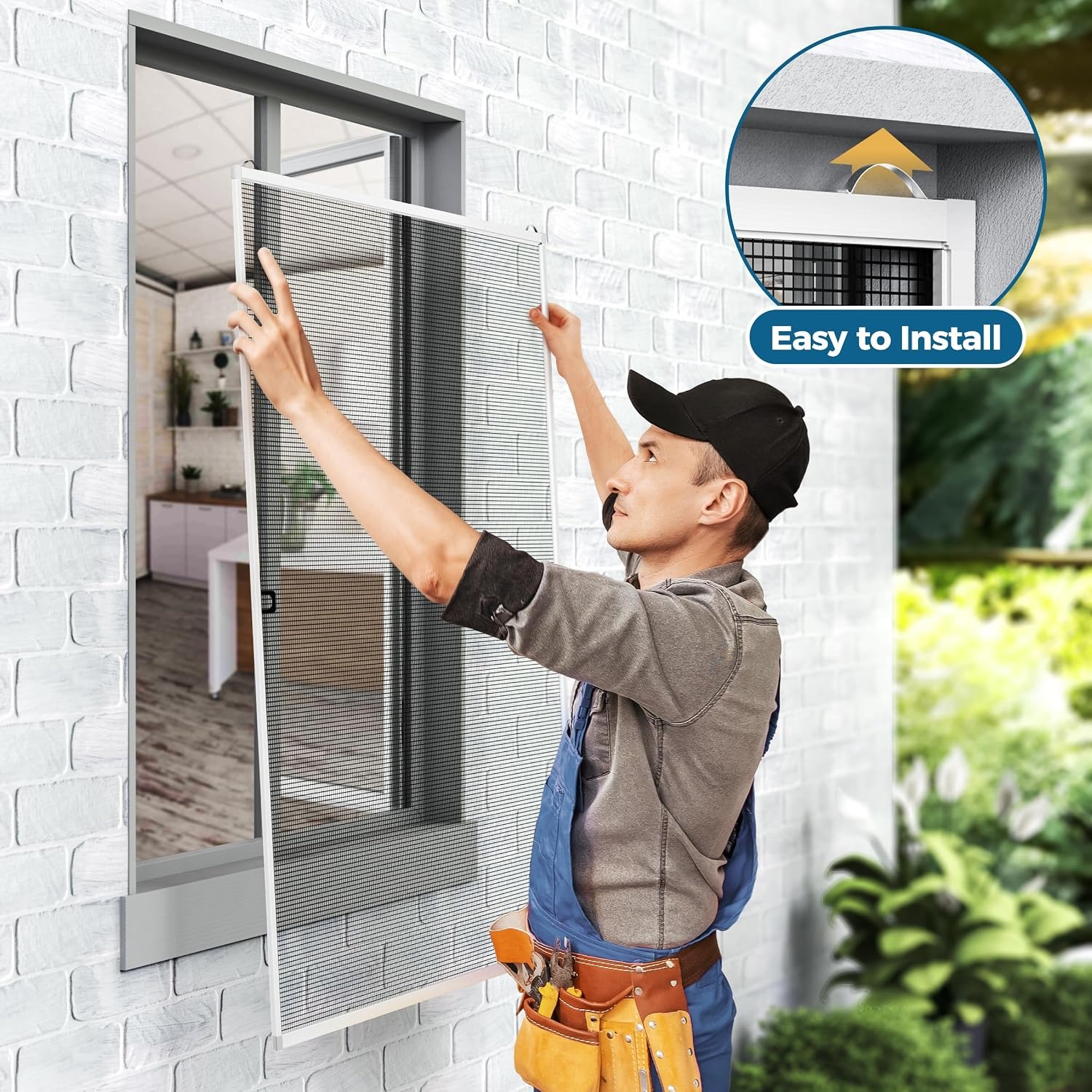
A window screen frame kit takes a different route. Instead of selling you a finished screen, it sells you the parts. You cut the frame to the size your window actually is, stretch the mesh, lock it in, and you have a screen that fits properly. For two windows, that is usually far cheaper than two made-to-measure panels.
What is in this kit and what it builds
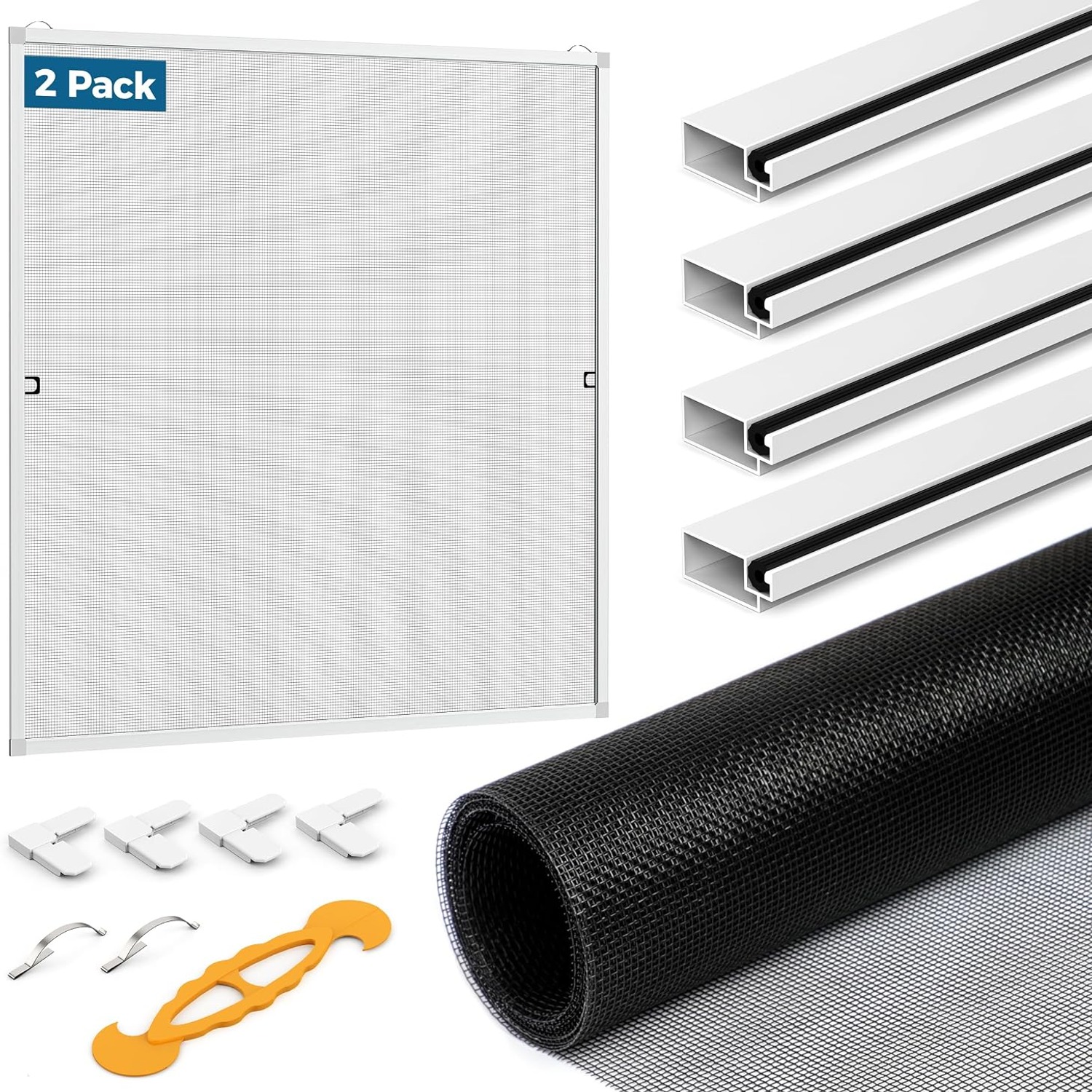
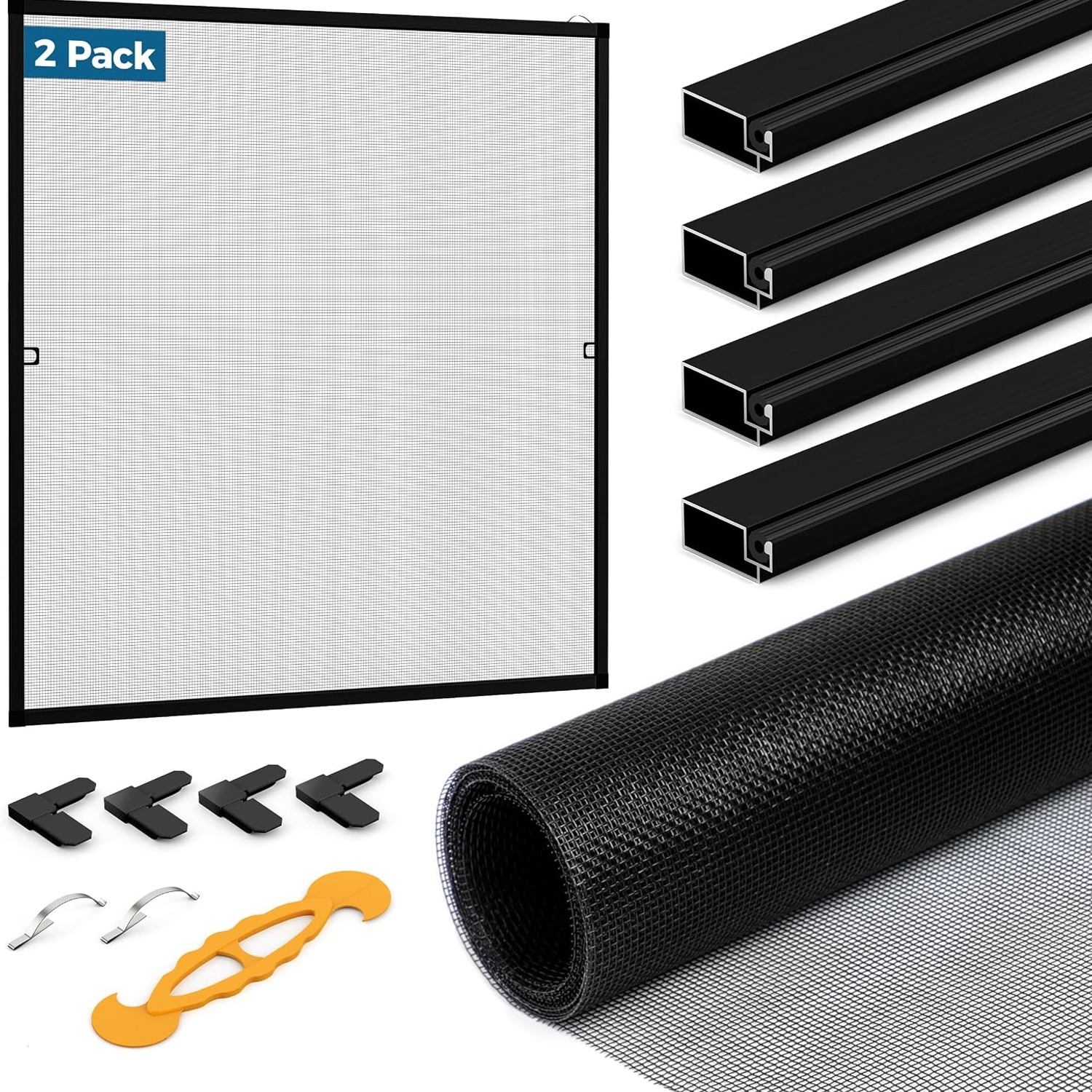
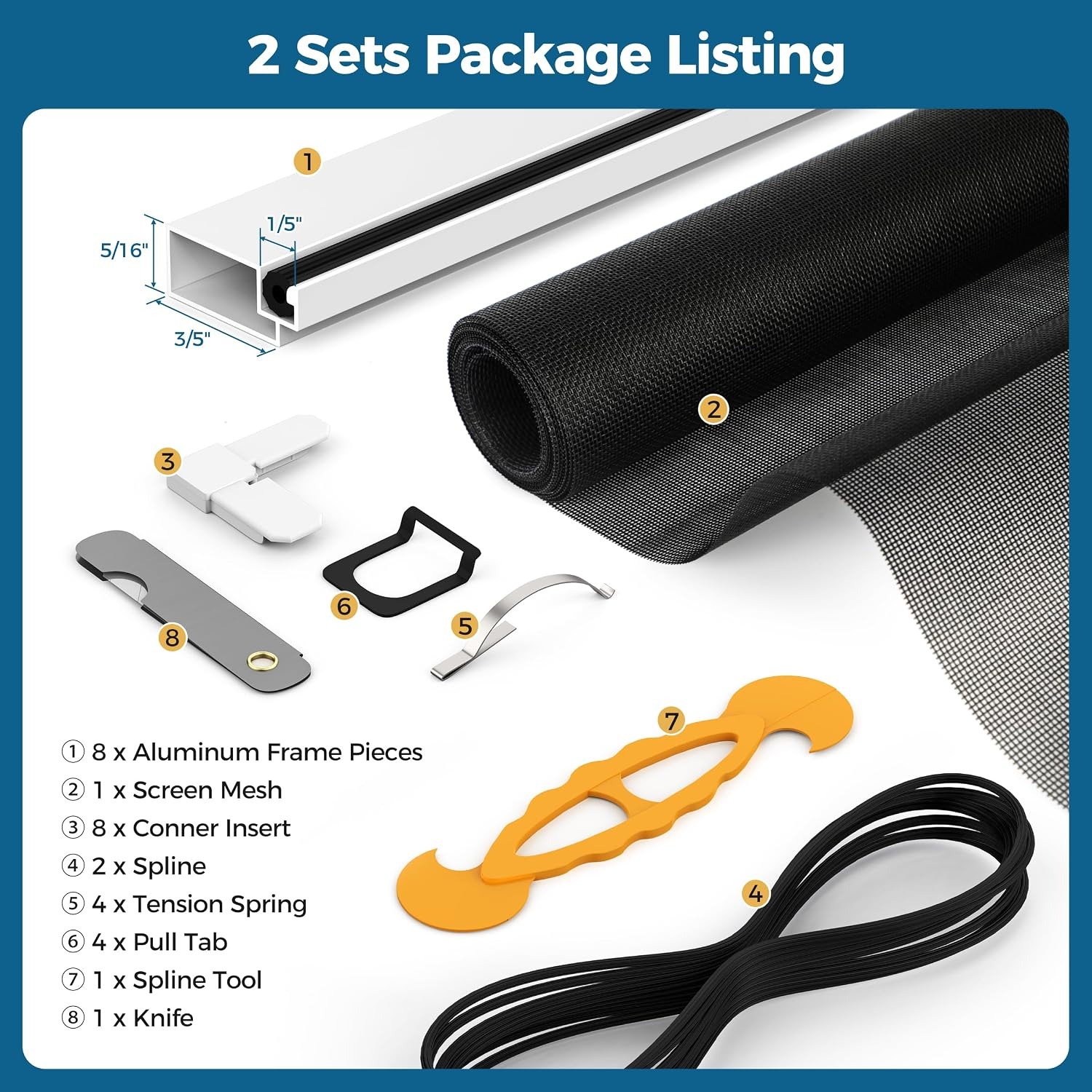
This pack contains aluminum frame lengths with a 5/16 inch by 3/5 inch profile, one roll of 48 by 99 inch mesh, 0.2 inch spline, eight plastic corners, four frame springs and four plastic pull tabs. The mesh is 18 x 16 polyester, the common residential insect weave.
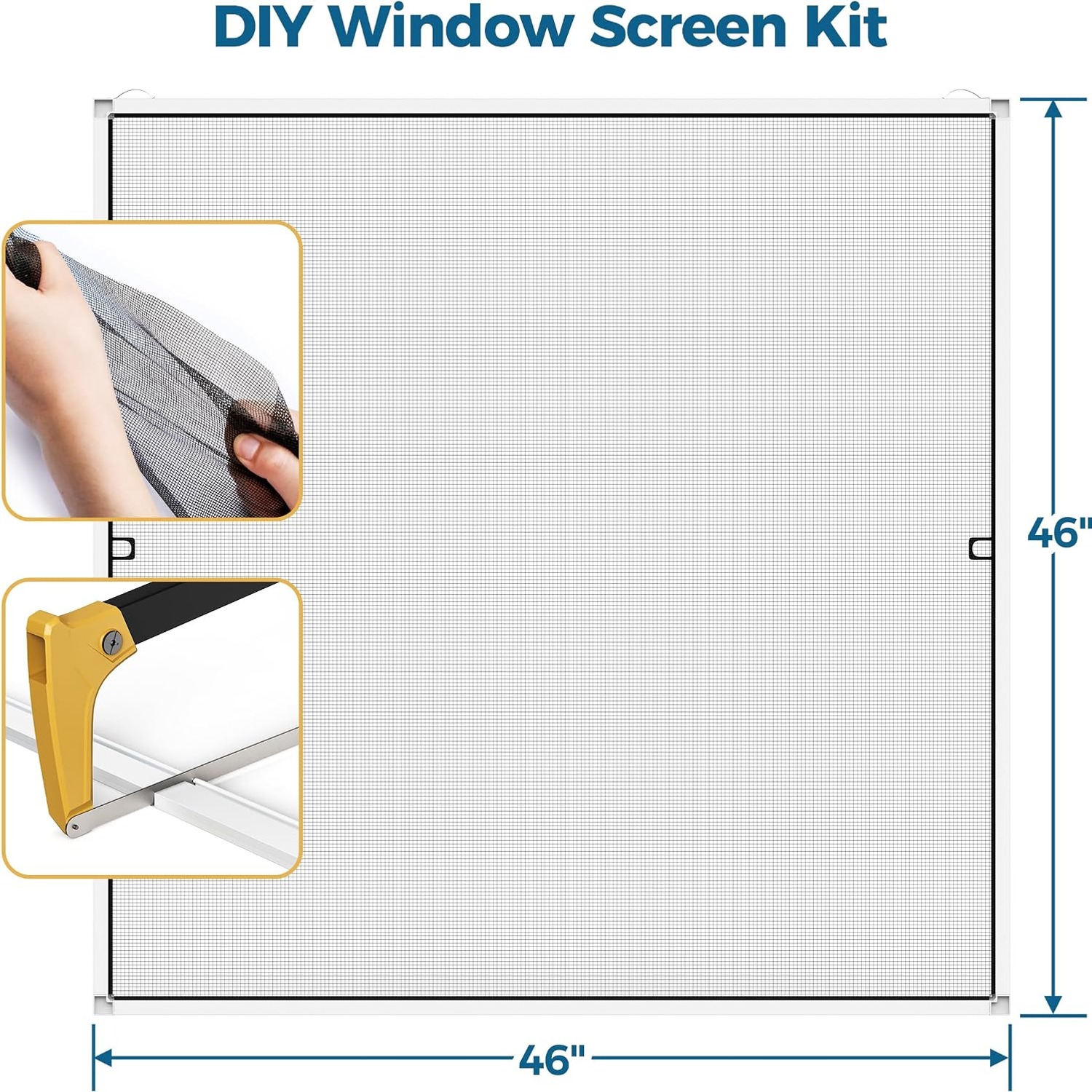
That material makes two complete screens, each up to 46 by 46 inches. If your openings are smaller, you cut down and keep what is left. Eight corners means two four-corner frames, so the kit is built around that two-screen plan rather than one large panel.
The listed package dimensions are 48 by 2 by 3 inches and the item weight is 2.65 pounds, which tells you the frame ships as straight lengths in a long box rather than pre-bent sections.
How the assembly actually works
The sequence is the same whichever brand of frame you use, and it has four steps worth understanding before you start.
First, measure. You want the width and height of the channel the screen will sit in, measured in three places each, because old openings are rarely square. Take the smallest reading and allow a small clearance so the screen slides in without jamming.
Second, cut. A hacksaw with a fine blade handles aluminum cleanly. Cut square, then run a file over the ends so the plastic corners seat properly. Rough ends are the main cause of a frame that will not sit flat.
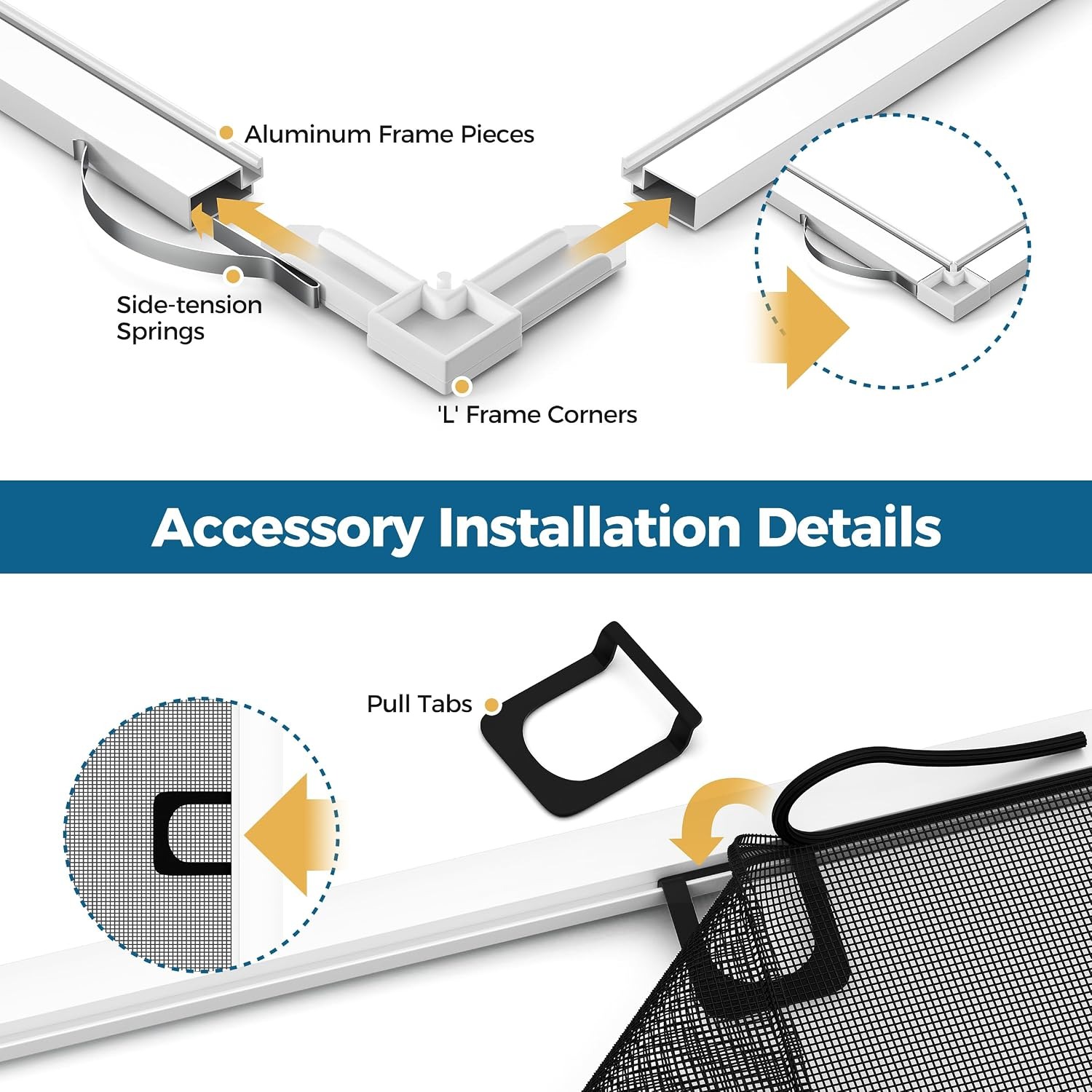
Third, corner and mesh. Press a plastic corner into each cut end to form a rectangle, lay the mesh across the assembled frame with a few inches of overhang, and work the spline into the groove with a roller. Start on one long side, do the opposite side next with light tension, then the two short sides. Pulling too hard will bow the frame inward.
Fourth, trim and finish. Run a utility knife along the outer edge of the spline groove to cut the excess mesh away. Fit the pull tabs, clip in the frame springs, and the screen is ready.
The first screen teaches you the feel of it. The second usually takes half the time.
Who this suits
This kit is for people who are comfortable measuring and cutting, and who have two or more openings to deal with. If you only have one small window, a pre-made panel may be simpler. If you have several windows of different sizes, the economics shift sharply in favor of building your own.
It also suits anyone screening something that was never designed for a screen. Porch bays, garden shed vents, greenhouse doors, pool enclosure panels and pet doors are all common uses. A best cut to size screen frame does not care what the opening was built for, as long as it falls within the maximum dimensions.
Renters often find this useful too, because nothing is drilled. The springs hold a screen inside a channel by tension alone, so you can lift the panels out and take them with you.
Choosing the right mesh
The 18 x 16 polyester mesh included here is the standard choice, and for most households it is the right one. The numbers describe the weave density, eighteen strands per inch one way and sixteen the other. That stops flies and mosquitoes while keeping airflow reasonable.
There are reasons to deviate. If you live somewhere with very small biting insects, a tighter no-see-um mesh blocks them but cuts airflow noticeably. If you have a cat that climbs screens or a dog that leans on them, a heavier pet mesh is worth the swap. Because the frame groove takes standard 0.2 inch spline, you can fit a different mesh to the same frame without changing anything else.
That modularity is the quiet advantage of building your own. In a few years, when the mesh has gone brittle in the sun, you replace the mesh and spline for a few dollars. The aluminum frame carries on.
Care and seasonal handling
Screens last longest when they are cleaned once or twice a year. Lift the panel out by the pull tabs, lay it flat, and wash both sides with a soft cloth and mild soapy water. Rinse with a gentle flow of water, never a pressure washer, and let it dry fully before refitting. Pressure will stretch the weave and leave a permanent bulge.
Check the spline each season. If a corner has lifted, press it back into the groove with the roller. A loose spline is the usual reason mesh starts to sag.
If you remove screens over winter, store them flat and stacked, not leaning against a wall where weight can twist the frame. Keep any leftover frame lengths with them, flat and out of direct sun.
A few practical notes before you cut
Measure twice. Cut kits cannot be returned once they have been shortened, so the measuring stage is the one place to slow down.
Buy or borrow a spline roller. It is the single tool most people are missing, it costs very little, and trying to press spline in with a screwdriver will shred the mesh.
Work on a flat surface. A kitchen table with a towel over it or a sheet of plywood on sawhorses both work. Rolling spline on carpet or grass means the frame flexes and the mesh ends up uneven.
Allow a little mesh overhang on all four sides. Trimming off excess is easy, adding mesh back is not.
The short version
This is a two-screen kit built around flexibility rather than convenience. You cut the aluminum to your own measurements, fit the plastic corners, roll in the 18 x 16 polyester mesh with spline, and finish with springs and pull tabs. No drilling, no fixed sizes, no waiting on a custom order.
It suits windows, porches, patio and French doors, pet doors and greenhouse openings up to 46 by 46 inches each. If your openings are smaller, you simply have spare material for the next repair. For anyone with more than one screen to sort out, that is a sensible way to spend an afternoon.