
The complete guide
Storm Door Chain and Spring Buyer's Guide
The problem nobody plans for
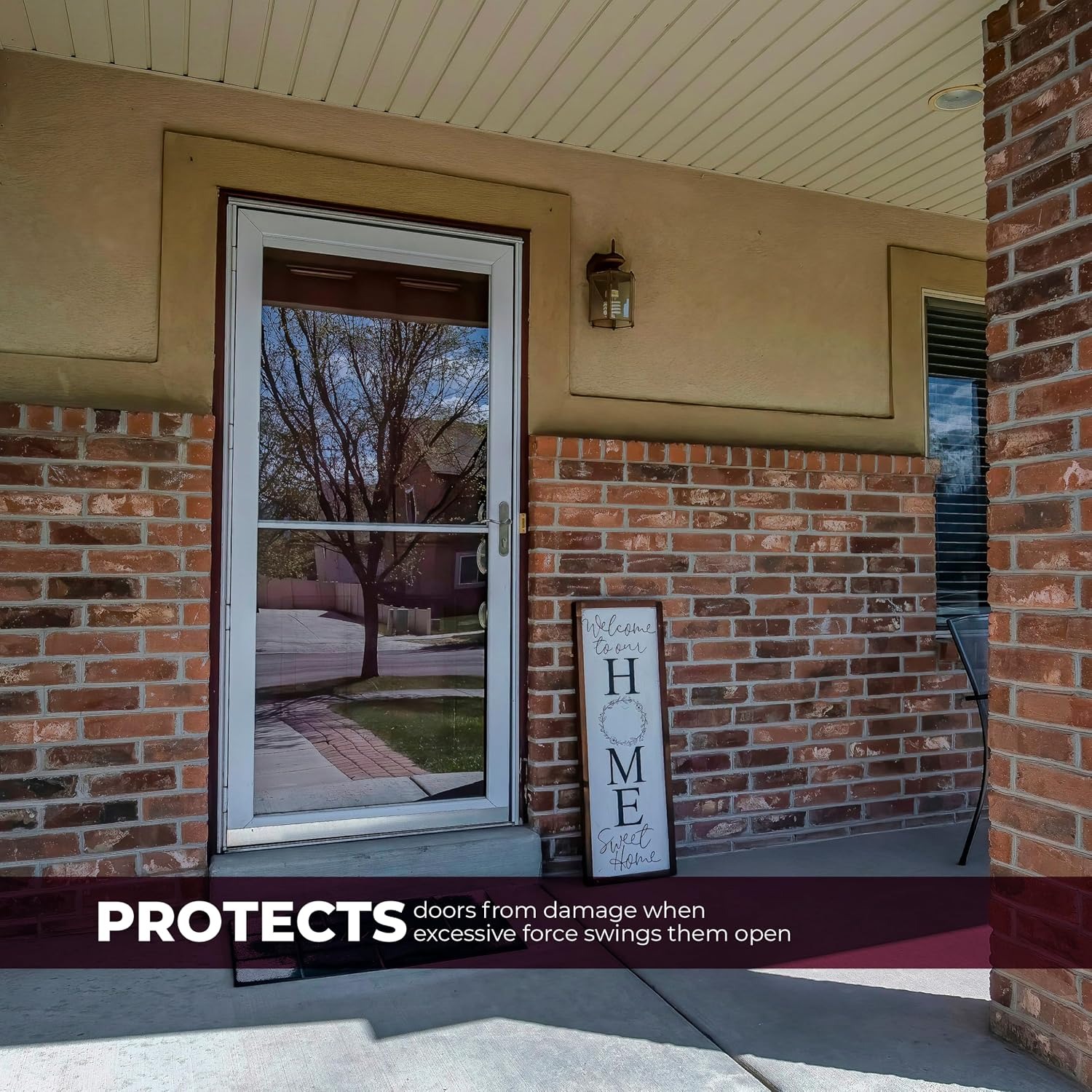
Most people do not think about their screen door until the day it gets away from them. You push it open, a gust of wind gets underneath, and the door keeps traveling. Sometimes it hits the wall. Sometimes it goes further than the hinges were built to allow and the screws start lifting out of the frame. Either way, the damage was done in about half a second.
Out-swinging doors are especially prone to this. They are light, they are usually part glass or part mesh, and they sit right where the wind funnels along the side of a house. A door panel is basically a flat surface held at one edge, which is the same description you would give a sail. The physics are not on your side.
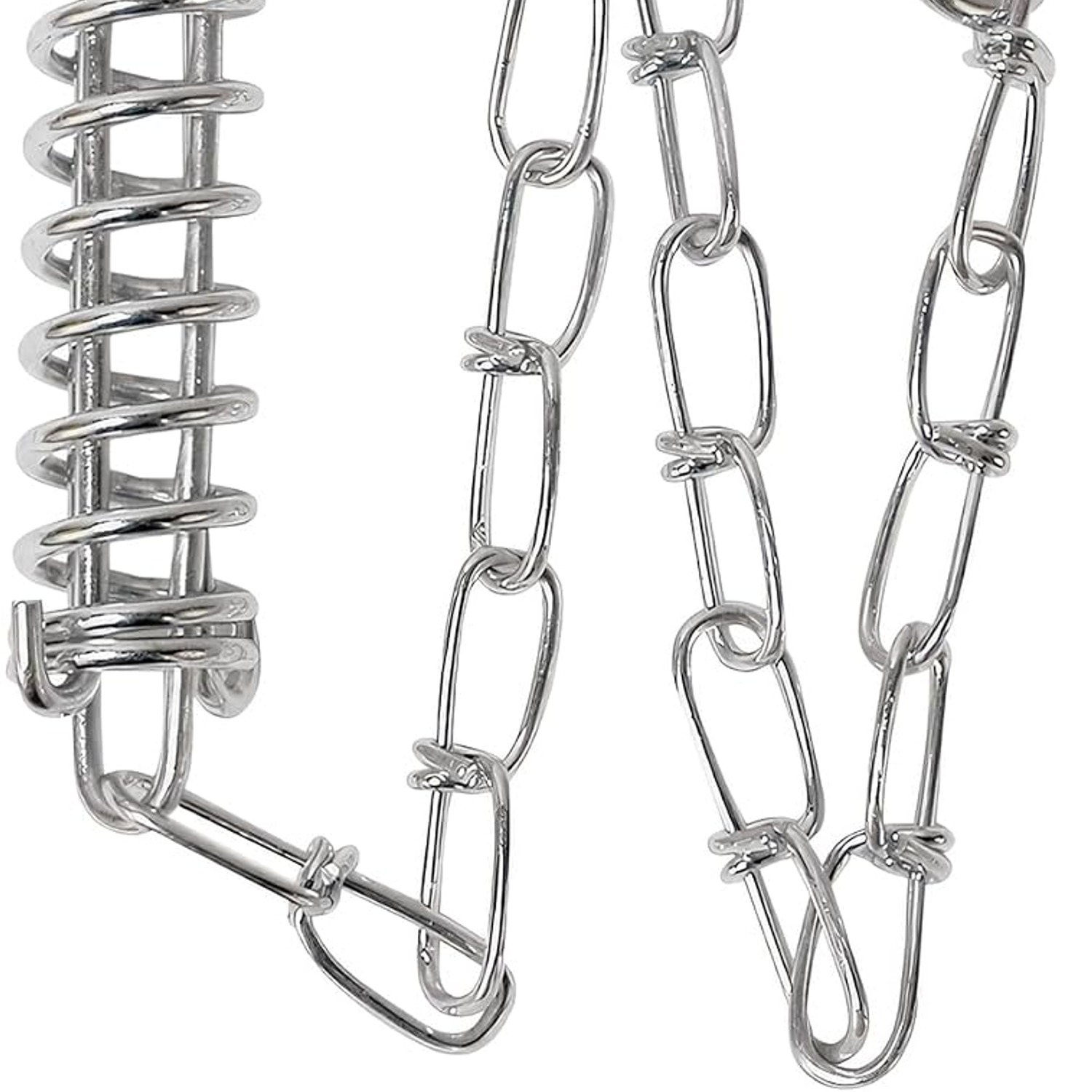
A storm door chain and spring is the cheapest fix for this problem, and it has been for a very long time. It is not clever, it does not need power, and there is nothing to break except the parts doing the work. That is part of why it is still sold.
How it works
The kit has two jobs happening at once.
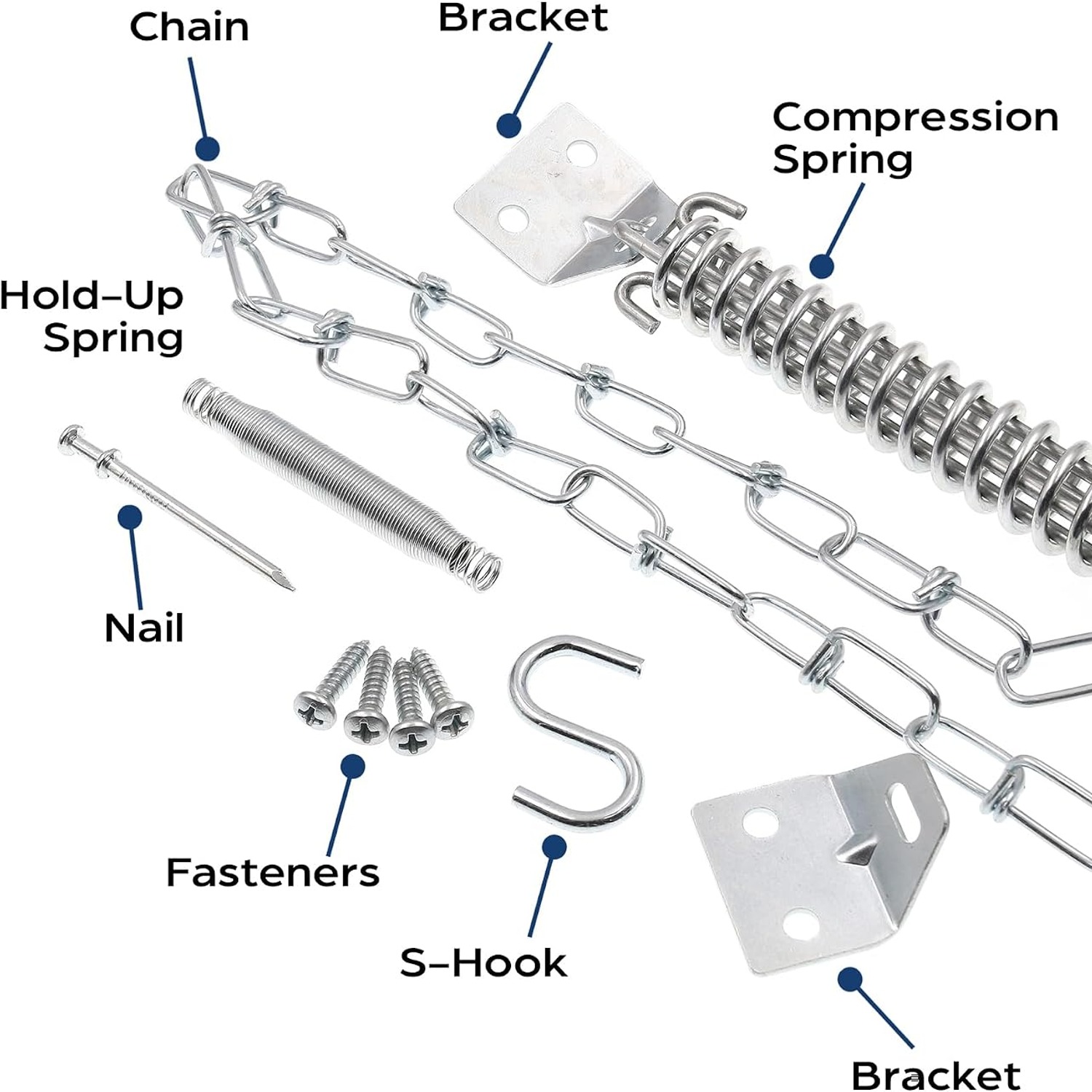
The chain sets the limit. One bracket mounts on the door, the other on the frame or jamb. When the door opens to the point where the chain runs out of slack, that is as far as it goes. You decide where that point is by where you put the brackets and how much slack you leave in the chain.
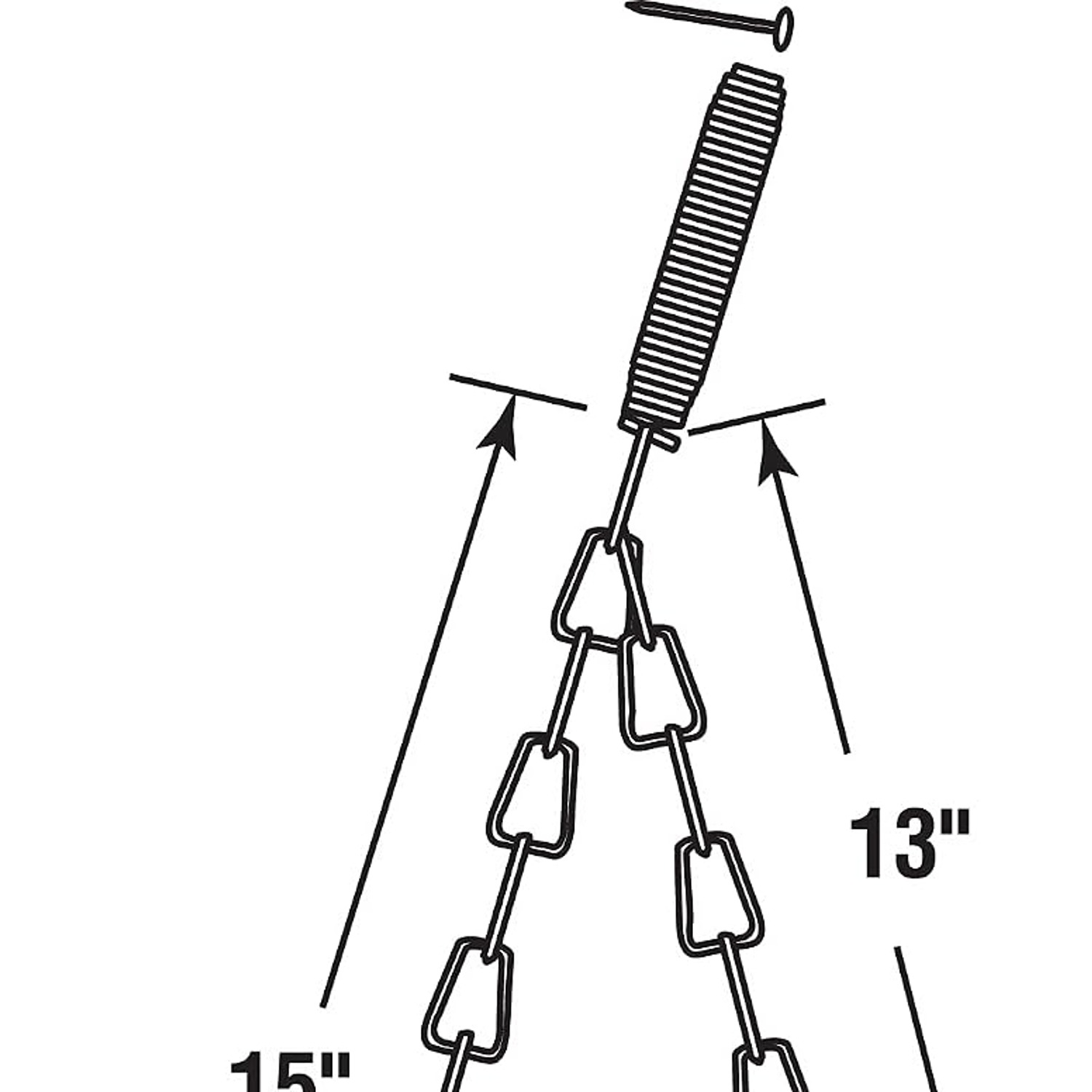
The spring handles the impact. If you installed a chain on its own, every time the door hit the end of its run you would get a hard jolt straight through the brackets and into the screws. Do that a few hundred times and the fixings loosen. The heavy-duty spring sits in line with the chain and stretches when the load comes on, spreading the stop over a fraction of a second rather than an instant. The door still stops. It just stops without the bang.
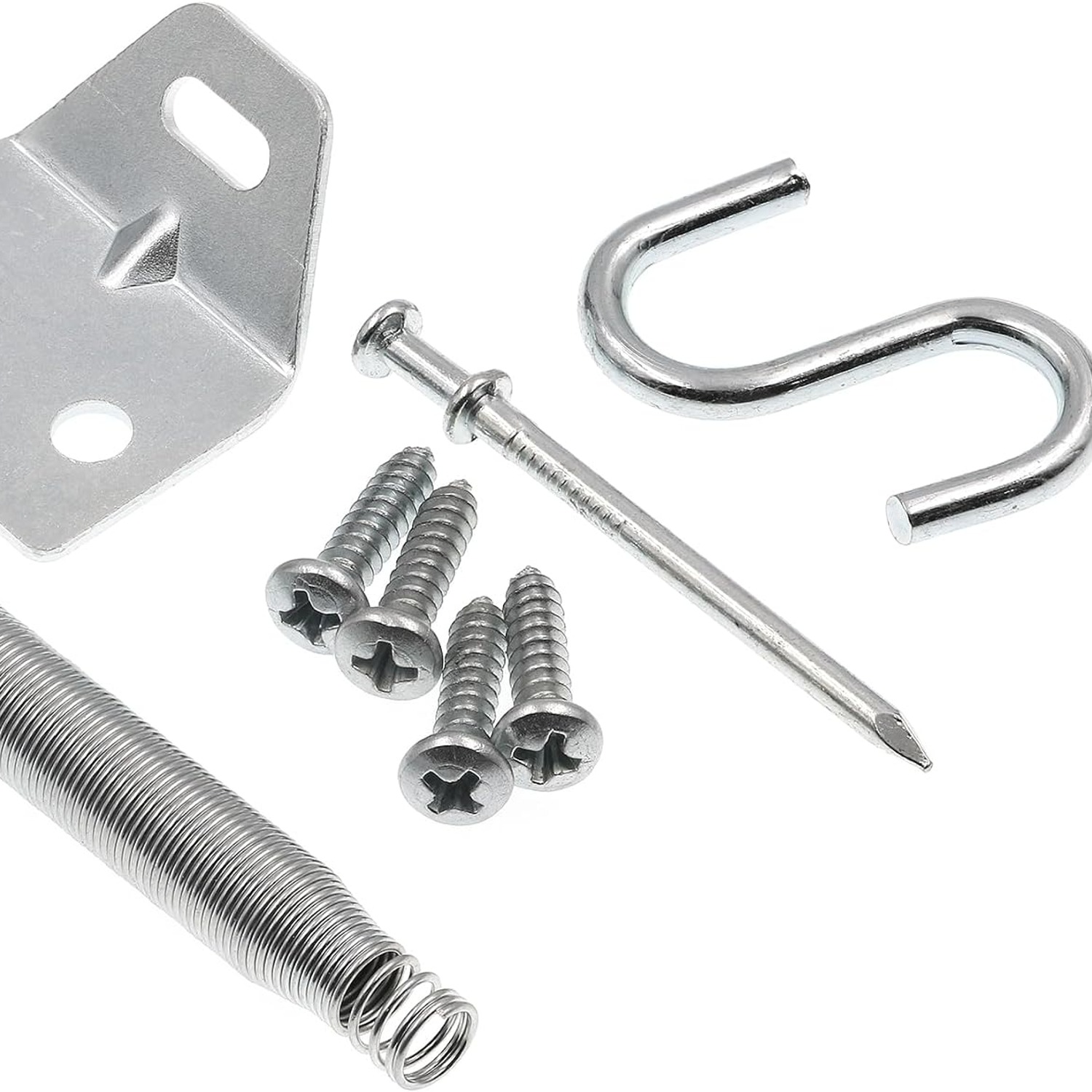
That is the whole mechanism. Three pieces in the box, a spring, a chain and fasteners, and model number K 5026 stamped on the packaging.
Who it suits
This is for anyone with an out-swinging screen or storm door, in wood or metal, that opens into an exposed spot. If your door is sheltered by a porch and never catches a breeze, you may not need one. If the door swings toward a wall, a railing, a downpipe or a parked car, you probably do.
It is also worth fitting on doors used by children, who tend to fling rather than open, and on doors with glass panels where the cost of a mistake is higher. The chain does not care who pushed it.
If your door opens inward, this is not the right product. The geometry does not work and the chain will fight the door rather than guide it.
Checking the fit before you buy
The number to pay attention to is the maximum gap fill of 15 inches. The listed item dimensions are 15 inches long by 1.5 inches wide by 1.5 inches thick.
To check whether that suits your door, open the door to where you want it to stop and measure the straight-line distance between the point on the door where a bracket would sit and the point on the frame where the other bracket would sit. If that distance comes in under 15 inches, you are in range. If it is comfortably over, you need something longer, and no amount of optimism will close the gap.
Also look at what you are screwing into. Solid timber or a decent metal frame is fine. Rotten wood, thin trim or hollow plastic is not, and the best screen door wind chain in the world will pull straight out of a soft fixing. If the frame is marginal, add a backing block or move the bracket to a stronger point.
Fitting it without regret
Dry fit before you drill. Hold the brackets in place, swing the door through its range, and watch where it stops. It is much easier to move a bracket you have not yet screwed down.
Mark the holes with a pencil, start pilot holes so the screws go in straight, and drive them snug rather than crushing the bracket into the surface. Then open the door slowly and let the chain take up. You want the door stopping a little short of whatever it would otherwise hit, not touching it and then easing back.
If the stop point is wrong, the fix is almost always moving one bracket rather than buying different hardware. A couple of inches in bracket position changes the stop point noticeably.
Most people have this done inside half an hour with a drill, a screwdriver and a tape measure.
Living with it
Once installed, a chain and spring asks for very little. Give it a wipe now and then to clear dust and grit, and dry it off if it has been sitting wet. Check the mounting screws once or twice a year, because any fitting that takes repeated loading will eventually work a screw loose, and catching that early is better than catching it after the bracket lets go.
The spring is the part that ages. Over years of use a spring gradually loses some of its return, and when it stops stretching and recovering properly you are back to a chain with no cushioning. At that point replace the kit. Given what it costs against a set of new hinges, that is an easy call.
Keep the model number somewhere if you can. K 5026, UPC 049793050267. It saves a lot of squinting at old hardware when you want a matching replacement.
What it will and will not do
Being honest about limits matters here. A chain and spring reduces damage from everyday wind, sudden pushes and ordinary use. It is a limiter, not a lock.
In a serious storm, the right answer is a latched door, not a chain. The same goes for a door being used as a prop in high wind. This kit handles the common problems very well and the extreme ones only partly, which is exactly what you would expect from a part weighing just over an ounce.
It also will not pull your door closed. That is a closer's job. Plenty of doors run both, with the closer bringing it shut and the chain stopping it flying open, and the two work together without conflict.
The short version
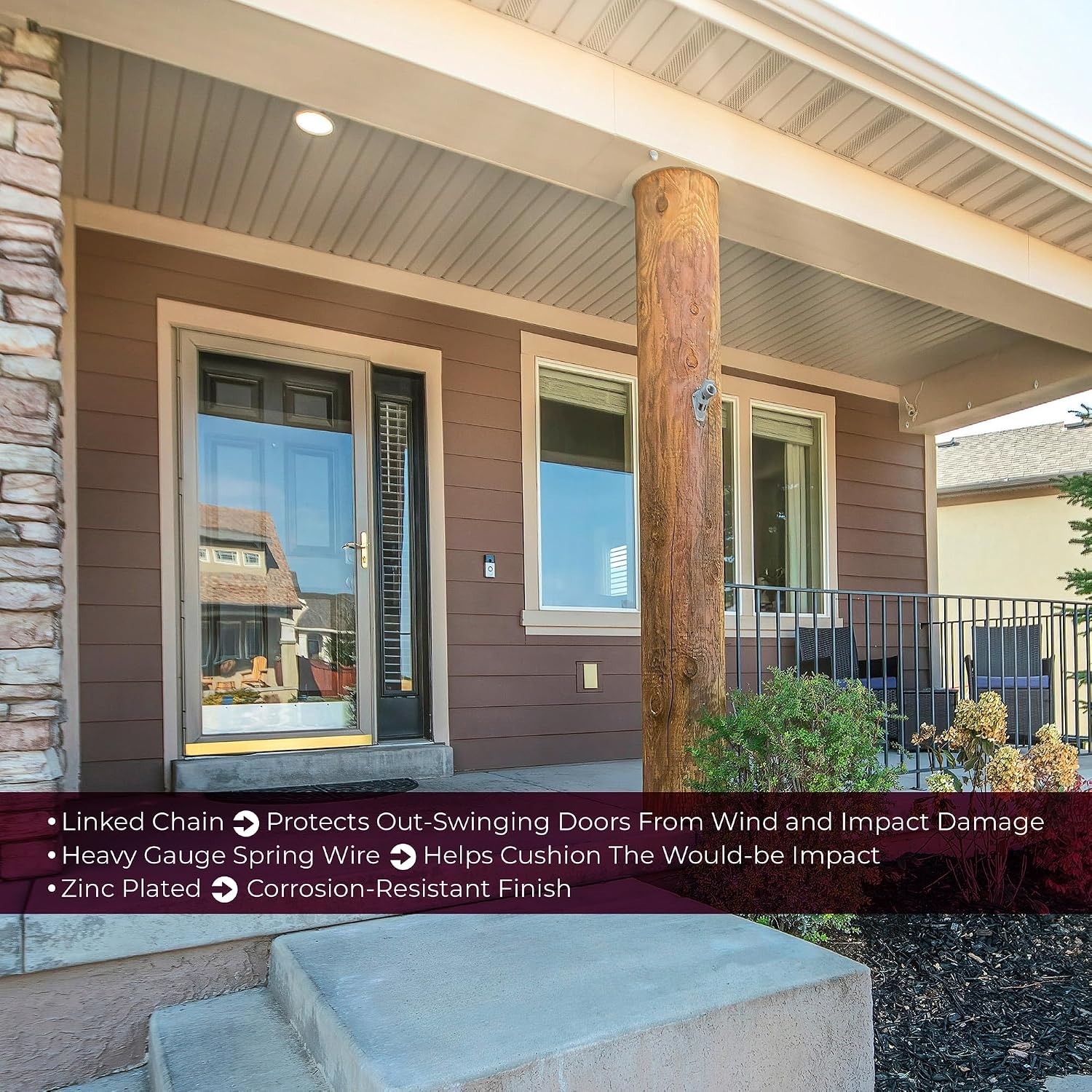
A storm door chain and spring is one of those parts that costs very little and saves a lot. The steel chain caps how far your out-swinging door travels and the heavy-duty spring takes the shock out of the stop, so hinges, frames and closers stop absorbing punishment they were never built for.
Measure your gap against the 15 inch maximum, check you have something solid to screw into, and give yourself half an hour with a drill. The kit includes the spring, chain and fasteners, carries model number K 5026 from PRIME-LINE, and is warranted against manufacturing defects for a year.
If your screen door catches the wind, fit one before the wind makes the decision for you.