
The complete guide
How to Choose a Dog Screen Door That Actually Lasts
The problem with being the family doorman
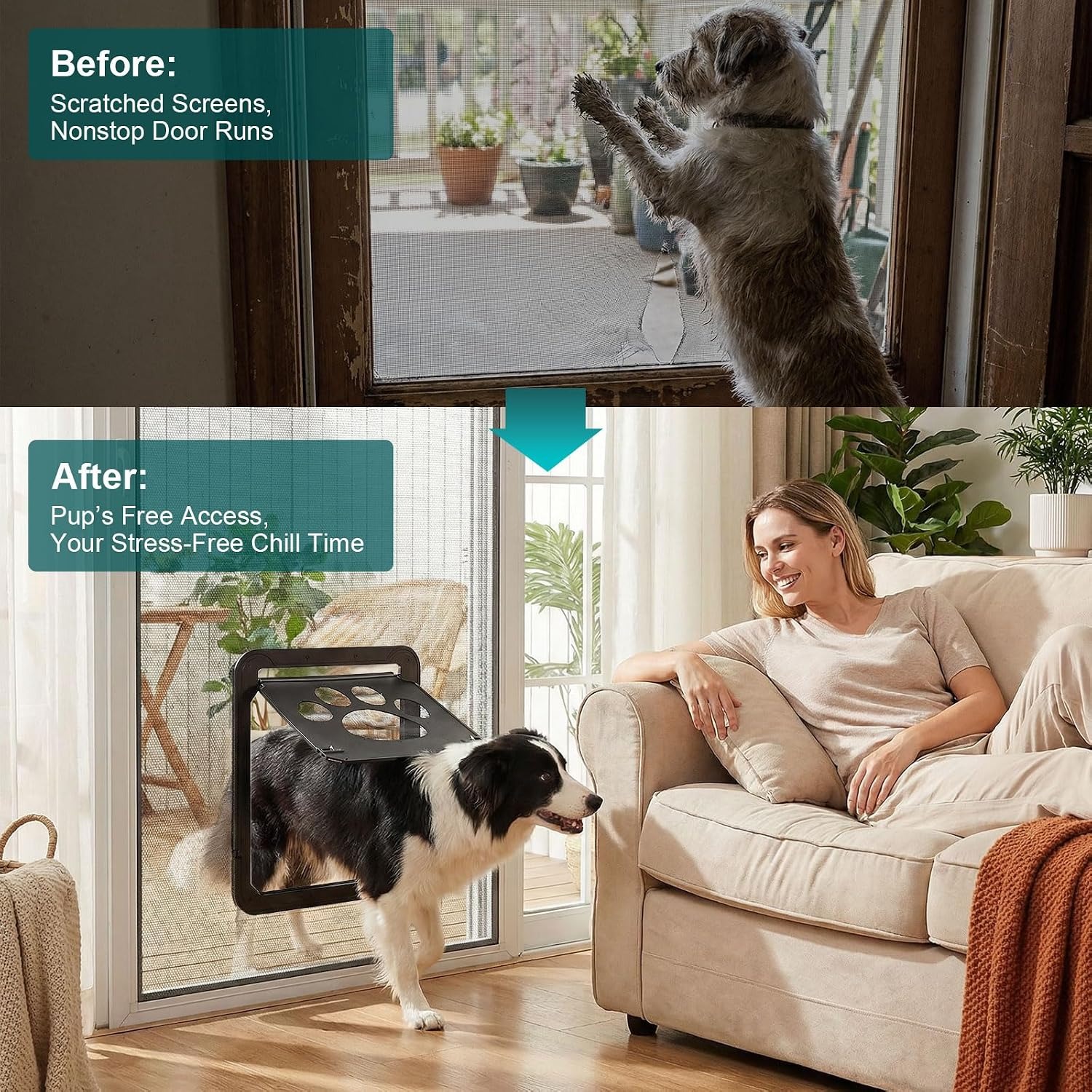
There is a particular kind of tiredness that comes from opening the same door forty times a day. The dog wants out. Five minutes later the dog wants in. You are halfway through dinner, or on a call, or asleep, and there is a nose at the screen again.
A pet screen door solves this in the plainest way possible. You cut an opening into a screen panel you already have, fit a framed flap into it, and your dog starts using their own door. After the first week you stop noticing it, which is the goal.
What separates a good one from a bad one is not complicated. It comes down to how reliably the flap closes, how well the frame survives daily abuse, how it attaches to your particular screen, and whether you can shut it when you need to.
How a screen pet door works
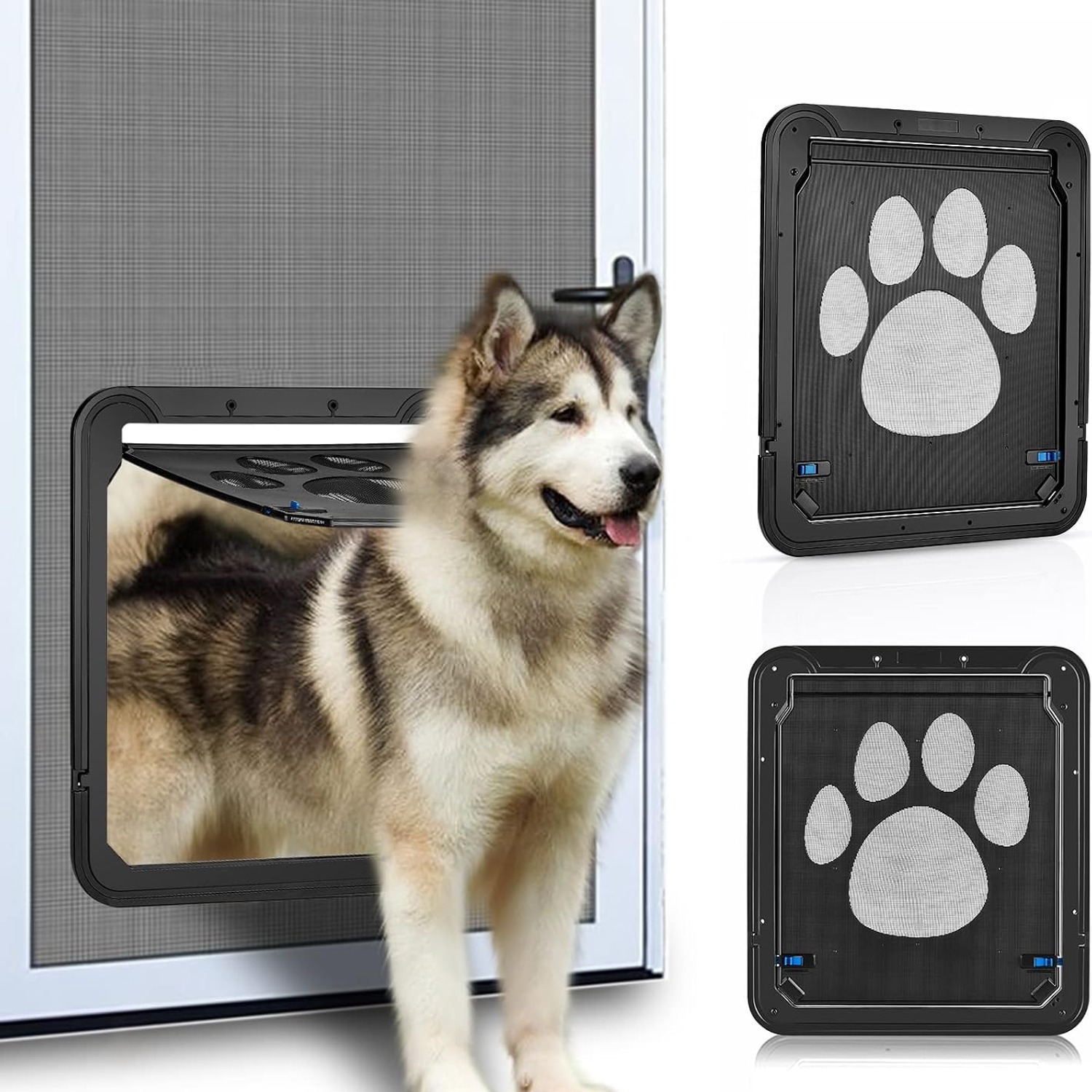
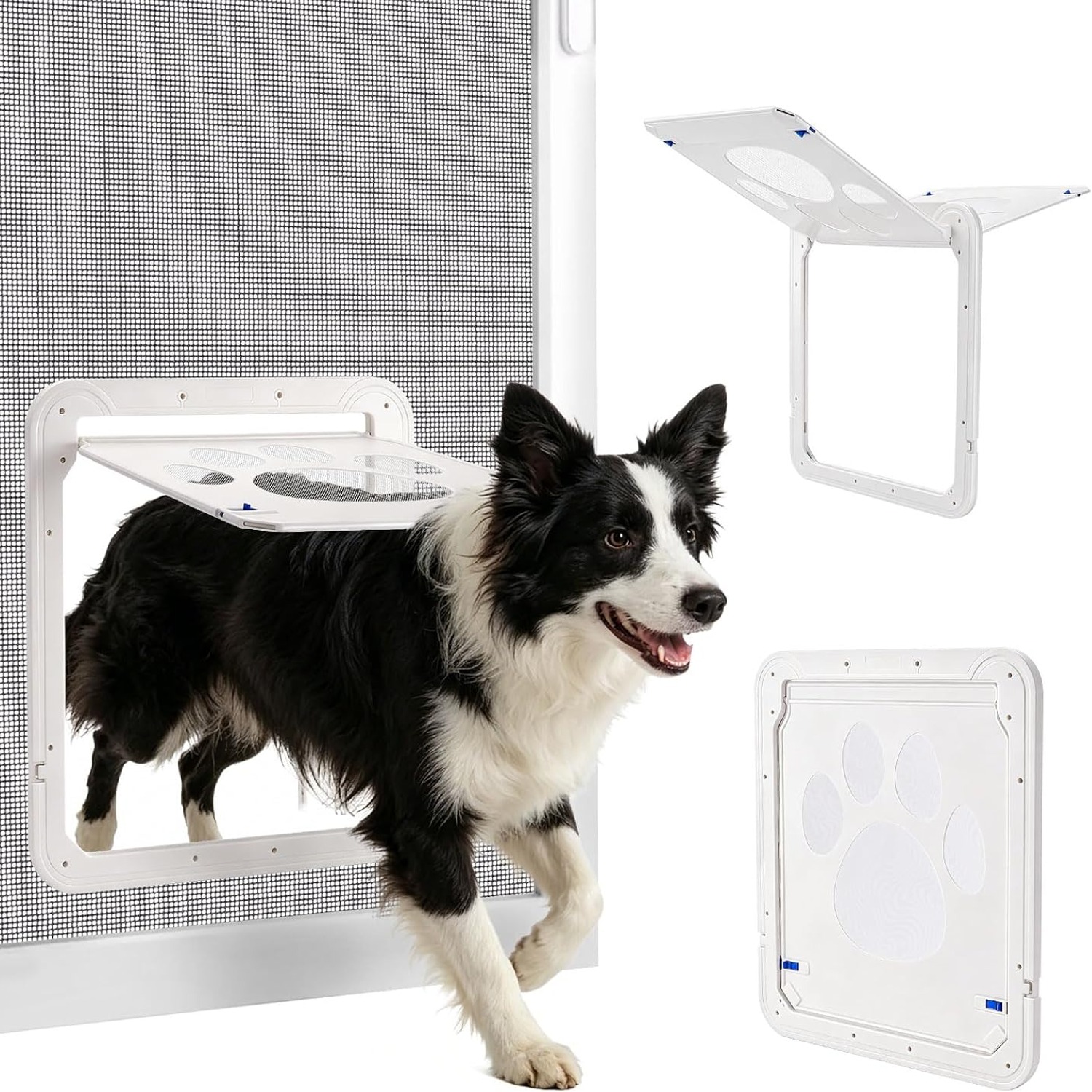
The mechanics are simple. The door is a rigid frame in two halves. One half goes on the inside of the screen, the other on the outside, and they clamp together through the cut opening with screws. The flap hangs from hinges at the top and swings in both directions.
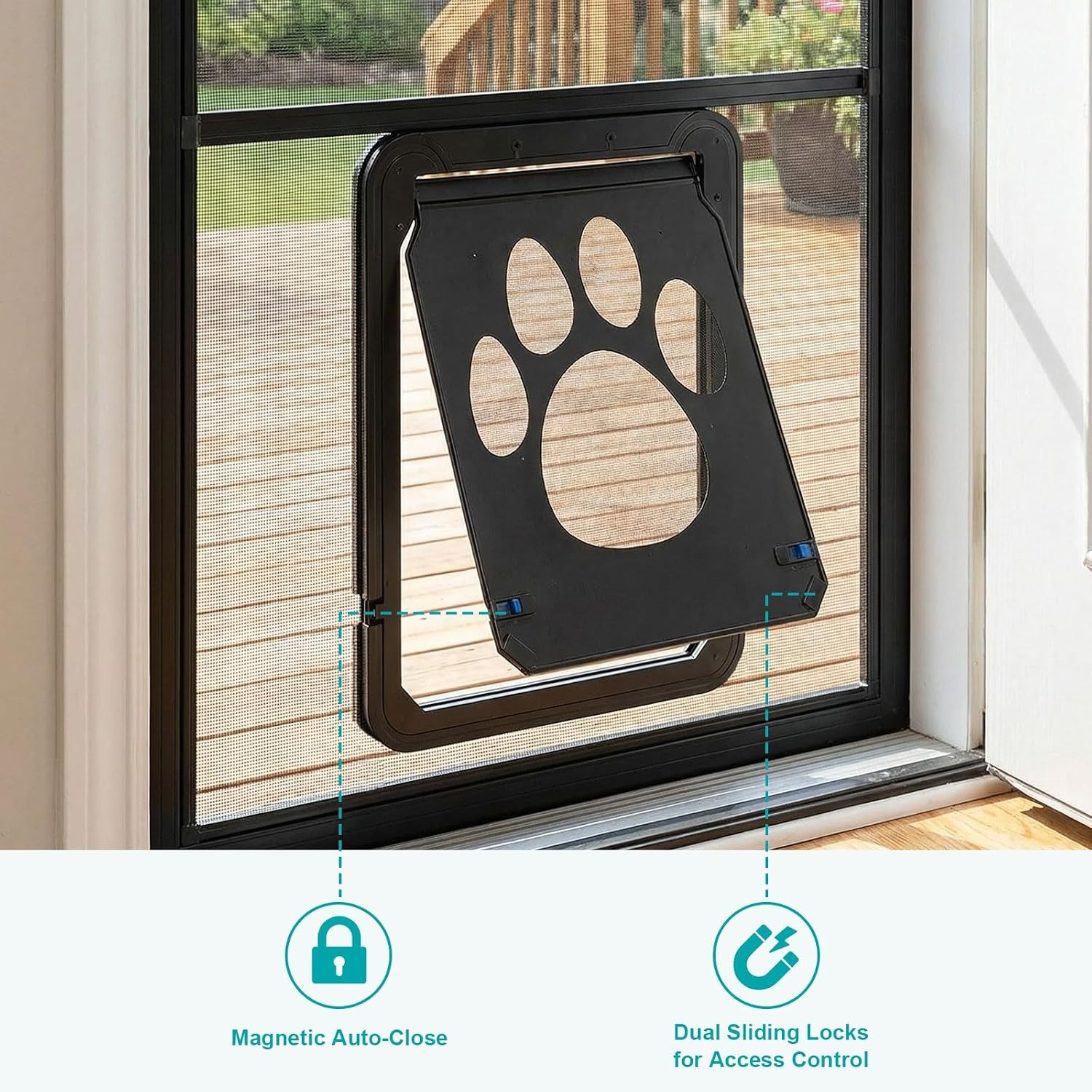
The closing mechanism is where products differ. Some use a spring, which snaps the flap shut with force and noise. This one uses magnets. The flap is drawn back against the frame by magnetic contact after each pass. It is quieter, which matters more than people expect, because a loud snapping door is the single most common reason a dog refuses to use one.
Magnets also do the insect job well. The whole point of a screen is to keep bugs out, and a flap that sits ajar undoes that in about an hour on a warm evening. A self-closing flap returns to its seat every time without you checking it.
The locks are the other half of the design. There is one on each face of the door. Engage them and the flap is held shut. That gives you control at night, during storms, when a gate is open, or when the dog has already had enough mud for one day.
Who this particular door suits
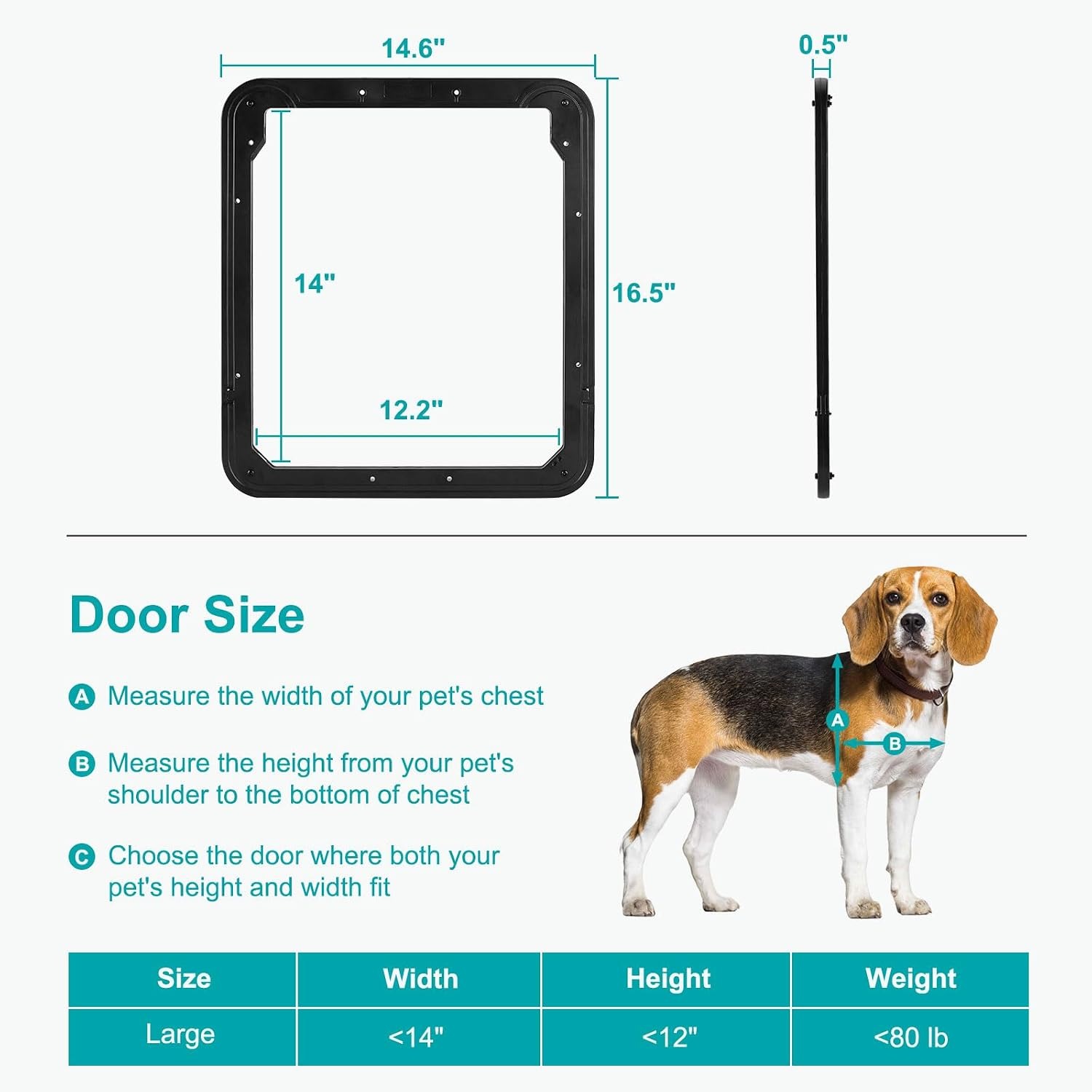
The 12 x 14 inch opening is the large size, and that is a real consideration rather than a marketing word. A door that is too small is the second most common reason a dog stops using one. They clip their shoulders, it becomes unpleasant, and they go back to standing at the screen.
Ownpets rates this door for pets up to 80 pounds. That covers a wide range, from cats and small terriers through to labradors and similar builds. If you have a mixed household, one door can serve all of them, which is why people searching for the best large dog screen door often land on this size even when they also own a cat.
Before you commit, measure your dog. Stand them square and measure the width across the widest point of the shoulders, then the height at the withers. You want the opening comfortably wider than the shoulders and the flap top above the shoulder line. If both numbers sit well inside 12 by 14 inches, you are fine.
Checking your screen before you order
This is the step people skip and then regret. Screen panels vary.
Measure the thickness of your screen panel. This door fits panels from 0.25 inches up to 0.5 inches thick, which covers most patio screens, sliding screen doors and hinged screen doors. Use a ruler on the edge of the frame rather than guessing.
Then measure the flat mesh area. You need enough clear mesh to take a 12 x 14 inch opening plus frame margin around it, without running into the panel's edge rails or any cross-brace. On a narrow screen panel this is the constraint that catches people out.
The door works with metal, fiberglass and vinyl-coated screens. If your mesh is one of those three and the thickness is in range, you are good to proceed.
Fitting it without wrecking your screen
Installation is tool-free in the sense that no drilling into the door frame is needed. You will still want a pencil, a marker and a sharp blade or scissors for the mesh.
Start by deciding on the height. Aim to mount the door around 6 to 9 inches off the floor. The idea is that your dog steps through rather than climbs or crouches. Watch them walk and set the bottom of the flap just below their chest line.
Use the included template to mark the opening. Check the marks twice, then cut the mesh. Cut slightly inside your line rather than outside, because the frame covers the edge and a tight hole looks neater than a loose one.
Press the two frame halves together through the opening and fit the screws. Do not overtighten plastic. Snug is enough. Then open and close the flap by hand a dozen times to check it sits flush and the magnets grab cleanly.
If you rent, the no-drill approach is the point. Only the mesh is altered. Re-meshing a screen panel is a cheap job if you move out and want to hand it back as you found it.
Training your dog to use it
Some dogs walk through on the first attempt. Most need a little coaching, and the method that works best is the slow one.
Tape the flap fully open so the dog sees a clean hole with daylight on the other side. Stand outside, call them, reward them when they come through. Repeat until it is boring. Then tape the flap half open and repeat. Then let it hang free and guide it gently with your hand as they push.
Never shove a dog through a flap. One bad experience with a pet door can take weeks to undo. Feeding them near it, leaving treats on the far side and keeping the whole thing low-key gets better results than force. For a nervous dog, the quieter magnetic closure is a real advantage over spring-loaded designs.
Keeping it working
Maintenance is genuinely light. Wipe the frame and flap down with a damp cloth and a little soapy water when it gets grubby, which on a door used by a muddy dog is more often than you would think.
Pay attention to the magnet contact area. Hair, dust and grit collect there and gradually stop the flap from seating properly. A wipe every few weeks is all it takes.
Twice a year, check the screws and the hinges. Daily use works fixings loose over time, and a loose frame starts to rattle and wear. Tightening them takes two minutes.
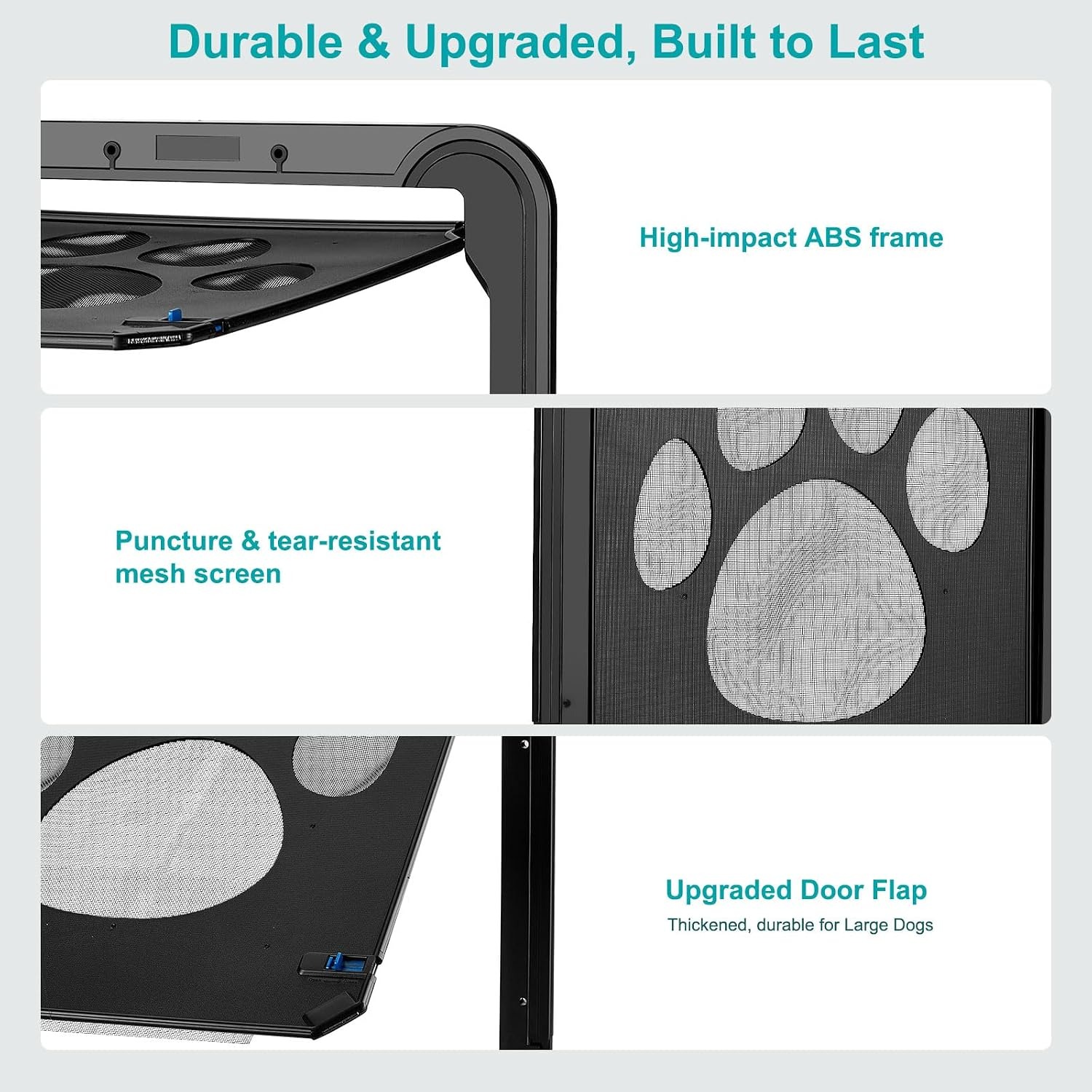
Avoid solvents and abrasive scourers on the ABS plastic. They cloud and scratch it. Mild soap and a soft cloth is the whole care routine.
The short version
If you are tired of opening the door all day, a screen pet door fixes it for not much money and not much effort. This one gives you a large 12 x 14 inch opening, a maker rating up to 80 pounds, a magnetic self-closing flap that keeps insects out, and locks on both faces so you stay in control.
Measure three things before you buy: your screen thickness (0.25 to 0.5 inches), your flat mesh area, and your dog's shoulders. Get those right and the rest is a ten minute job with a template and a blade.
Then sit down and finish your dinner.