
The complete guide
How To Choose And Fit Pet Proof Screen Mesh
The problem with ordinary window screen
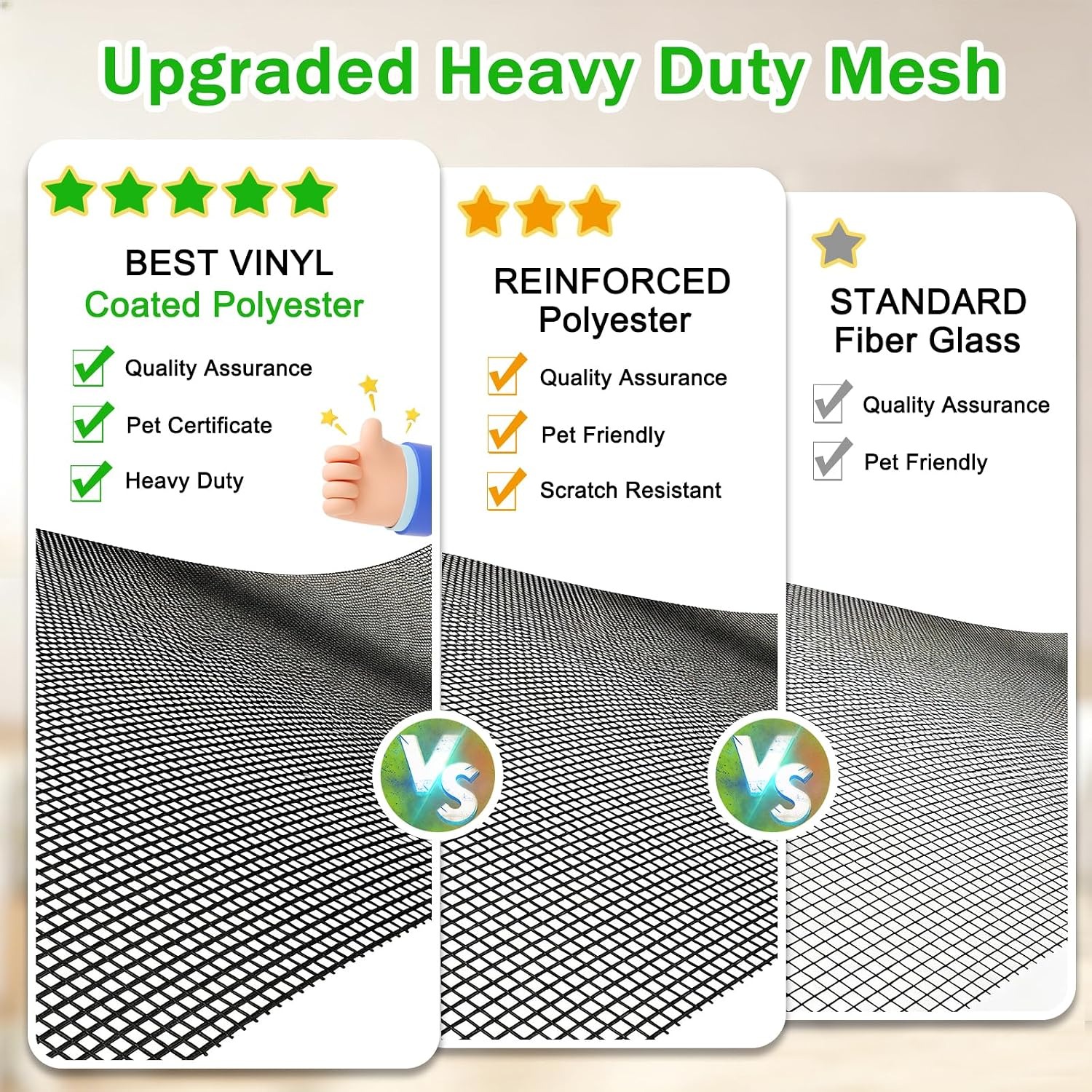
Most screen doors and windows leave the factory with fiberglass mesh in them. It is cheap, light, and perfectly fine for keeping flies out of a quiet house. It is hopeless against a dog that wants to come inside.
The failure is always the same. A cat hooks a claw, pulls back, and three or four strands snap. The hole is small for about a week. Then the dog notices the hole, pushes a nose into it, and the whole lower panel splits. Now the screen does nothing at all, insects come in, and the door looks tired even though the frame is fine.
People then do one of two things. They tape it, which never looks right and never holds. Or they buy another roll of the same cheap screen and repeat the cycle a few months later. Neither is a real fix, because the material was never built for the job.
What makes pet screen different
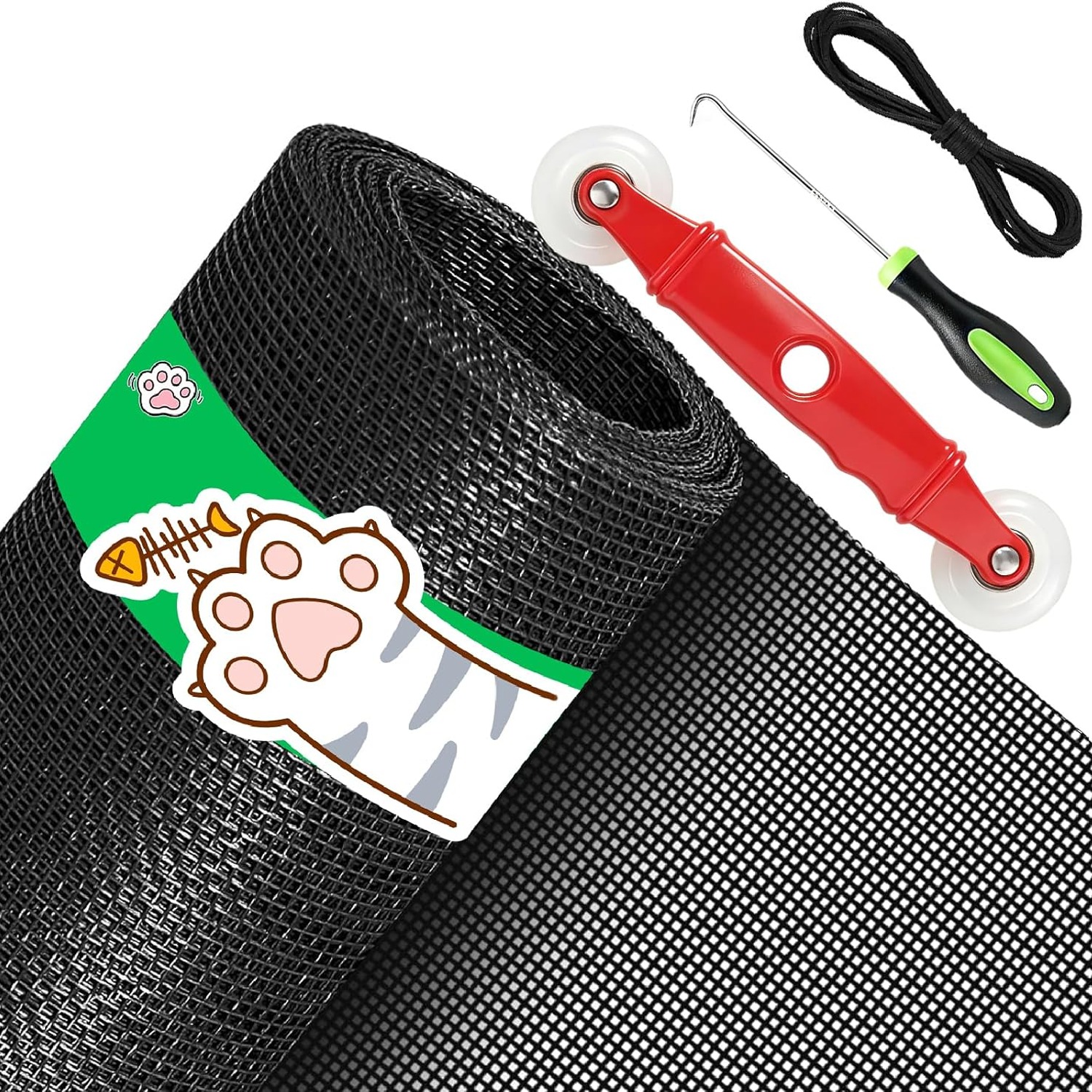
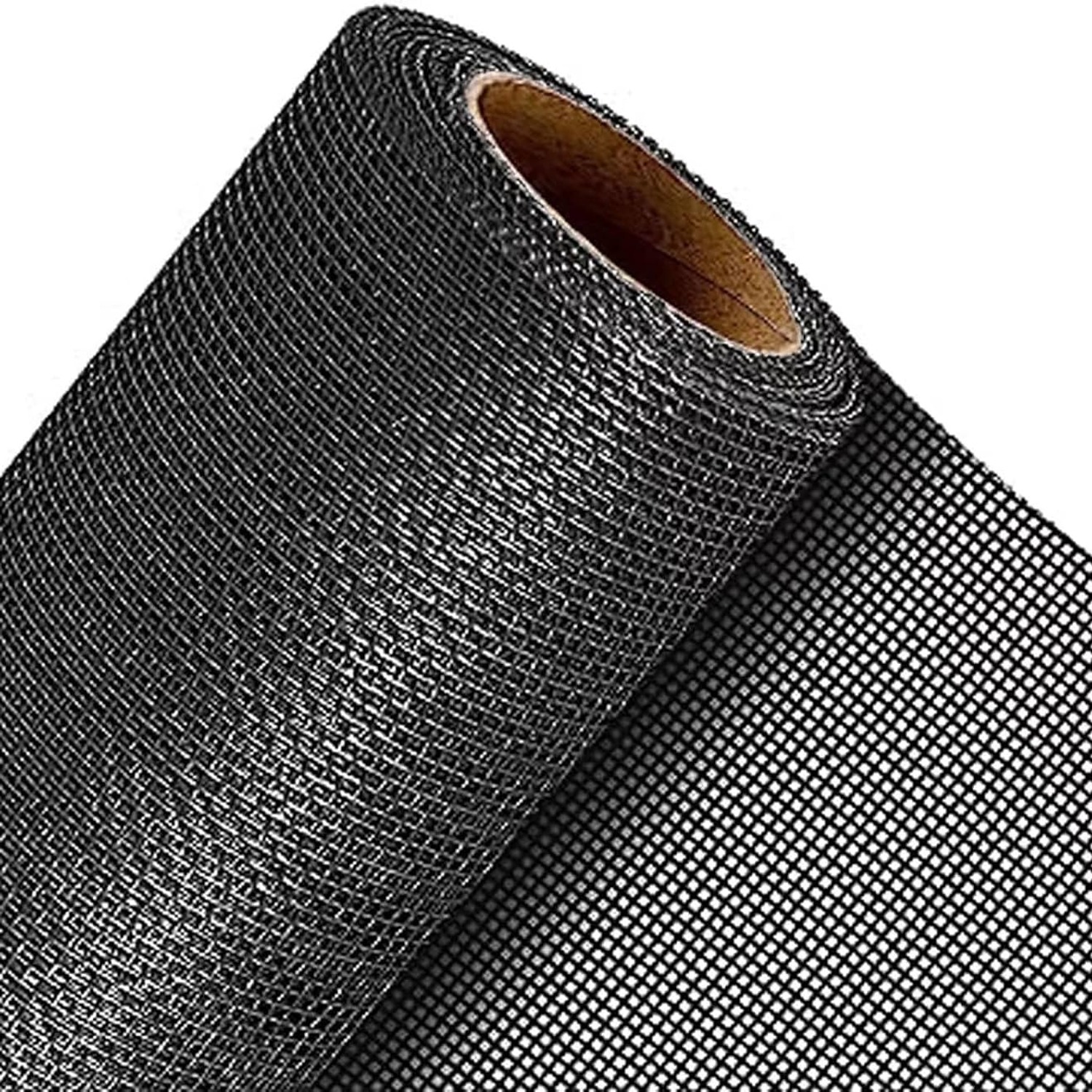
A pet proof screen mesh starts with polyester rather than fiberglass. Polyester yarns are tougher and have more stretch before they break, so a claw that catches tends to drag the yarn rather than cut it. Then a vinyl coating goes over the top. That coating does two useful things. It thickens each strand, and it locks the crossings of the weave so individual yarns cannot be pulled sideways out of position.
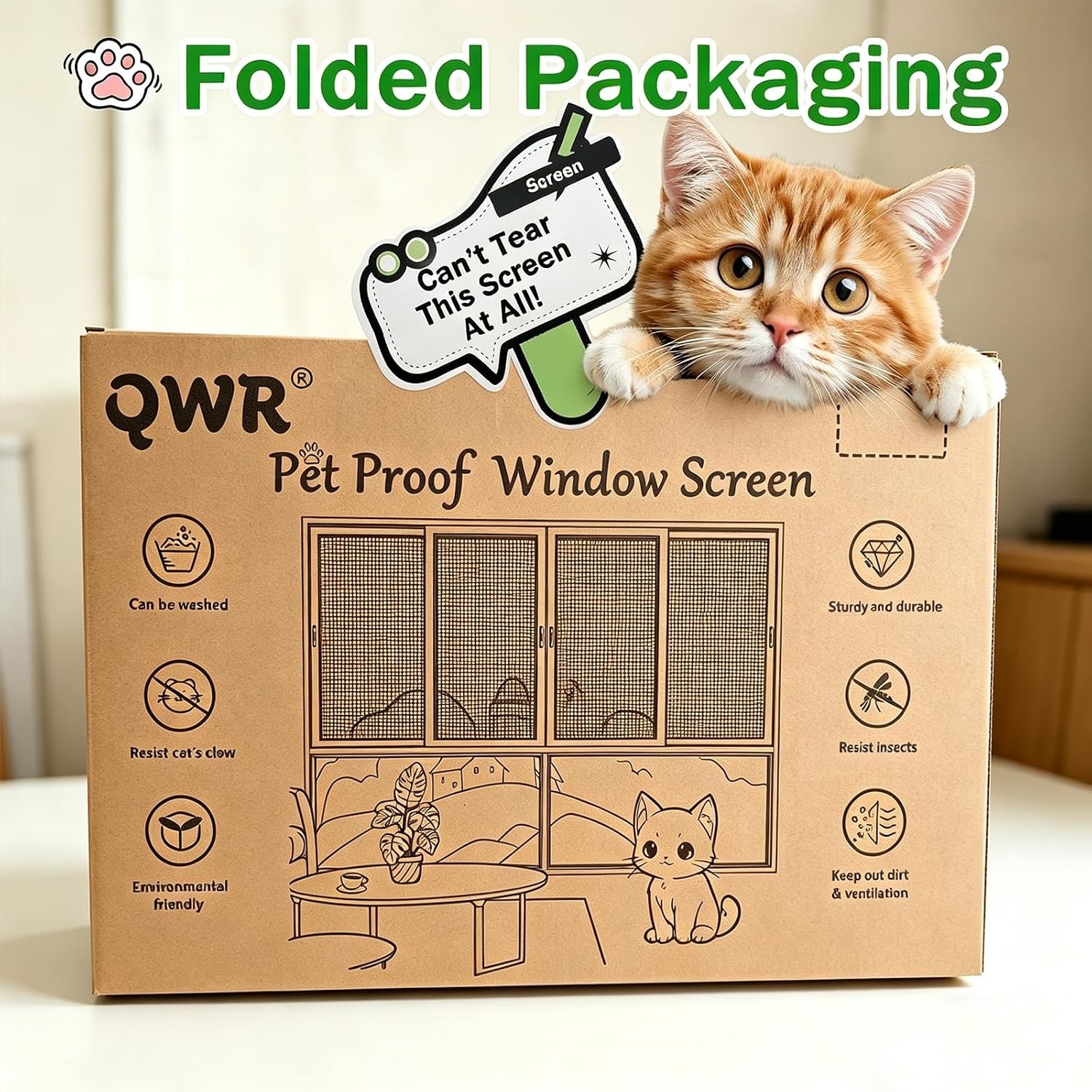
The result is a screen that a claw slides off instead of sinking into. That is the whole trick. Most screen damage does not come from brute force, it comes from a single sharp point finding a single thin strand. Take that away and the panel survives.
This particular mesh is black vinyl coated polyester at 39 x 118 inches. The black matters more than people expect. Light colored screening reflects daylight back at you and makes the mesh itself the thing your eye lands on. Black absorbs it, so you look through the screen rather than at it.
Working out how much you need
Measure the outside edges of the screen frame, not the glass or the opening. You want the overall height and width of the frame you will be re-screening, because the mesh has to reach past the spline channel on all four sides.
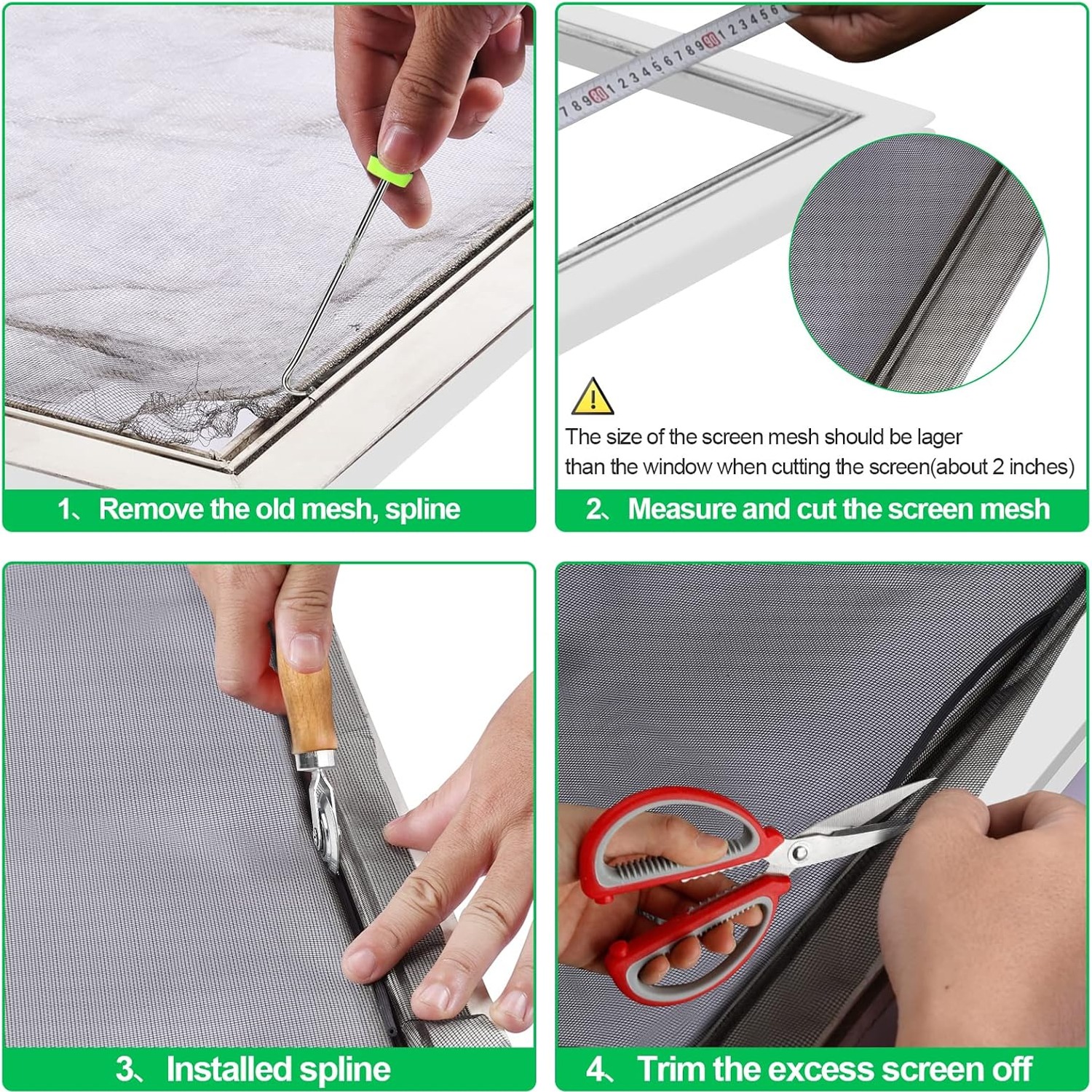
Add about two inches to each measurement. That overhang gives you something to hold while you roll the spline in, and it is trimmed off at the end. Without it you will be fighting the sheet the whole way around.
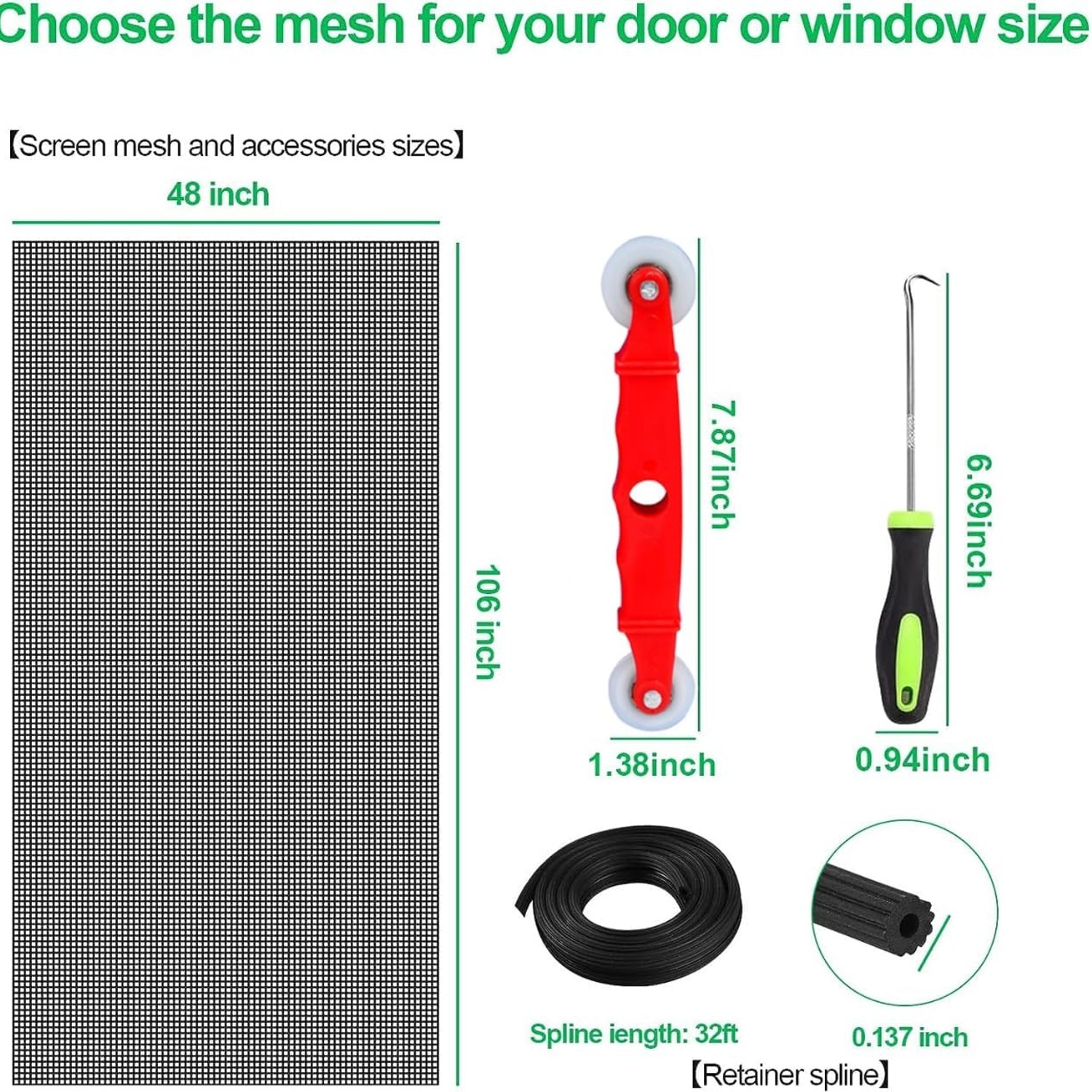
A sheet of 39 x 118 inches gives you roughly 32 square feet. In practice that is one tall screen door with trim left over, or four to six average window screens, or a couple of large patio panels. If you are doing a whole house, work out the total square footage before ordering so you are not short by one window.
One tip that saves material. Lay all your frames out on paper first and plan the cuts, the way you would with fabric. The 118 inch length is the generous dimension, so run your longest pieces down that direction and fit the smaller frames into what is left of the 39 inch width.
Who this suits
Households with dogs are the obvious case, especially where the dog uses the back door as its own entrance and leans on the screen to be let in. The lower third of a screen door takes almost all of the damage, and a tougher mesh lives there far longer.
Cat owners come second but complain louder, because cats do not need to be let in or out to ruin a screen. They will climb one for fun. Coated mesh takes the fun out of it fairly quickly because there is nothing to grip.
Then there are the places where wildlife is the issue. Porches, patio enclosures, screened verandas and anything near a bird feeder or a bin. Squirrels and raccoons go through standard screening in minutes and will keep returning to a spot they have already beaten. A heavier coated weave is a genuine deterrent.
Families with toddlers get the same benefit for different reasons. Small hands press against screens constantly, and a stretched sagging panel is both ugly and easy to push through.
Fitting it without drama
Re-screening is one of the easier home jobs, but there is an order to it. Work on a flat surface, a kitchen table or the floor with a blanket down. Do not try to do it with the frame hanging in the door.
Start by lifting the old spline out. A small flathead screwdriver or an awl under one end usually gets it moving, then it pulls out in a single length. Keep it if it is still soft and round. If it has gone hard and crumbly, replace it, because brittle spline will not hold new mesh.
Pull the old mesh off and clean the channel. Grit in the groove is the main reason a spline will not seat properly.
Lay the new sheet over the frame with the overhang even on all sides. Start on one long side. Press the mesh gently into the channel with the convex wheel of the roller, then run the concave wheel along to seat the spline. Do the opposite long side next, keeping light tension across the frame. Then the two short sides.
Do not pull it drum tight. A light aluminum frame will bow inward if you do, and the panel will not sit in the door track afterwards. Flat and lightly taut is correct. If you see small waves in the finished mesh, they usually settle once the frame is back in place.
Trim last. Run a fresh utility blade along the outside edge of the spline, angled slightly into the channel. A dull blade will drag the mesh instead of cutting it, so change the blade before you start rather than halfway through.
Looking after it
Coated mesh is low maintenance, which is most of the appeal. Twice a year is plenty for a proper clean on a door that sees daily use.
Brush the loose hair and dust off first with a soft brush or a vacuum brush attachment. Washing without that step just turns dust into mud and rubs grit into the weave. Then use warm water with a small amount of mild detergent on a soft cloth or sponge, work both sides, rinse, and leave it to dry.
Keep bleach, solvents and abrasive pads away from it. They attack the vinyl coating, and once the coating goes the polyester underneath is back to being ordinary screen. Skip the pressure washer too. It can stretch the weave and pop the mesh out of the spline channel.
While you are cleaning, run a finger around the spline line. If a section has lifted, press it back in with the roller before it works further loose.
The short version
If your screen door has a hole in it and the frame is still sound, you do not need a new door. You need better mesh and an hour of your time.
This one is black vinyl coated polyester at 39 x 118 inches, supplied with a tool kit, and it is built to take claws rather than surrender to them. Measure your frames, add two inches each way, plan your cuts, and work on a flat surface. The job is not difficult, and it is the kind of repair that stays fixed.