American Budget Screens
Company
Shop By Category
T&Cs
Shop Online
  • Clear materials and product specifications
  • Free tracked USA-wide delivery over $75
  • 14-day returns

Screen Patch Tape 14 Sheets | Window screen patch | screen repair kit

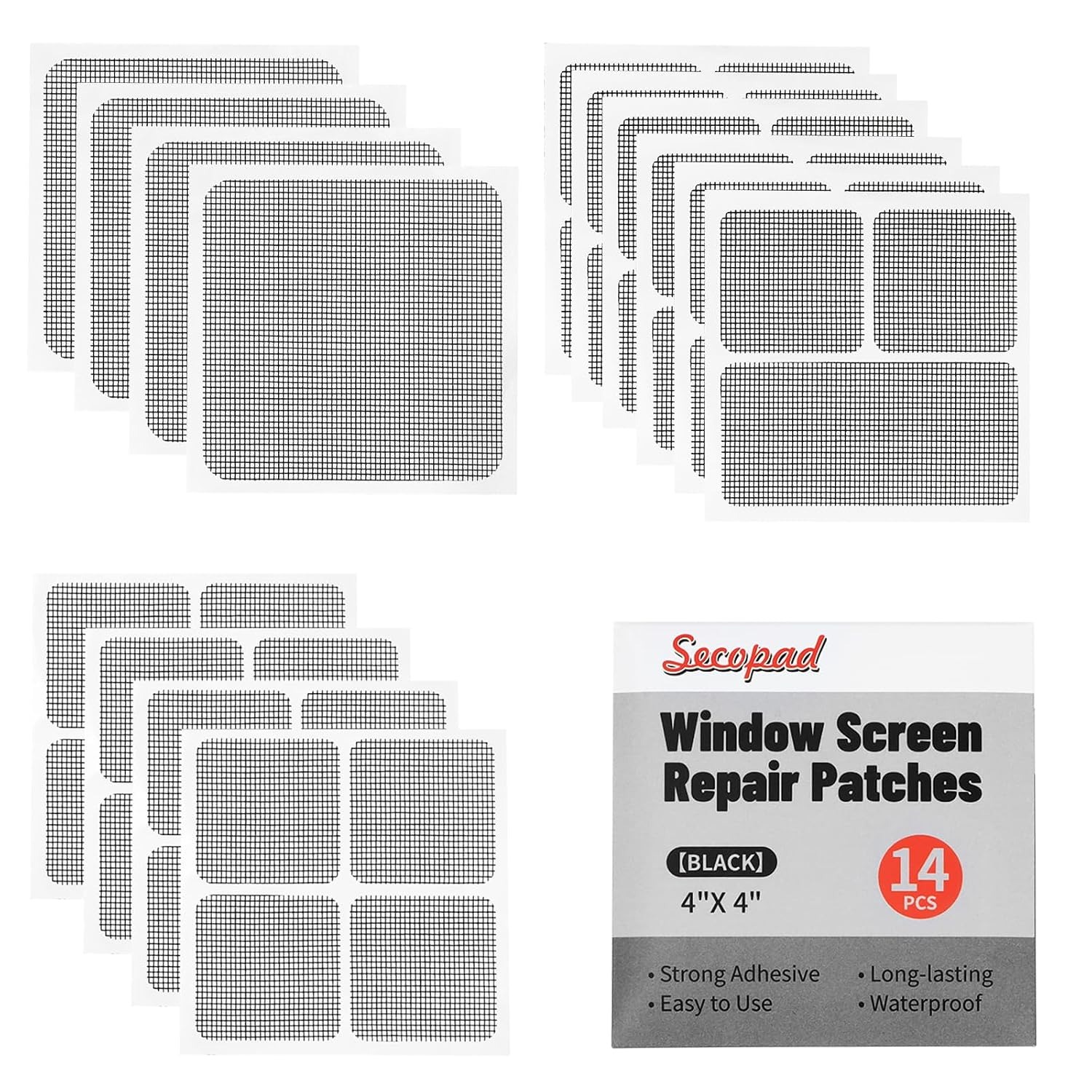
Screen Patch Tape, 14 Sheets

$13.99 $16.99 Save $3
  • Cut To Shape
  • Fiberglass Mesh
  • Weather Ready
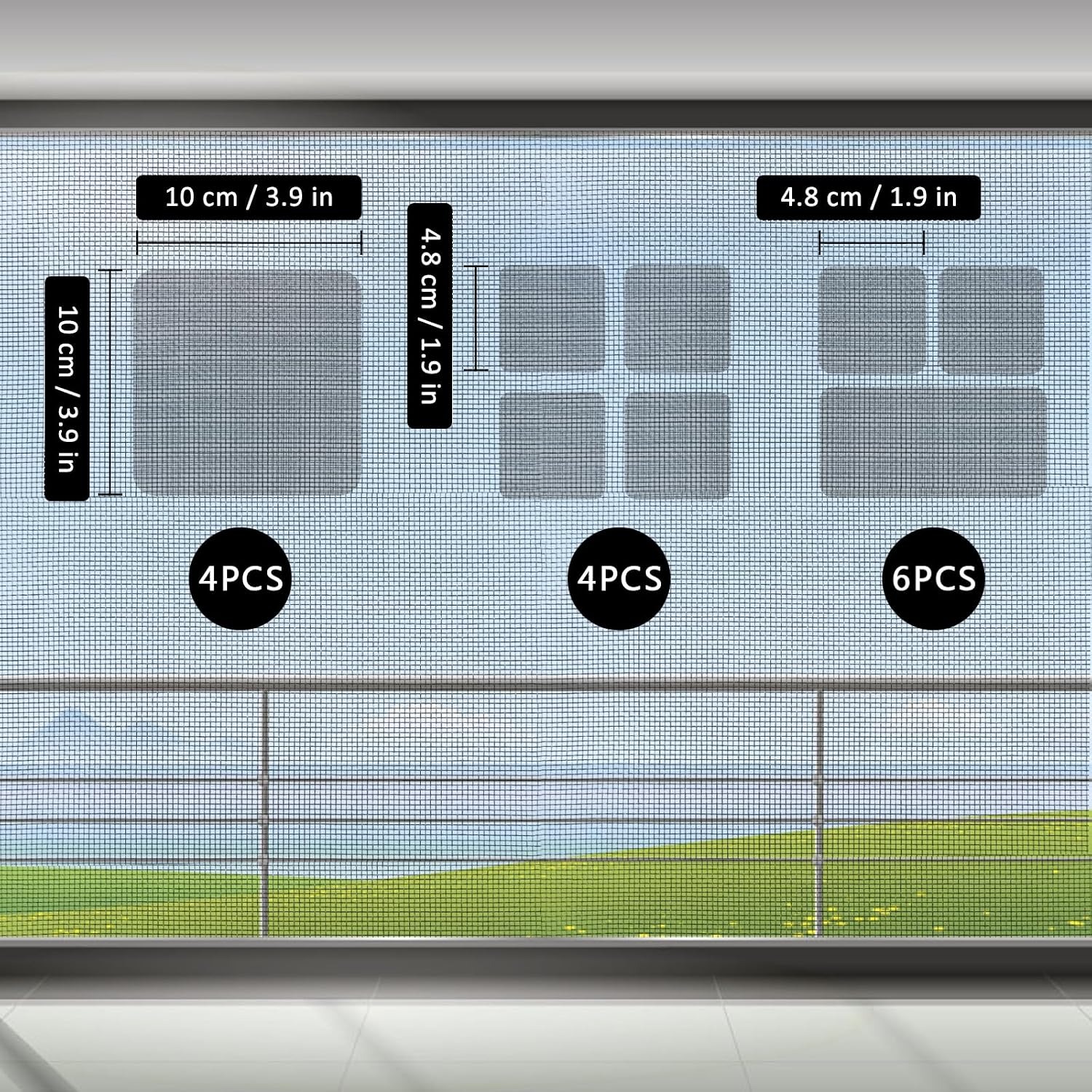
  • 14 Sheets, 3 Sizes

Price: $13.99 $16.99

  • Free tracked USA-wide delivery on orders $75+, otherwise a flat $9.95
  • Pay by card or PayPal, handled by the payment provider
  • 14 days to change your mind, plus your statutory rights
Product specifications
BrandSecopad
Model NumberSahsh-001
Manufacturer Part NumberSP-SRK-4X4-MSIZE-14P
Set NameRepair Tape Set
Included ComponentsScreen patches
Unit Count14 sheets
MaterialFiberglass
ColorBlack
FinishUnfinished
Mounting TypeWall mount
Item Dimensions4 x 4 x 0.3 in
Item Weight40 g
Temperature Range-4°F to 158°F
Weight40 g
Shipping & returns

Tracked delivery anywhere in the USA. It is free on orders of $75 or more, and a flat $9.95 below that.

If it is not right for you, send it back within 14 days of delivery in resaleable condition and we refund the price you paid, including standard delivery. That is a voluntary policy we offer on top of your legal rights. You cover the cost of returning it unless the item is faulty.

If it arrives faulty, damaged or not as described, we put it right at no cost to you under the consumer protection law of your state and the Federal Trade Commission Act, return postage included.

Shipping details · Refunds and returns

Cut To ShapeTrim any sheet with household scissors to match the tear.
Fiberglass MeshWoven fiberglass patches sized to blend with standard screens.
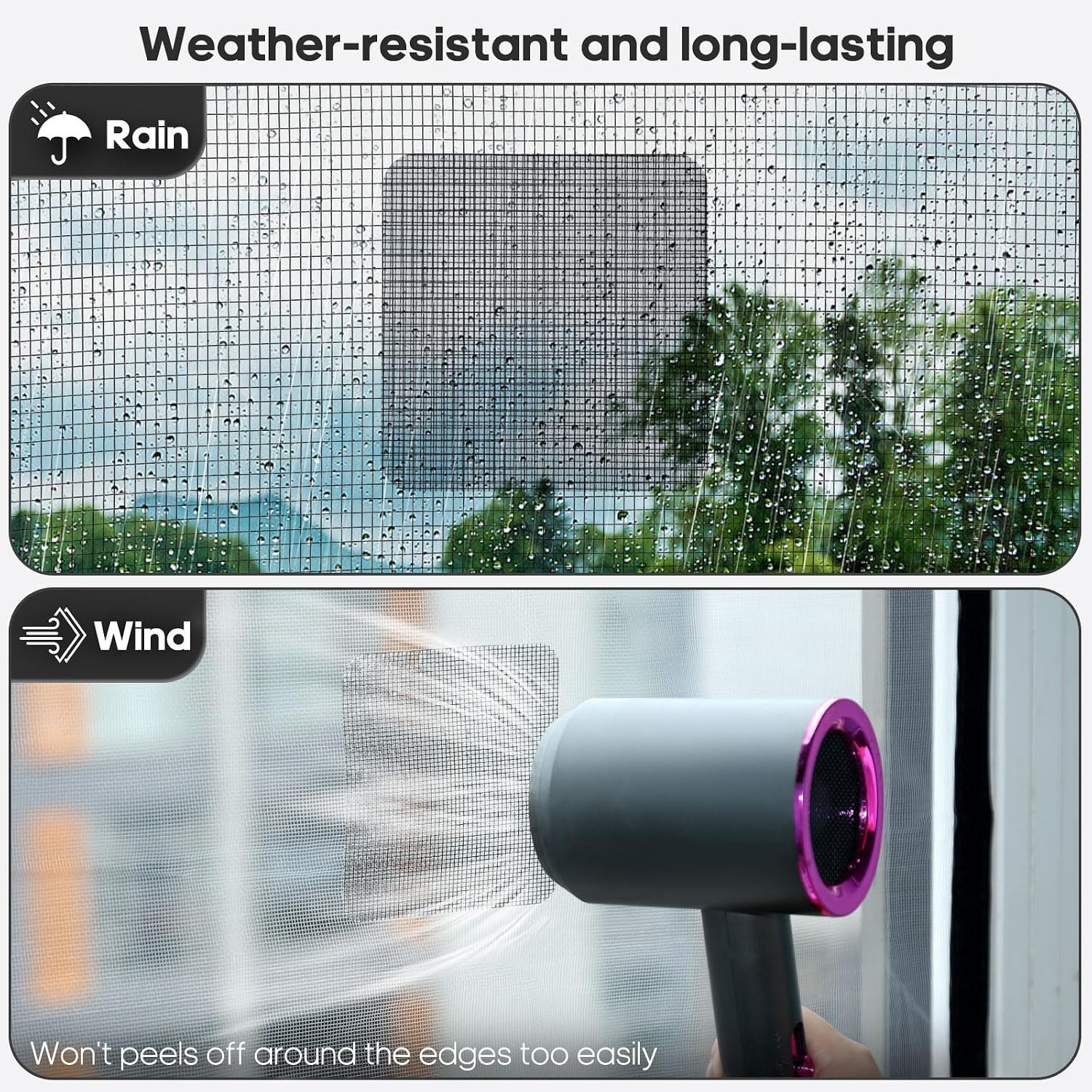
Weather ReadyWaterproof and rated for use from -4°F to 158°F.
14 Sheets, 3 SizesEnough patches to cover several screens around the house.

Screen repair kit'breadcrumbCurrent: 'Screen Patch Tape, 14 Sheets: screen repair kit: fix torn window screens in seconds with screen patch tape that sticks where you put it and stays put.

A 14 sheet pack of self-adhesive fiberglass patches in three sizes, cut to shape with scissors, rated for indoor and outdoor use between -4°F and 158°F.

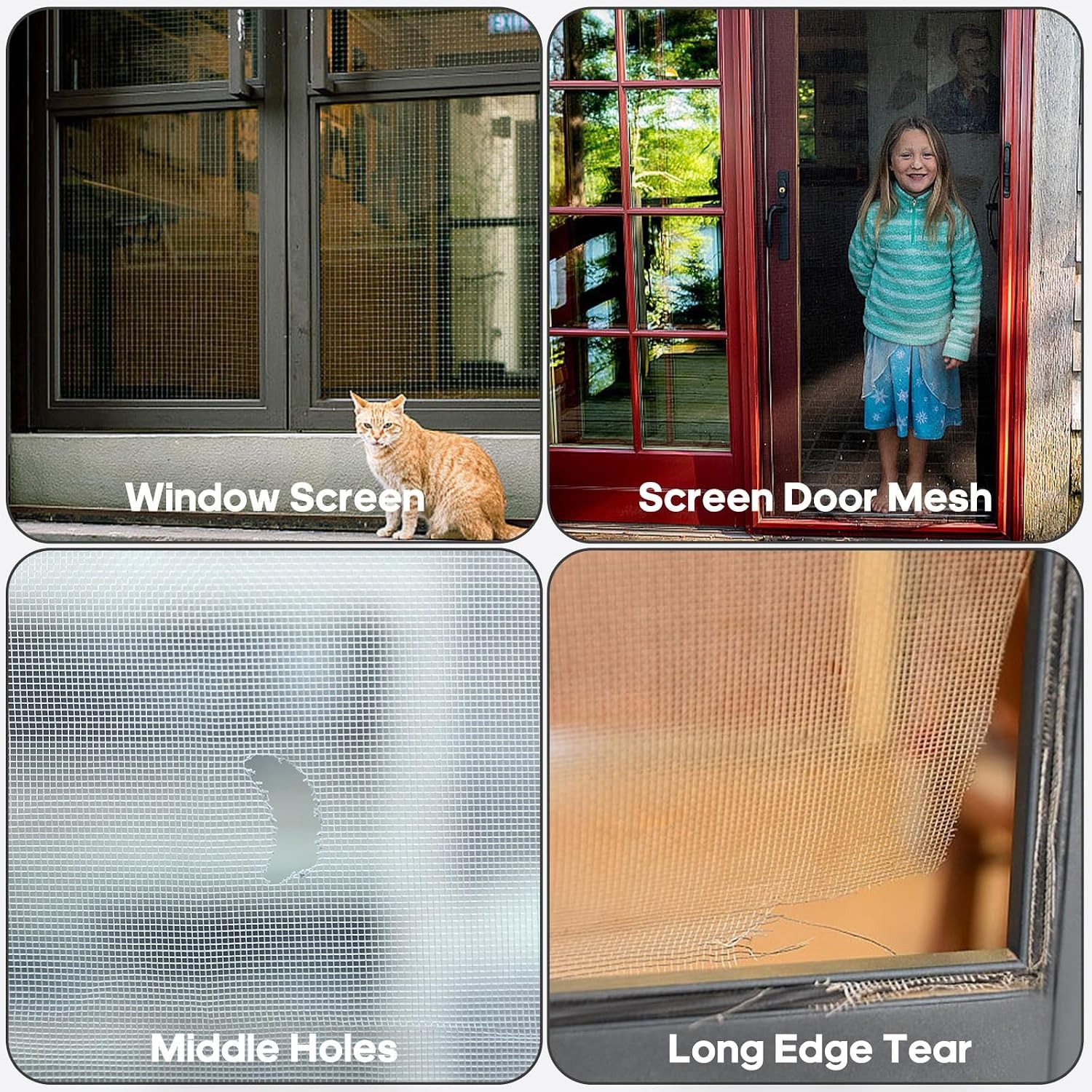
A 14 sheet pack of self-adhesive fiberglass patches that covers tears and holes in window screens, screen doors and other mesh.

Three patch sizes are included, so you can grab the closest match or cut one down with scissors for an odd-shaped rip.

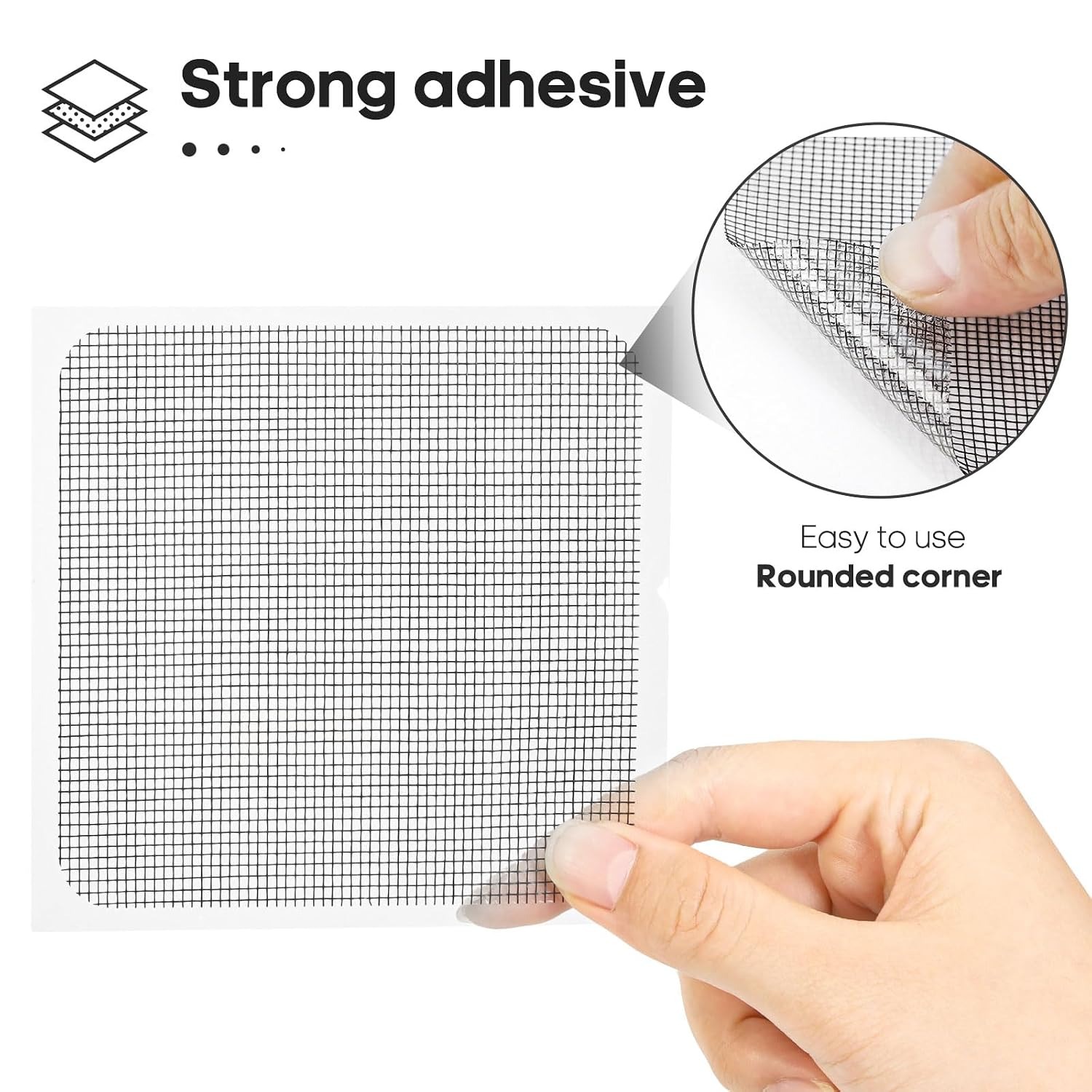
No tools, no frame removal and no spline work, just peel the liner, press the patch over the hole and smooth the edges.

The patches are waterproof and rated for use between -4°F and 158°F, which covers most indoor and outdoor jobs.

One pack handles several repairs around the house for far less than replacing a whole panel of mesh.

Screen Patch Tape, 14 Sheets

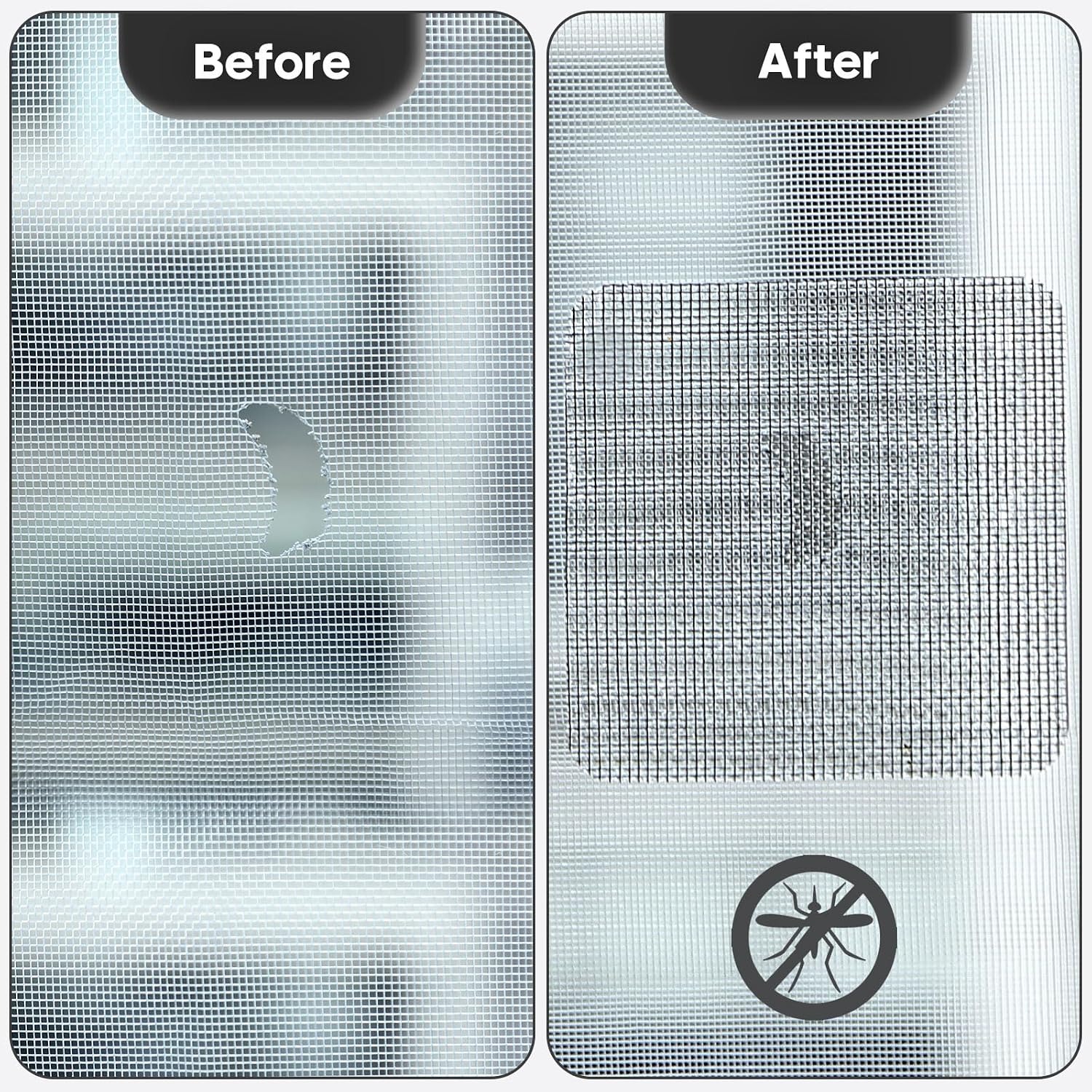
A split window screen is one of those jobs that sits on the list for months. The hole is small, the frame is awkward to pull out, and re-meshing a panel means buying a roll, a spline tool and a free afternoon. This screen patch tape skips all of that. Each sheet is a woven fiberglass patch with adhesive already on the back, so the repair takes seconds rather than an afternoon.

Screen Patch Tape, 14 Sheets

The pack contains 14 sheets across three sizes. Smaller patches handle the pinholes and tiny snags that let mosquitoes through, while larger sheets cover the longer tears that come from a cat, a stray elbow or a branch rubbing against an outdoor screen. If none of the sizes is an exact match, cut one with ordinary household scissors. Fiberglass mesh cuts cleanly and does not fray the way some plastic meshes do.

Screen Patch Tape, 14 Sheets

Adhesion is the part that matters most with any screen repair kit, and it depends almost entirely on prep. Wipe the area around the tear and let it dry completely. Dust, cobwebs and old insect residue are what cause patches to lift later. Peel the release liner, line the patch up over the hole with a good margin on all sides, then press firmly from the center outward so no air pocket sits under the edge.

Screen Patch Tape, 14 Sheets

The patches are waterproof and the manufacturer rates them for normal use between -4°F and 158°F, so they suit outdoor screen doors, pool enclosures, caravan windows and tent mesh as well as indoor windows. They are black and not invisible. Up close you will see the patch sitting over the mesh, which is the trade-off for a repair that takes under a minute and costs a fraction of a new panel.

Screen Patch Tape, 14 Sheets

Worth knowing before you buy. These patches are not ventilated in the way a bare mesh is, and they are not see-through, so a very large repair in a prominent window will be visible from inside and out. For a small hole in an upstairs window, a back door, a shed or anything you look past rather than at, most people never notice them again. Keep the leftovers in the drawer, because once you have fixed one screen you tend to spot two more.

Not sure yet? That is fine.

A screen or fitting has to suit your window or door, and you cannot always judge the fit from a photograph. If it is not right for you, send it back within 14 days of delivery in resaleable condition and we refund the price you paid, including standard delivery. That is a voluntary policy we offer on top of your legal rights.

If it turns up faulty, damaged or not as described, that is on us. The consumer protection law of your state covers you, and we pay the return postage. Read the full detail on our refunds and returns page, or ask us anything before you order.

Frequently Asked Questions

What exactly comes in the pack?

You get 14 self-adhesive fiberglass patch sheets in three different sizes. There are no tools included because none are needed beyond a pair of scissors if you want to trim a patch. The sheets ship flat with the release liner still attached.

How does screen patch tape actually work?

Each sheet is woven fiberglass mesh with a strong adhesive backing. You clean the screen, peel off the liner, and press the patch over the hole so it overlaps the undamaged mesh on every side. The adhesive grips the surrounding mesh strands and holds the patch in place.

Do I need to take the screen out of the frame?

No. That is the main reason people reach for a patch instead of re-meshing. You can apply it with the screen still in the window or door, as long as you can reach both the tear and a clean area around it.

How long does the repair take?

For a small hole, under a minute once the surface is clean and dry. Most of the time goes into wiping the screen and letting it dry. The patch itself goes on in seconds.

Is this a permanent fix or a temporary one?

It depends on the location and how well you prep. On a sheltered indoor window with a clean surface, a patch can last for years. On a west-facing outdoor screen with constant sun and rain, treat it as a long-term temporary repair and keep a spare sheet handy.

What size are the patches?

The pack includes three sizes across the 14 sheets. The packaged item measures 4 x 4 x 0.3 inches, so the largest sheets are around that footprint. Exact individual sheet measurements are not specified in this record.

Can I cut the patches smaller?

Yes, and most people do. Ordinary household scissors cut the fiberglass mesh cleanly. Rounding the corners slightly helps, because square corners are the first thing to catch and lift.

What is the patch made from?

Fiberglass mesh with a specialised adhesive backing. Fiberglass is the same material used in most standard insect screens, which is why the patch blends reasonably well with an existing panel.

What color are the patches?

The listed color is black, which matches the most common window screen mesh. Against a gray or charcoal screen the difference is slight. Against white or very light mesh the patch will be visible.

Is the patch invisible once applied?

No. This is worth being clear about. The patch is a solid piece of mesh sitting over your screen, so you will see it if you look at it directly. From a few steps back on most windows it reads as a small dark square.

Does air still pass through the patch?

The patch is not ventilated in the way bare mesh is, so airflow through that small area is reduced. On a typical repair covering a few square inches of a full screen, you will not notice any change in how the room breathes.

Will insects still get through?

Not through a correctly applied patch. The point is to seal the gap, so as long as the patch overlaps undamaged mesh on all sides and the edges are pressed down, mosquitoes and flies cannot find a way in.

What temperature range can it handle?

The manufacturer rates it for normal use between -4°F and 158°F. That covers cold winter mornings and hot summer afternoons on a sun-facing screen in most climates.

Is it waterproof?

Yes, the patches are waterproof, which is why they suit outdoor screen doors, caravan windows and pool enclosures. Rain running down the screen will not lift a properly applied patch.

Can I use it outdoors?

Yes. This is one of the better options for a best outdoor screen repair tape job because it handles water and a wide temperature range. Prep matters more outdoors, since outside screens collect dust and pollen.

Will it work on a pool screen enclosure?

It is suitable for pool screen mesh. Larger enclosure panels often get bigger tears, so you may need to overlap two sheets or cut from the largest size. Clean off any chlorine residue and dry the area first.

Can I patch a tent or camping mesh with it?

Yes, tent mesh repair is a common use. Apply the patch on the inside face if the tent is likely to rub against gear, and press the edges down well. Carry a spare sheet in the tent bag for trips.

Does it work on metal screens as well as fiberglass?

The adhesive sticks to most screen surfaces including aluminum mesh, provided the surface is clean and free of oxidation. On old, chalky aluminum, wipe it back first or the adhesive will only grab the loose surface layer.

What about pet screens or heavy-duty mesh?

It will stick, but a heavy pet screen that has been torn by a determined dog is under a lot of tension. A patch handles the hole, though if the pet keeps at the same spot you will eventually need a tougher panel.

How do I prepare the screen before applying?

Brush or vacuum the dust off, then wipe the area with a dry or lightly damp cloth. If the screen is greasy, a little mild detergent helps, but rinse and dry it fully. Any residual moisture or dust is the usual reason a patch lifts later.

Which side goes against the screen?

The side under the release liner. Peel the liner off and place that face against the mesh. Applying it the wrong way round is the most common mistake and the patch will barely hold.

Can I apply a patch to both sides of the screen?

You can, and for a larger tear it adds strength. Apply the first patch, press it flat, then apply the second on the opposite face so the two sandwich the damaged mesh.

How do I remove a patch later?

Peel it back slowly from one corner. Warming it gently with a hairdryer softens the adhesive and makes removal cleaner. Some adhesive residue may remain, which usually comes off with a mild solvent and a soft cloth.

Can I paint over the patch?

We would not recommend it. Paint can clog the surrounding mesh and does not bond reliably to the adhesive edge. The black finish is already a reasonable match for standard screens.

How should I store the unused sheets?

Keep them flat in a cool, dry drawer with the liner on. Heat and humidity shorten the shelf life of any adhesive, and a curled sheet is harder to apply neatly.

How many repairs will one pack cover?

With 14 sheets across three sizes, most households fix every screen they own and still have spares. For small pinholes you can cut one sheet into several patches, which stretches the pack further.

Is this cheaper than replacing the whole screen?

Considerably. A roll of mesh, a spline tool and new spline costs more than this pack, and that is before the time spent restretching the panel. For small damage, a best DIY screen repair kit like this is the sensible first step.

How does it ship and how long does delivery take?

The item is light at 40 g and ships flat in protective packaging. Delivery timing depends on your country storefront and is shown at checkout before you confirm the order.

Does it make a sensible small gift?

It does, particularly for a new homeowner, a renter or anyone with a caravan or tent. It is the kind of practical item people never buy for themselves but use the moment a screen tears.

What if it is not right for my screen?

If the product arrives damaged or is not what you expected, contact us and we will sort it out under the returns policy shown on your storefront. Please keep the unused sheets with the liner intact. If a patch does not stick, the cause is almost always a dusty or damp surface, so a quick clean and a second attempt often fixes it before you need to return anything.

How To Repair A Torn Window screen Without Replacing The Whole Panel

6 min read American Budget Screens

The hole that lets everything in

A window screen does one job. The moment there is a tear in it, the job stops. One small split near the latch is enough to let a steady trickle of mosquitoes into a bedroom all summer, and the frustrating part is that the mesh itself is fine. Ninety-nine percent of the panel is doing exactly what it should. A single thumb-sized hole has made it useless.

The standard advice is to re-mesh the frame. That means popping the screen out, prising the spline from the channel, cutting a new sheet of mesh, rolling the spline back in without wrinkles, and trimming the excess. It is not hard work, but it needs a spline roller, a roll of mesh you will mostly throw away, and an hour you probably do not have on a Tuesday night when you notice the hole.

Screen patch tape exists for that gap. It is a piece of mesh with adhesive on the back. You put it over the hole. That is the whole method, and for the vast majority of screen damage it is completely adequate.

What is actually in the pack

This pack has 14 fiberglass patch sheets in three sizes. Fiberglass matters here because it is the same family of material most insect screens are made from, so the patch sits in the plane of the screen rather than bulging off it like a plastic sticker would. It is woven, it flexes a little, and it cuts cleanly with scissors.

The adhesive is on the back under a release liner. You peel the liner, and that exposed face goes against the screen. This sounds obvious, but applying a patch upside down is far and away the most common mistake people make. If a patch feels barely tacky, check which side you peeled.

The sheets are black and rated waterproof, with a usable temperature range of -4°F to 158°F. Packaged, the item measures 4 x 4 x 0.3 inches and weighs 40 g, so the largest patches are around four inches across.

How to do the repair properly

Adhesion is almost entirely a prep question. The patch has strong glue, but glue can only stick to what it touches. If it touches a film of dust, pollen, cooking grease or old cobweb, it sticks to that film, and that film eventually lets go.

Start by brushing or vacuuming the area around the tear. Then wipe it with a dry cloth, or a lightly damp one if the screen is genuinely grubby. If there is kitchen grease involved, use a drop of dish soap, rinse, and then wait. The screen must be completely dry before the patch goes near it. On a warm day that is a few minutes. On a damp morning, give it longer or bring the panel inside.

Next, pick your size. Hold a sheet over the hole and check that you have a decent overlap on every side, ideally half an inch or more of healthy mesh under the patch. Overlap is what carries the load. A patch that only just covers the hole has nothing to grip.

If no size fits neatly, cut one. Scissors work fine on fiberglass. Round the corners slightly while you are at it, because sharp corners are the first thing a sleeve or a passing branch catches on, and a lifted corner is how a patch starts to fail.

Then peel the liner, line the patch up, and press. Work from the center of the patch outwards so you push any air toward the edges rather than trapping it in a pocket. Finish by running a thumbnail firmly around the perimeter. That edge seal is what makes a repair last.

For a tear longer than a couple of inches, or anywhere the mesh is under tension, consider patching both faces. One patch inside, one outside, pressed together through the hole. It is twice the material but it is a notably stronger repair.

Where these patches work well

Indoor window screens are the easy case. Low wind, no rain, moderate temperature, and nobody touching them. A patch applied properly on an indoor screen can outlast the screen.

Outdoor screen doors are the harder case and the one people care about most, because door screens take the most abuse. Shoes, dogs, grocery bags and the constant swing of the door all work against a repair. These patches handle it, but prep is more important and you should expect to check the edges occasionally.

Pool enclosures, caravan windows, tents and camping mesh all fall in between. The waterproof rating and the temperature range are what make these usable outdoors. A patch on a tent panel is one of the better uses, honestly, because tent mesh is thin, tears easily, and is miserable to sew.

Aluminum mesh works too, as long as the metal is clean. Old aluminum screens develop a chalky oxide layer, and adhesive sticking to chalk is adhesive that will peel. Wipe it back first.

The honest limitations

Two things are worth saying plainly before you buy.

First, the patch is not invisible. It is a solid black square of mesh over your screen. From across the room or from the street it reads as a small shadow. From two feet away in good light you can see exactly what it is. If the damage is in a large feature window that you look at every day, you may be happier re-meshing the panel.

Second, the patch is not ventilated like open mesh. Over a few square inches of a full-size screen this makes no practical difference to airflow in a room. Over a large area it would. If you are trying to cover a third of a panel with overlapping patches, you have crossed the line where replacement makes more sense.

There is also a size limit in practice. A rip running most of the width of a door is a structural problem with the mesh, not a hole, and patching it just moves the stress to the next weak point.

Keeping the repair alive

Once a patch is on, leave it alone for a day. Do not flex the mesh hard, do not wash the screen, do not pick at the edge to see if it is stuck. The adhesive keeps building grip for the first several hours.

After that, clean the screen normally but gently. Wipe rather than scrub, and work across the patch rather than at its edge. Avoid pressure washers anywhere near a patched screen, since a jet of water under an edge will lift it in seconds.

Store the leftover sheets flat, in a cool dry drawer, liner still on. Adhesive does not love heat or humidity, so a kitchen drawer beats the garage shelf in summer. Having spares matters more than you would think. Once you have fixed one screen, you notice the other holes you had trained yourself to ignore.

The short version

If you have a tear in a window screen, this is the fast answer. Clean the area, dry it fully, pick or cut a patch with good overlap, peel the liner, and press from the middle out. The job takes a minute. The pack gives you 14 sheets in three sizes, the patches are fiberglass and waterproof, and they work indoors and out between -4°F and 158°F.

They are black and you will be able to see them. In exchange, you spend a minute instead of an hour and a few dollars instead of the price of a mesh roll and a spline tool. For a small hole in a screen you look through rather than at, that is a trade most people are glad to make.

Browse the shop

Ready to close that hole?

Grab a 14 sheet pack, keep it in the drawer, and fix screens the day they tear instead of next spring.

Ask us a question

Page summary

Screen Patch Tape, 14 Sheets is a self-adhesive screen repair kit from Secopad, model Sahsh-001, part number SP-SRK-4X4-MSIZE-14P. The pack contains 14 fiberglass mesh patches in three sizes, supplied in black with an unfinished surface. Patches are cut to shape with scissors and pressed over tears or holes in window screens, screen doors, tents, pool screens and similar mesh, with no tools or frame removal needed. The product is waterproof and rated for use between -4°F and 158°F, indoors or outdoors. Packaged item dimensions are 4 x 4 x 0.3 inches with an item weight of 40 g. The patches are not invisible and not ventilated. Color of individual sheets beyond black, country of origin and GTIN are not specified in this record.