

The complete guide
Garage Door Screens: How to Choose, Fit and Live With One
The problem with a big open door
A garage is the most flexible space most homes have. It becomes a workshop, a gym, a place to sand a chair, a spot to sit with a drink when the weather turns nice. The trouble starts the moment you open the door.
Leave it shut and the air goes stale. Heat builds under the roof, paint fumes hang around, and if you are lifting weights or sawing timber, you feel it within ten minutes. Open it and you get the breeze you wanted along with every mosquito, fly, wasp and moth in the neighbourhood. At dusk, with a light on, the garage turns into an insect magnet.
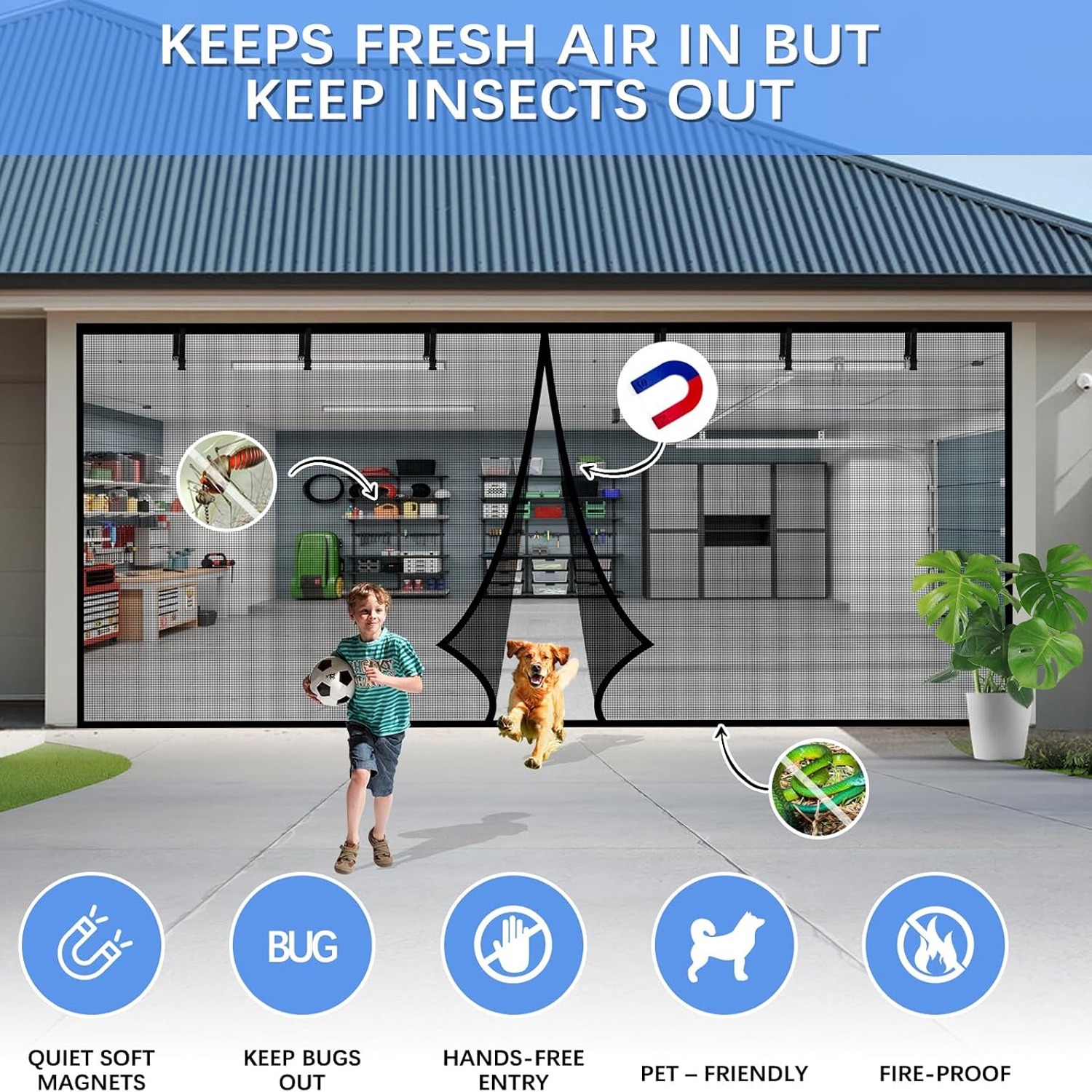
A garage door screen sits in the middle of those two options. It is a mesh panel across the opening that lets air and light pass while keeping flying insects out. You get the open-door feeling without the bugs, and you can still walk in and out freely.
How a magnetic garage screen works
The design is simple, which is why it works. Two mesh halves hang from the top of the opening and meet in the center. Magnets are sewn into that center seam, spaced closely enough that the two edges pull together as soon as you release them.
On this panel there are forty magnets down the seam. Spacing matters more than people expect. Too few magnets and the middle gaps open when the wind pushes against the mesh, which defeats the whole point. Close spacing means the seam closes along its full height rather than just at a few points.
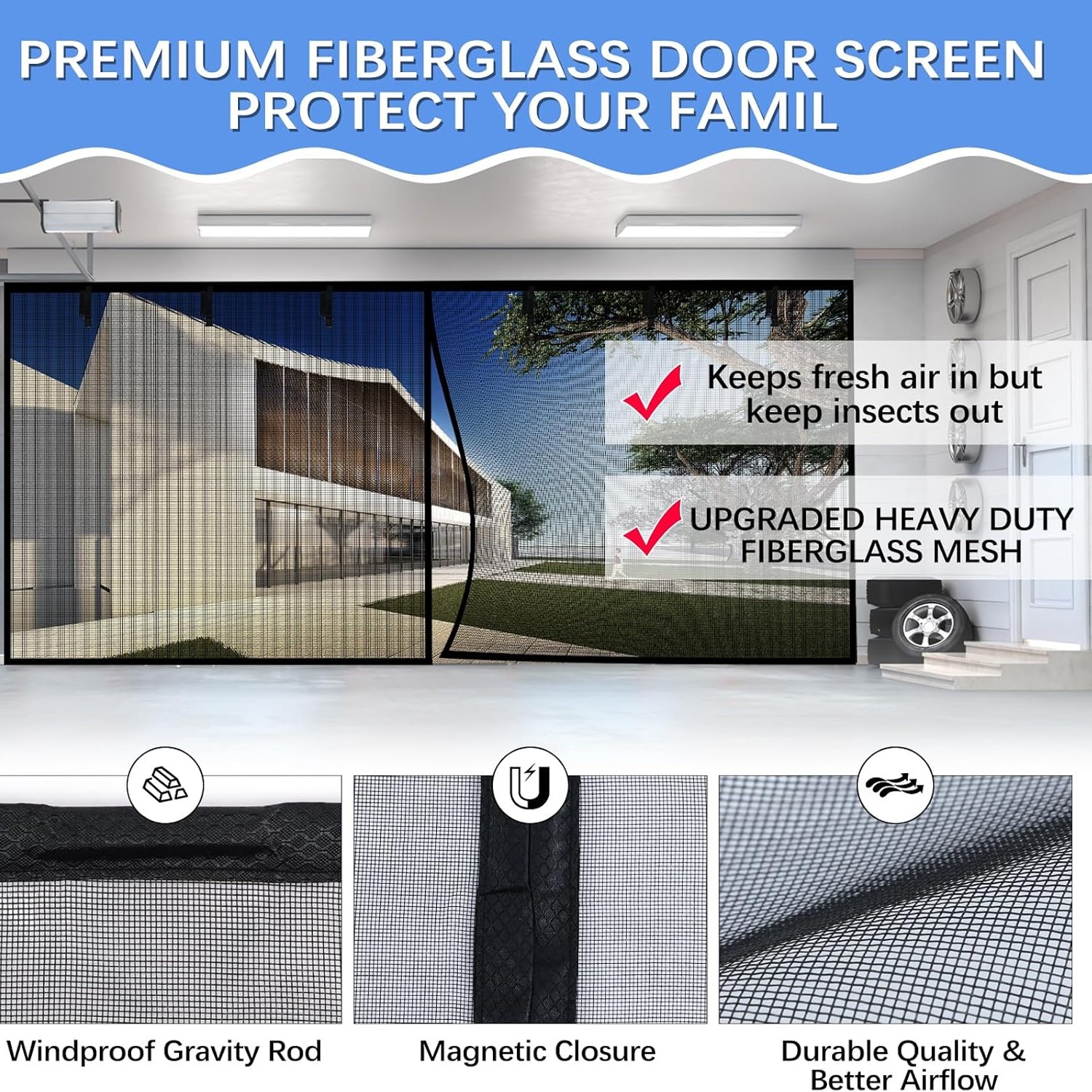
The second part of the design is weight. Sixteen gravity rods sit in the bottom hem. A tall sheet of mesh with nothing holding it down behaves like a sail, lifting and flapping at the slightest breeze. The rods keep the hem on the floor, help the halves hang straight and keep the magnets lined up with each other.
The mesh itself is fiberglass rather than thin polyester. Fiberglass holds its shape, resists stretching, and copes better with sun, damp and wind over a season outdoors. It is the standard choice for insect screening for good reason.
Who it suits
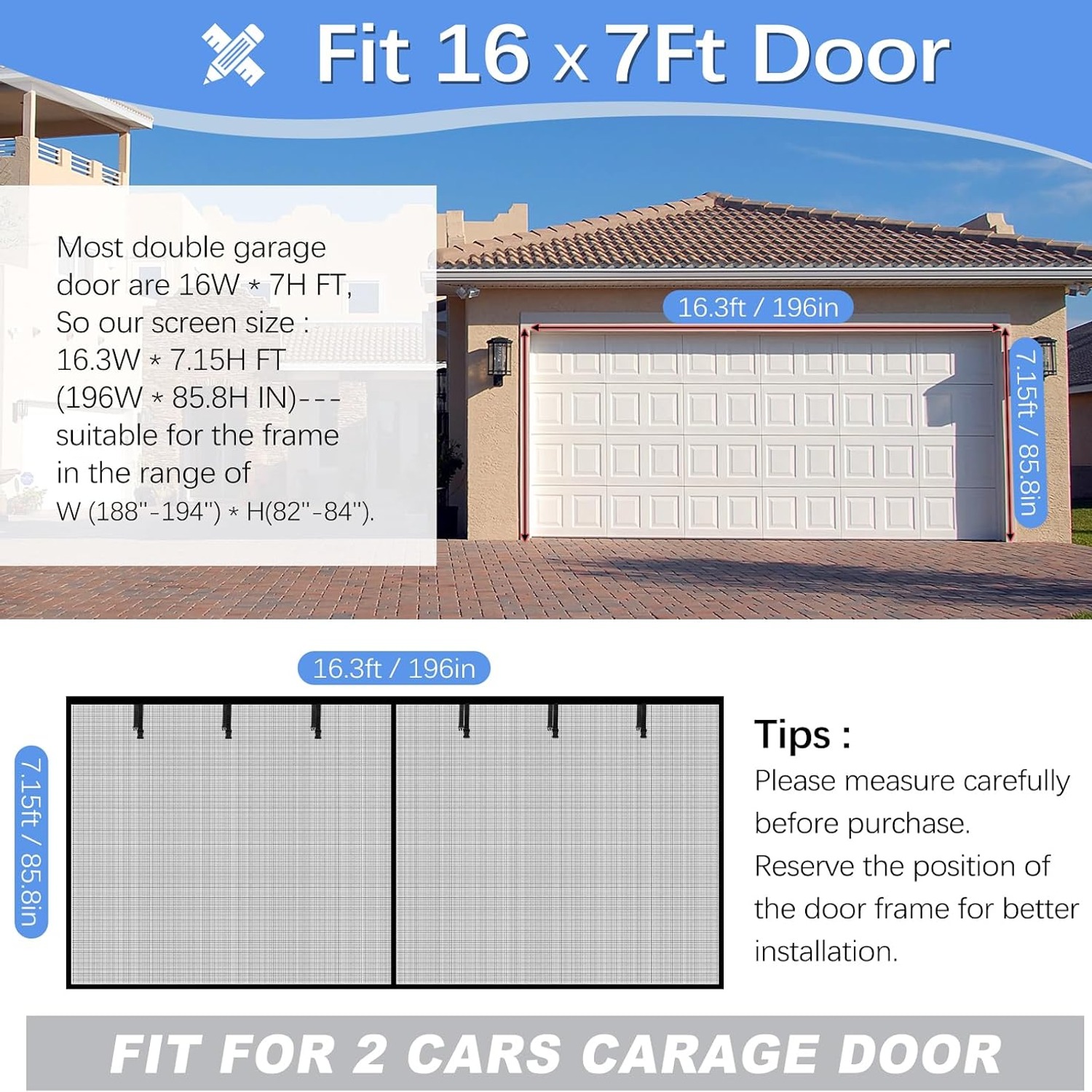
This 16 x 7 ft panel is built for a standard two-car garage, covering openings from 188 to 192 inches wide and 82 to 84 inches high. If that is your door, it is a straight fit.
Beyond garages, it works anywhere you have a wide opening and an insect problem. Wide back patios, covered balconies, outdoor studios, garden rooms, and runs of floor-to-ceiling windows all take the same treatment. The only requirements are an opening close to this size and a flat surface around it for the tape.
It is popular with people who have turned the garage into something else. Home gym users want air during a session. Woodworkers want ventilation while finishing. Families use the garage as a shaded play space on hot days. In all three cases the door needs to be open and the bugs need to stay out.
Who it does not suit: anyone with a single-car garage, where the panel will be too wide to hang neatly, and anyone who needs to drive through the screen. You roll it aside for the car, every time.
How to choose a garage screen
Measure before anything else. Measure the opening width and height, then measure the flat frame area around it. You need surface to stick the hook-and-loop tape to, and you want the panel to overlap the opening rather than finish exactly at the edge. A screen that is slightly generous seals well. One that is a touch short leaves gaps at the corners, and gaps are where insects get in.
Check the closure. The number and spacing of magnets tells you how well the center seam will behave. Also look for weighting at the bottom. A screen with magnets but no bottom weight will flap and gap, and you will end up pegging it down yourself.
Look at the mesh. Fiberglass is tougher than cheap nylon netting and keeps its weave. Hold any screen up to the light and you want to see an even grid, not stretched patches.
Think about how it mounts. Hook-and-loop tape is the common choice because it needs no drilling and lets you take the screen down in seconds. Push pins are useful on timber frames for extra grip. If your frame is rough brick or crumbling paint, plan to fix a thin timber batten first and tape to that.
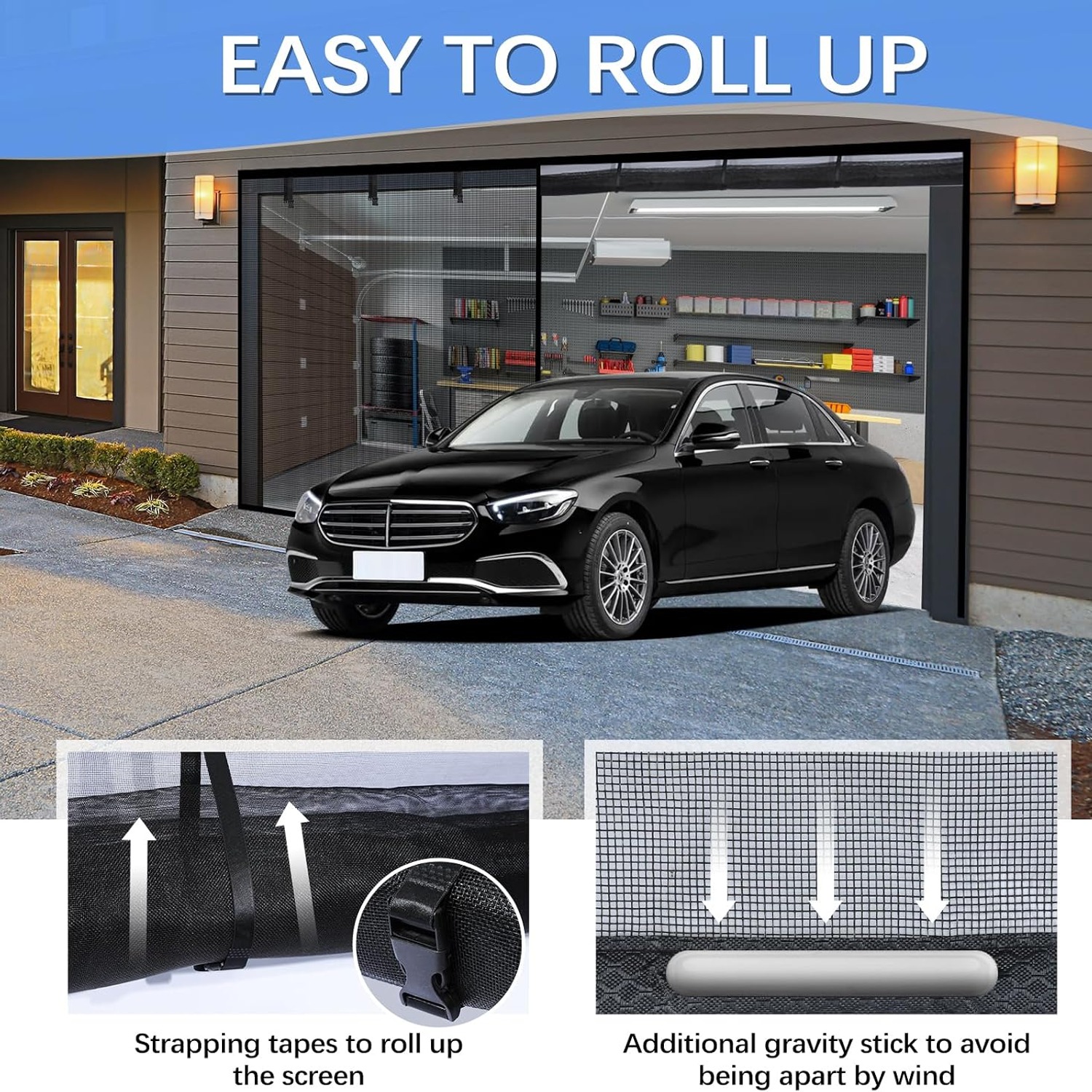
Decide whether you want it removable. A retractable garage screen that rolls up and stores is far more practical than a fixed system if you use the garage for the car as well as for other things.
Fitting it properly
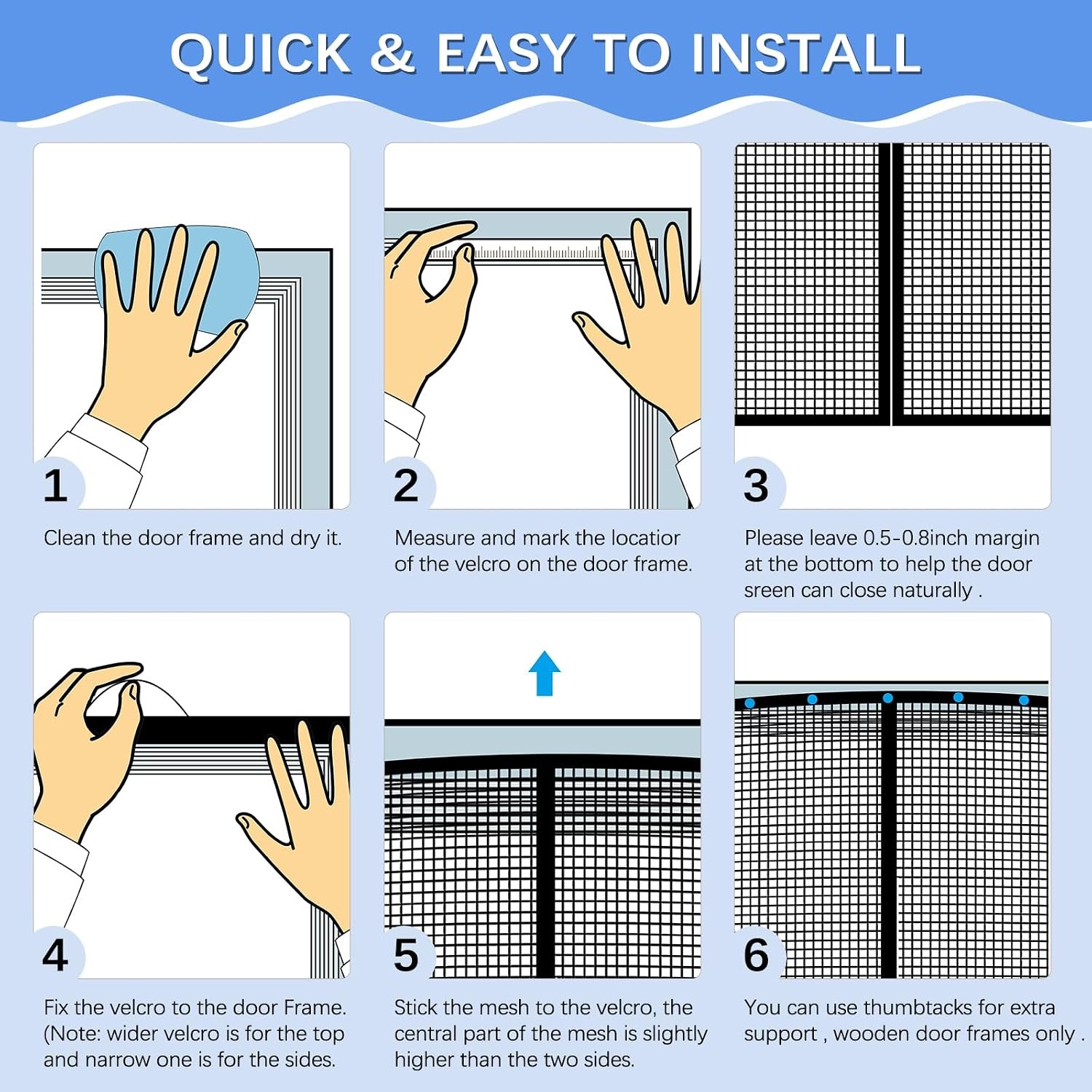
Pick a dry day with little wind. Wipe the frame down with a degreasing cleaner and let it dry fully, because tape on dusty or greasy paint will let go within a week.
Start with the top edge. Run the tape across the full width first, then hang the panel from the center outwards so it sits level. Getting the top straight is the whole job. If it is level, the two halves hang plumb and the magnets line up by themselves. If it sags at one end, nothing below it will seal correctly.
Work down both sides next, pulling the mesh lightly taut as you press the tape. Not drum tight, just enough to remove slack. Finally check the bottom hem. The gravity rods should rest on the floor along the whole run, with no section lifted or bunched.
Open and close the seam a dozen times and watch where it hesitates. Any point that does not snap shut usually means the panel is hanging slightly off square, and a small adjustment at the top will fix it.
Allow about an hour, less if someone holds the other end of the panel while you work.
Living with it, day to day
The first few days feel odd. You will reach for a handle that is not there, and the screen will brush your shoulders as you walk through. After a week you stop noticing.
Pets adapt fast. Show a dog or cat where the seam opens two or three times and they will push through on their own. Children get it immediately.
Carrying things through takes a small technique. Lead with an elbow or a knee to part the seam, then walk straight through and let it close. Trying to hold it open with one hand while carrying a load in the other is the slow way.
Care and storage
Cleaning is easy. Wipe the mesh with a damp cloth and mild soapy water, then let it air dry before you roll it. Keep the magnet strip clear of grit and dust, because anything stuck to it stops the two sides sitting flush.
Avoid bleach, solvents and pressure washers. All three will damage the mesh fibres or the stitching holding the magnets and rods in place.
Take the panel down in storms and high winds. No fabric across a large opening is meant to stay up in severe weather, and taking it down takes a minute.
For storage, roll rather than fold. Folding puts permanent creases in the mesh and bends the magnet strip, which makes the seam close badly next season. A rolled screen on a shelf or in a cardboard tube keeps its shape.
The short version
If you want the garage door open without the insects, a mesh screen is the cheapest fix there is. This one is sized for a two-car opening at 16 x 7 ft, uses fiberglass mesh for outdoor durability, closes itself with forty magnets and keeps the hem down with sixteen gravity rods.
It fits with tape and pins, no drilling, in around an hour. It rolls up when you need the opening clear, and it works just as well on a patio or balcony of a similar size.
Measure first. Measure the opening and the frame around it, and check your numbers against the fitting range before you order. That one step is the difference between a screen that seals properly and one that annoys you all summer.