

The complete guide
How to Choose and Fit a Magnetic Screen Door
The problem with leaving the door open
Warm evenings create a small domestic argument. You want air moving through the house, and the quickest way to get it is to prop the back door open. Within twenty minutes you have moths circling the kitchen light, mosquitoes in the hallway and a fly doing laps of the fruit bowl.
The old fix was a hinged screen door. It works, but it costs money, it needs fitting, it does not suit most rentals, and it slams. The other fix was a bead curtain or a plain mesh panel, which looks fine until you try to carry two plates of food through it and end up wearing most of one.
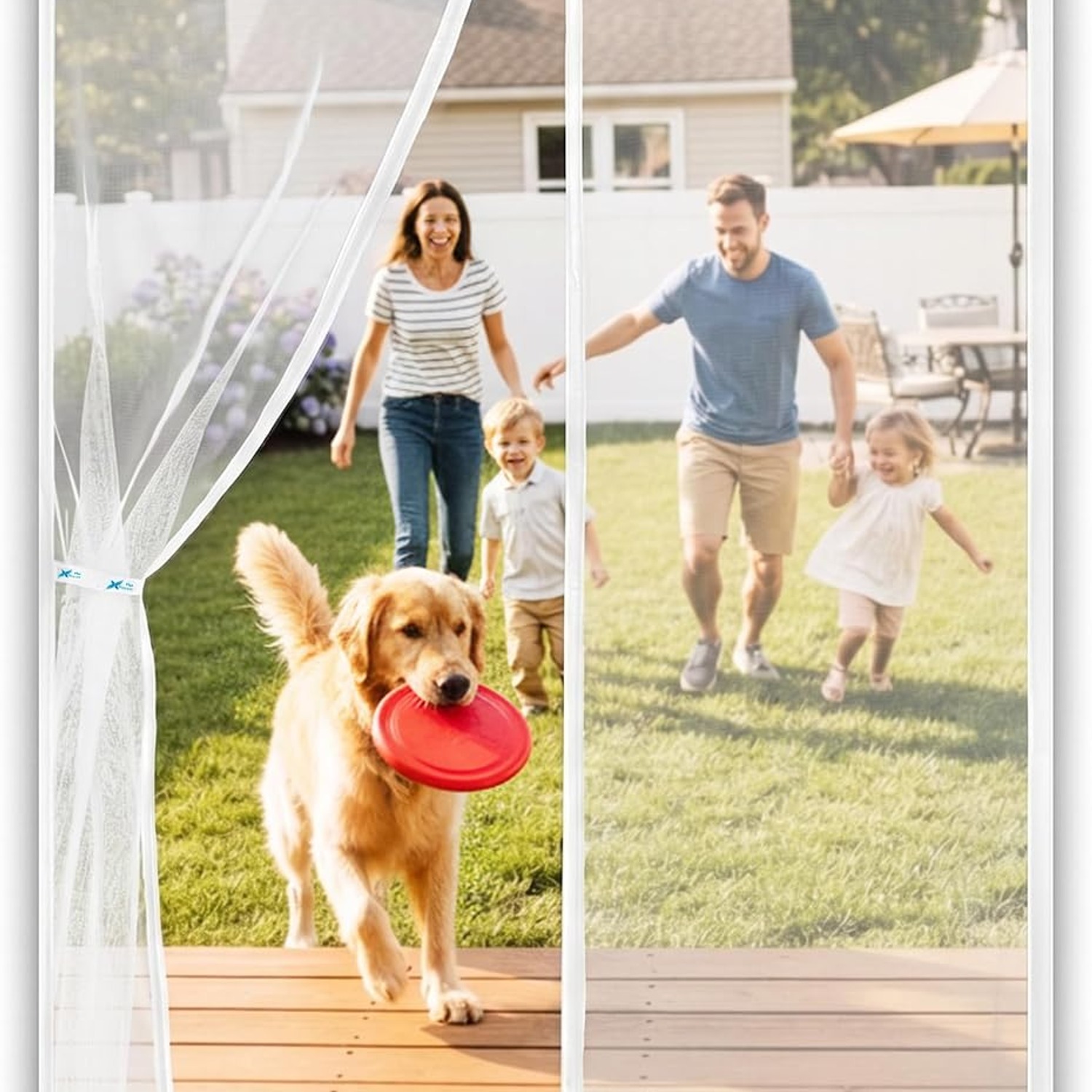
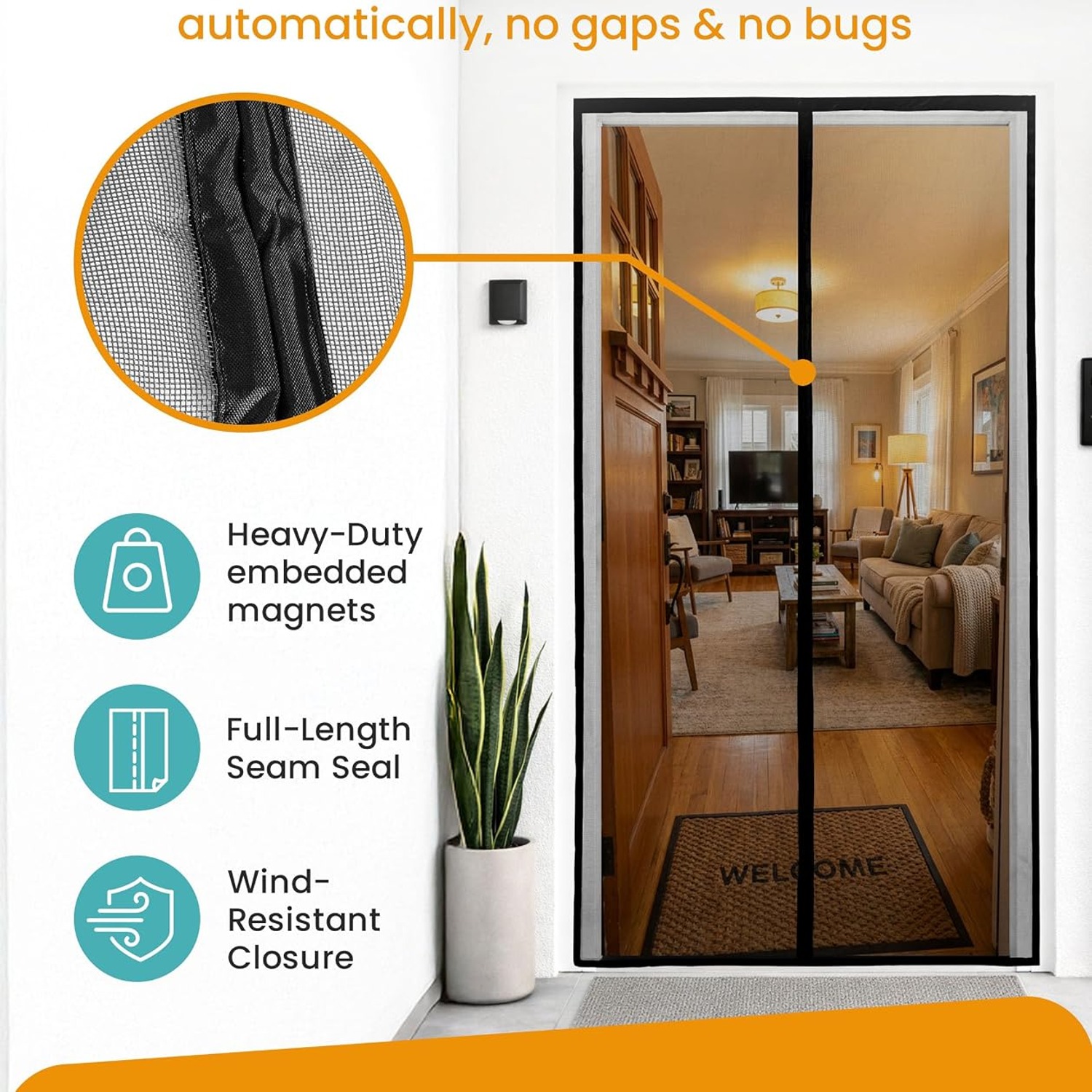
A magnetic screen door sits between those two. It is a soft mesh panel in two halves, hung over the doorway, with magnets running down the middle seam. You walk at it, it opens, and it closes again behind you. No frame, no hinge, no bang.
How the magnets actually work
The clever part is the number of magnets and where they sit. This model has 52 of them, sewn into the center seam from near the top of the panel down to near the floor. Spacing matters more than raw strength. A few powerful magnets will hold at those points and let the mesh bow open in between, which is exactly where the insects find their way in. A long run of smaller magnets pulls the whole seam shut evenly.
That is also what makes it a hands free screen door in practice rather than in theory. You can push through with a shoulder, a hip or the side of a laundry basket. By the time you are two steps into the garden, the seam has already closed.
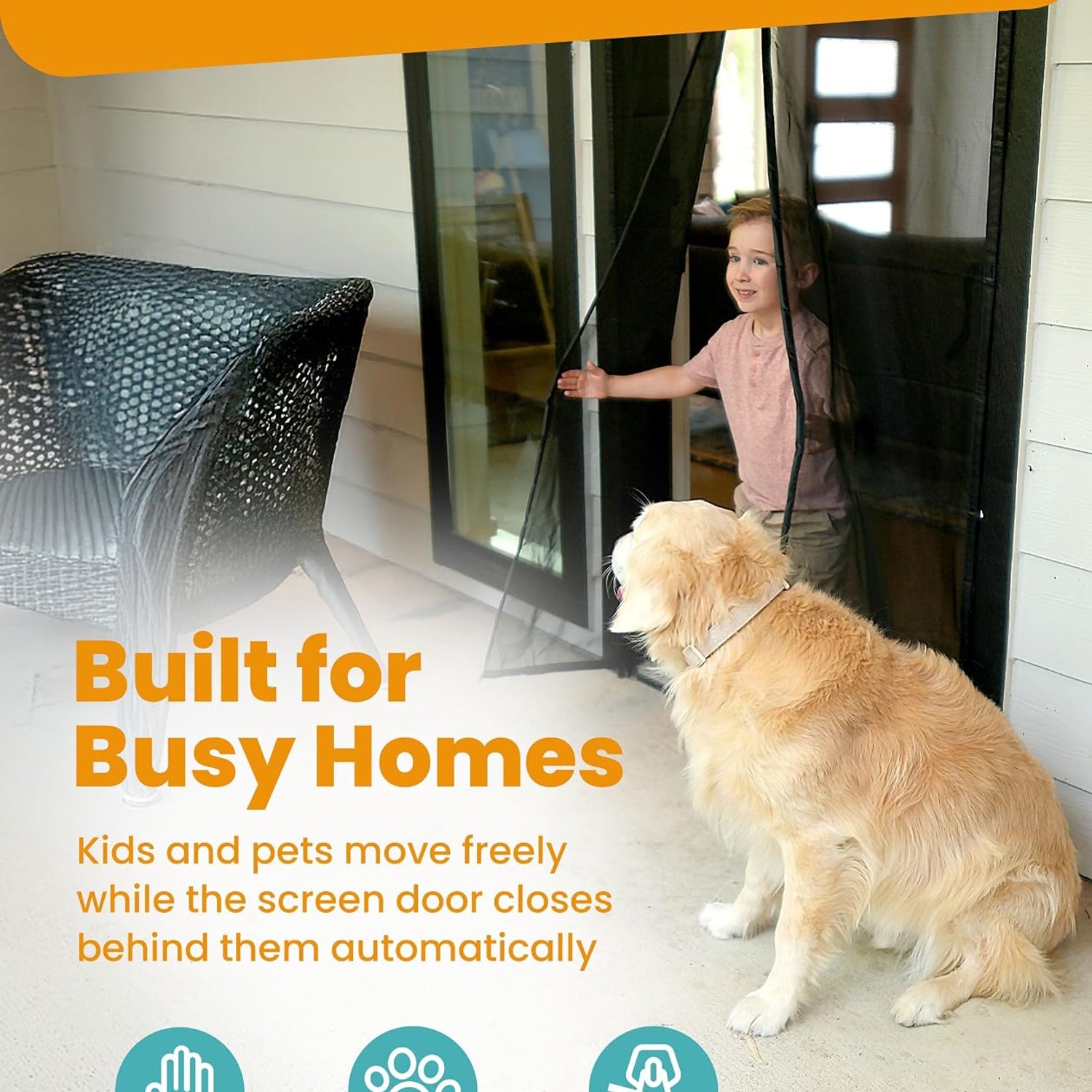
Pets pick it up quickly. Most dogs need two or three guided attempts before they go through on their own. Cats usually work it out without any help at all.
Mesh weave: the detail that decides everything
Mesh is where cheap screens give themselves away. A loose weave stops house flies and nothing else, which is no use if your problem is mosquitoes or the tiny gnats that come off a compost heap or a nearby pond.
This one uses a fine polyester weave with roughly a 1 mm gap. That is tight enough to stop gnats, mosquitoes and flies, while still letting air move. It is also sewn without heavy vertical bars running down the panels, so you keep your view of the garden and the room stays bright. Dark mesh helps here too, because it cuts glare and is easier to see through from the inside.
A denser weave has a second benefit. It resists a dog nosing through or a cat hooking a claw into it, because there is less open space for a nail to catch. If you are hunting for the best pet friendly screen door, weave density is the spec to look at first.
Measuring before you order
This is the step people skip, and it is the one that causes nearly every return.
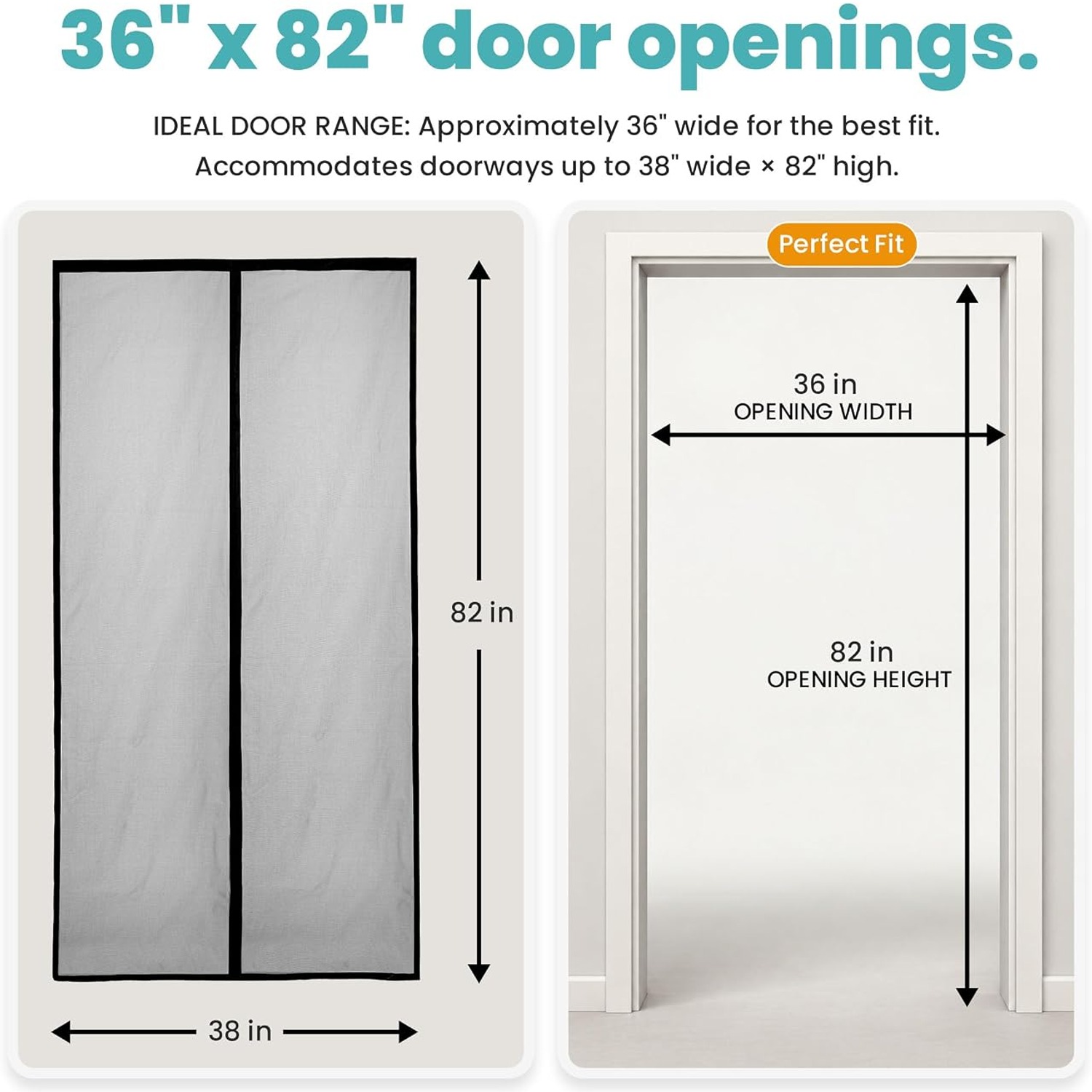
Measure the inside of your door frame, top to bottom and side to side. Do not measure the door itself, because the door is smaller than the opening it sits in. You want the frame to be no larger than 38 x 82 inches. If your opening is close to that, you are fine, because the screen is designed to cover rather than exactly match.
If your opening is wider, this model will leave gaps at the sides and insects will simply walk around it. Sliding patio doors and double doors need a wider panel. Garage doors are out of scope entirely.
Also check the surface the tape will stick to. You want a clean, flat edge around the frame, at least an inch or so wide, free of flaking paint or heavy texture.
Fitting it in under ten minutes
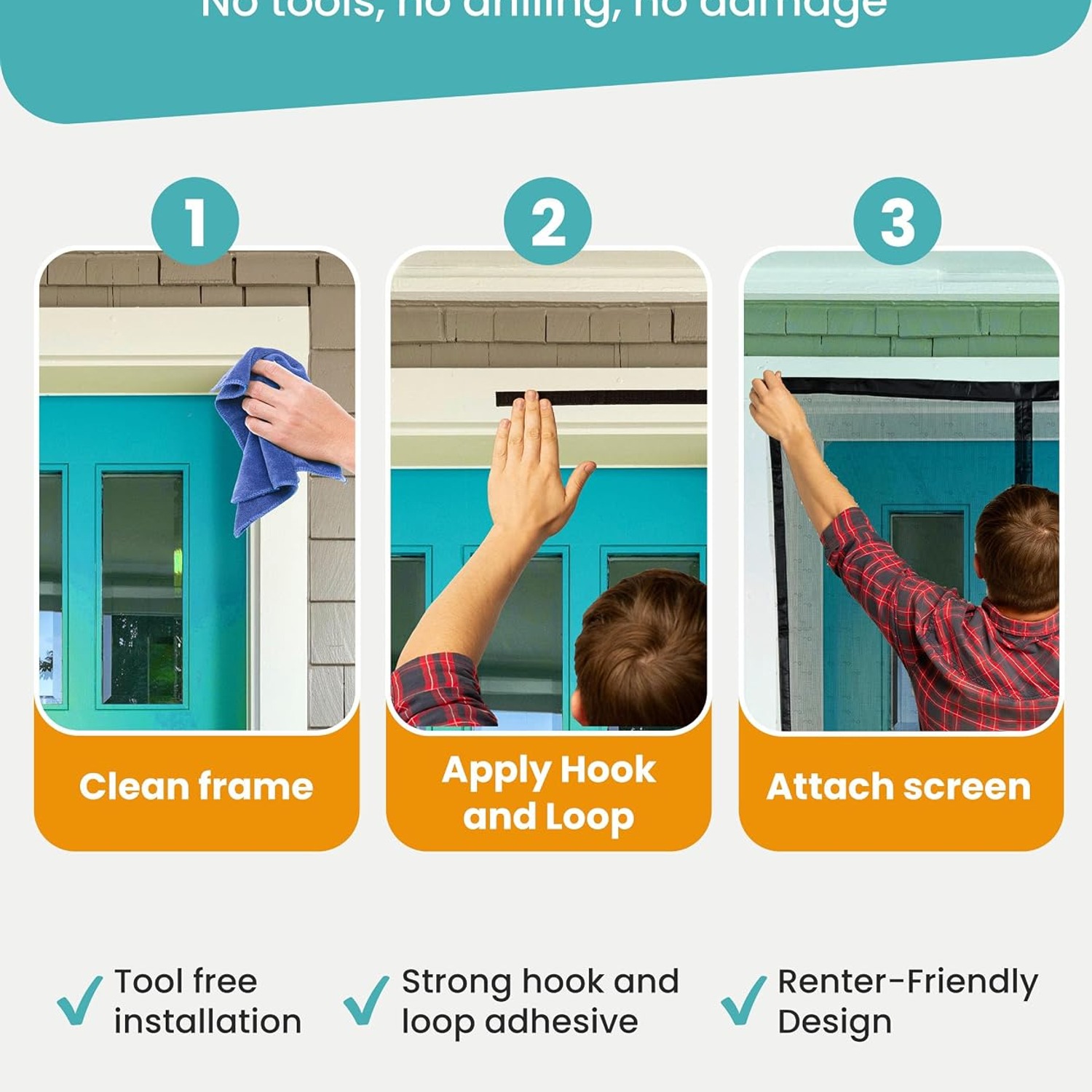
The kit includes full-length hook-and-loop tape, push pins and an instruction manual. No drill, no screws, no bracket.
Start by wiping the frame down with rubbing alcohol and letting it dry. Adhesive tape fails on dusty or greasy surfaces more often than it fails on the wrong material. On uPVC and painted metal this step is not optional.
Press the tape along the top of the frame first and hang the screen from there so it sits straight. Then work down each side, smoothing as you go rather than pulling tight. If you stretch the mesh while fitting, it will pucker later. On timber frames, add the push pins at the top corners and every foot or so down the sides for extra security.
Let the adhesive settle for a few hours before heavy use if you can. It grips far better once it has had time.
Who it suits
Renters get the most obvious benefit, because nothing is drilled and the whole thing comes down when you leave. Anyone looking for the best screen door for apartments usually ends up at a magnetic panel for the same reason.
It also suits households where the back door gets used constantly. Kids running in and out, a dog with its own schedule, trips to the bin and the washing line. A hinged door becomes a chore in that situation. This one just works.
It is a good seasonal product too. Up in spring, down in fall, stored flat in a cupboard over winter. A hinged screen door cannot do that.
Looking after it
Cleaning is simple. Wipe the mesh with a damp cloth and mild soapy water, then let it air dry before you let the panels close together. Keep bleach and solvents away from it, and do not attack it with a stiff brush, because that distorts the weave.
If the tape starts to lose grip, it is usually dust in the hook-and-loop rather than a failed adhesive. Brush it out with a dry toothbrush and it generally comes back.
Take the screen down before a serious storm. Reinforced edges help it cope with a breeze, but no fabric panel enjoys a gale, and there is no reason to test it.
For storage, clean it, let it dry fully and lay it flat or roll it loosely. Avoid tight folds across the magnet seam for months on end.
A few honest limitations
It is a mesh curtain, not a security door. It will not stop anyone getting in and it is not a child barrier.
In very windy spots it will flap, and the magnets may part briefly. Tie-backs help if you would rather have the doorway open than fighting the wind.
Very large or very determined dogs can push the panels off their tape over time, particularly if they launch at the door rather than walk through it. Adding push pins down the sides on a timber frame usually solves this.
The short version
If you have a single doorway up to 38 x 82 inches, want air without insects, and do not want to drill anything, this does the job well. The fine 1 mm weave handles gnats and mosquitoes, not just flies. The 52 magnets down the seam mean it closes itself whether your hands are free or not. It weighs 1.4 pounds, fits in under nine minutes, and comes down just as easily when summer ends.
Measure your frame first. Everything else is straightforward.