
The complete guide
How to Choose a Storm Door Closer That Actually Lasts
The door that bangs
There is a particular sound every household with a storm door knows. It is the crack of the door hitting the frame about two seconds after someone has walked through it, usually while you are on the phone or someone is asleep. Then there is the other version, where the closer has given up entirely and the door drifts half shut, letting in bugs and letting out whatever you were paying to heat or cool.
Both problems come from the same place. A screen door, storm door or security door gets used dozens of times a day and almost never gets closed gently. The closer is the one part taking all of that, and on a heavy door it wears out faster than anyone expects.
The other daily annoyance is the hold-open. On older closers that job is done by a small metal washer you slide down the piston rod. In theory it is simple. In practice it pinches fingers, it is hard to reach if you are carrying anything, and it needs you to bend down. Plenty of people stop bothering and just prop the door with a shoe.
What a dual kit actually does
A dual closer kit puts two closers on one door instead of one. That is the whole idea, and it is a better idea than it sounds.
A single closer concentrates the entire closing force on one point of the door and one point of the frame. On a lightweight aluminum screen, that is fine. On a full-view storm door with a glass insert, the weight is much higher and the make use of on that single mounting point is significant. Screws loosen. The frame wears around the holes. The closer starts to sag and eventually the door no longer lines up.
Split that same load across two closers, one high and one low, and each one is working well within itself. The door moves more evenly through its arc because the force is applied along its height rather than at one spot. Mountings last longer. The action stays consistent for longer.
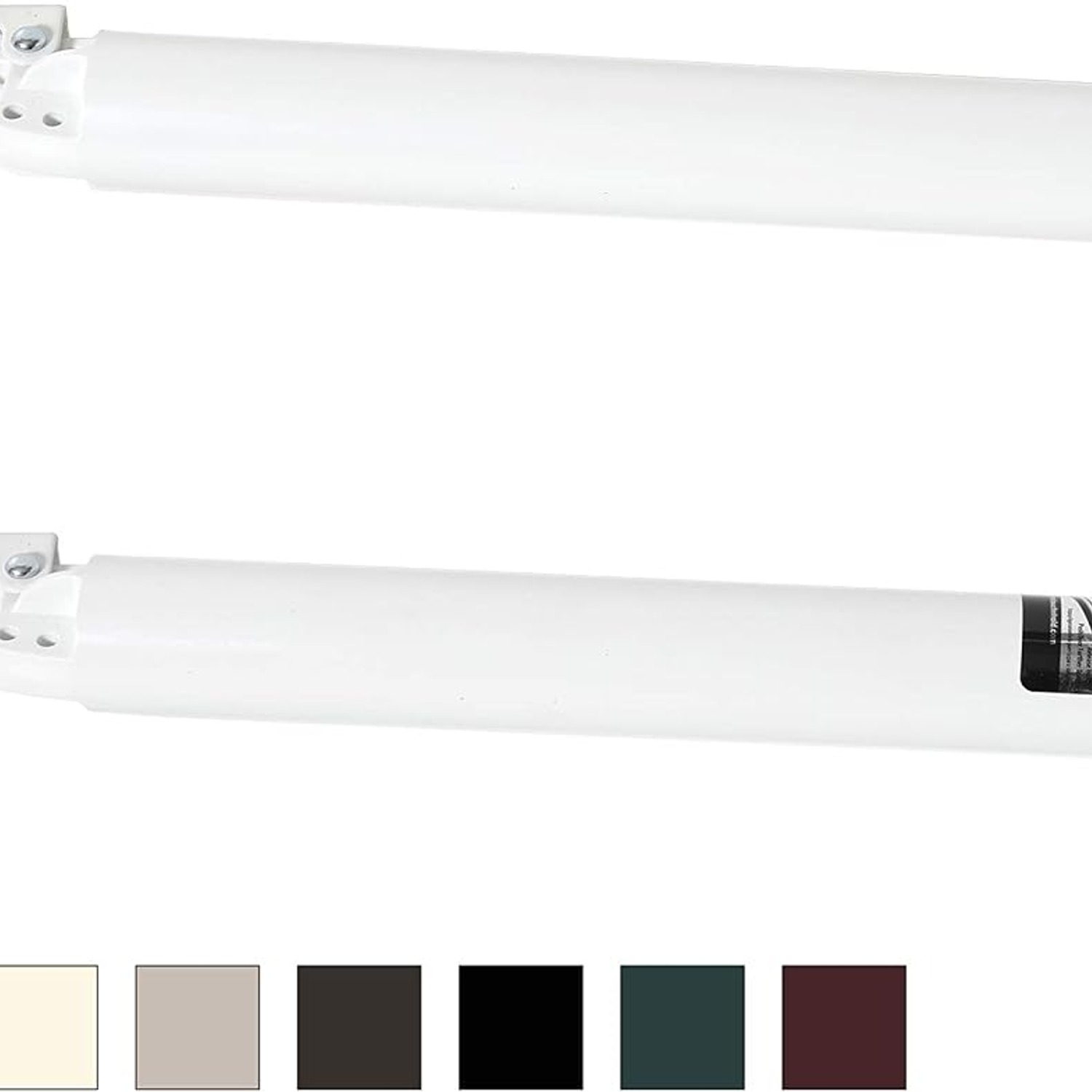
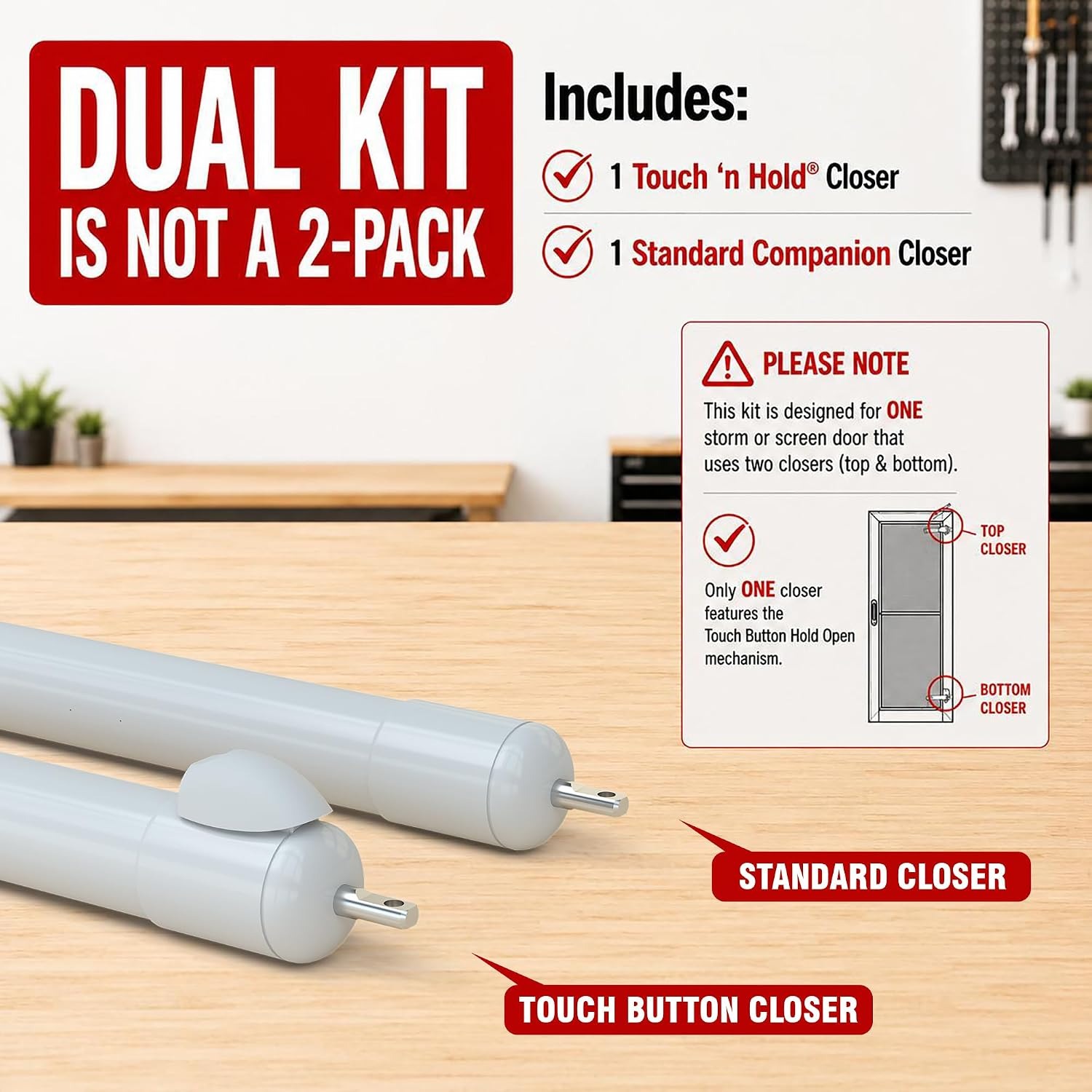
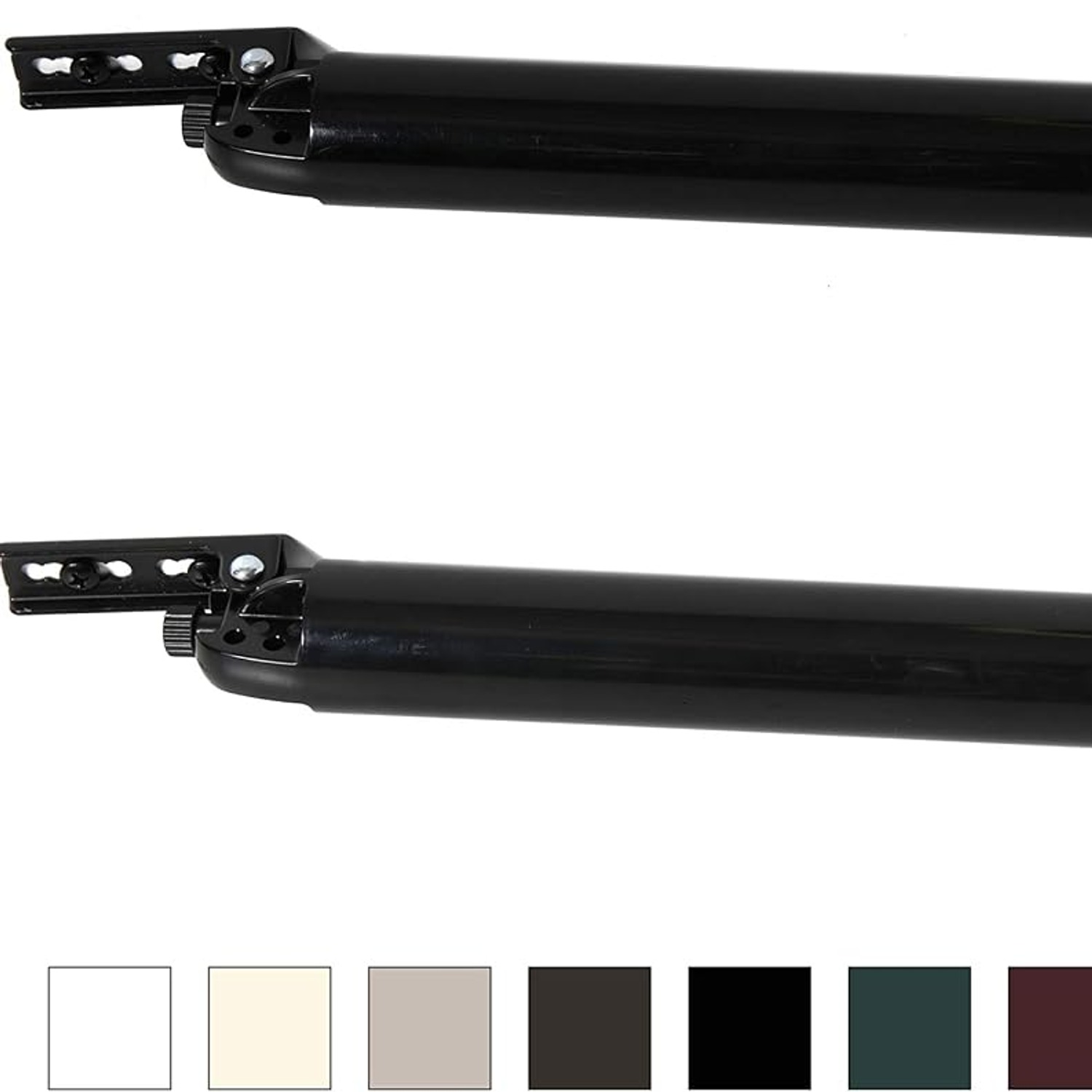
This kit comes as two packs with two pieces, intended as a heavy duty system for one door. It is listed for heavier full-view storm doors with glass inserts, which is the category where single closers struggle most.
The touch button
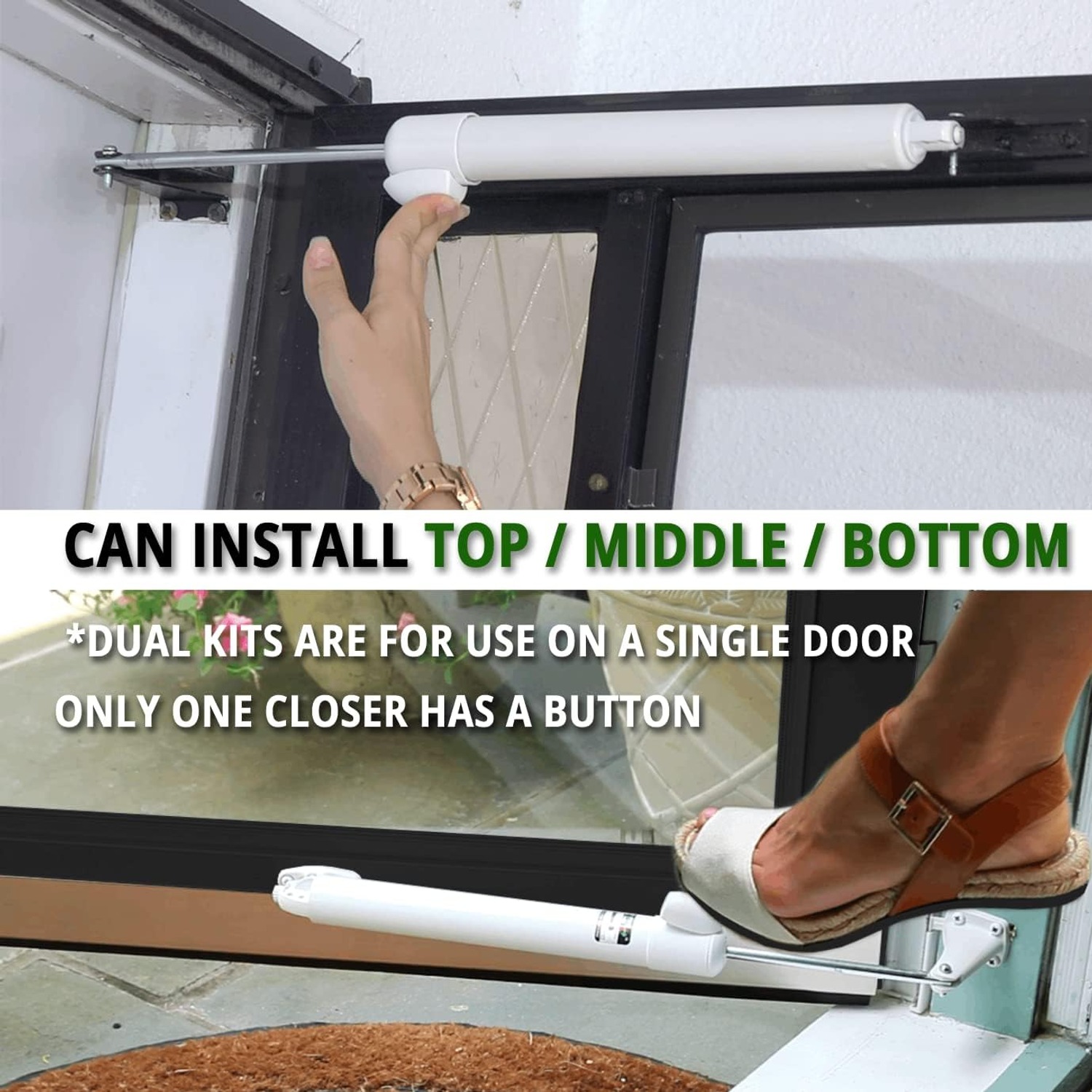
The hold-open on this system is a button. You tap it, the door stays open where it is. To release, you push the door slightly further open than its holding point and it lets go on its own, then returns.
Two things make that worth paying attention to. First, there is nothing to pinch. The sliding washer is the single most complained-about part of a traditional closer, and removing it removes the problem. Second, you can operate it at hand height with an elbow if your hands are full, which is most of the time you actually want a door held open.
The one instruction that catches people out is the release. Do not press the button again to let the door go. Pressing the button is what sets the hold. Nudging the door further open is what cancels it. It takes about one day to become automatic.
Smooth closing and why bounce matters
A closer that slams is obvious. A closer that bounces is sneakier. The door hits the frame, rebounds an inch or two, and either sits there unlatched or catches the back of your heel as you step through.
The smooth closing action in this unit is designed to take that rebound out. The door comes back in a controlled sweep and meets the frame without the kick. For anyone carrying a laundry basket, a toddler, or a tray of food, that single change is the difference between a door you tolerate and a door you forget about.
Who should buy the dual kit and who should not
Go dual if your door has a full glass panel, if it is a security door, if it is wood or has a heavy frame, or if you have already replaced a single closer once and it failed again. Also go dual if the door is tall, since height increases make use of.
Stick with a single closer if your door is a light aluminum screen in a sheltered doorway and the existing closer has simply aged out. Fitting two closers to a very light door is not harmful, but it is more hardware than the job needs.
If your door has already dropped out of square, deal with that before you buy anything. A closer cannot correct a sagging hinge, and fitting one to a door that does not sit true will just wear the new hardware out at the same rate as the old.
Measuring and fitting
Installation type here is screw-in, which is the standard approach and the one most people can manage themselves.
Before you order, do three checks. Measure the length of your existing closer and compare it to the 12 inch height of this unit. Check you have clear mounting space at both the top and bottom of the door, free of glass frames, handles and latch hardware. And look at the condition of the existing screw holes in the frame, because worn holes need plugging and redrilling before new brackets go on.
During fitting, the thing that matters most is getting both closers parallel. If one is angled relative to the other, they work against each other and both wear faster. Mark everything, check with a level, then drill. Measure twice is a cliché because it is correct.
Expect the job to take under an hour for most doors. Longer if you are repairing frame damage along the way.
Living with it
Maintenance is minimal. Wipe the white bodies with a damp cloth and mild cleaner, then dry them. Brush grit off the piston rod occasionally, since grit on a rod is what scores seals and shortens life. Resist the urge to spray oil or grease on the rod unless the instructions specifically call for it, because lubricant attracts dust and makes things worse.
Twice a year, put a screwdriver on every mounting screw and check nothing has worked loose. Doors vibrate, screws back out, and ten seconds of checking saves a torn-out bracket later.
Set the closing speed once, properly, using small adjustments and testing after each change. Both closers should be tuned to work together. If one is noticeably faster than the other, the door will pull unevenly.
Do not hang anything from the closer arms, and do not force the door past its hold position. Those are the two things that kill closers early.
The short version
If you have a heavy storm, screen or security door and you are tired of either the bang or the half-open drift, a dual kit is the straightforward fix. Two closers share a load that one was never going to handle for long.
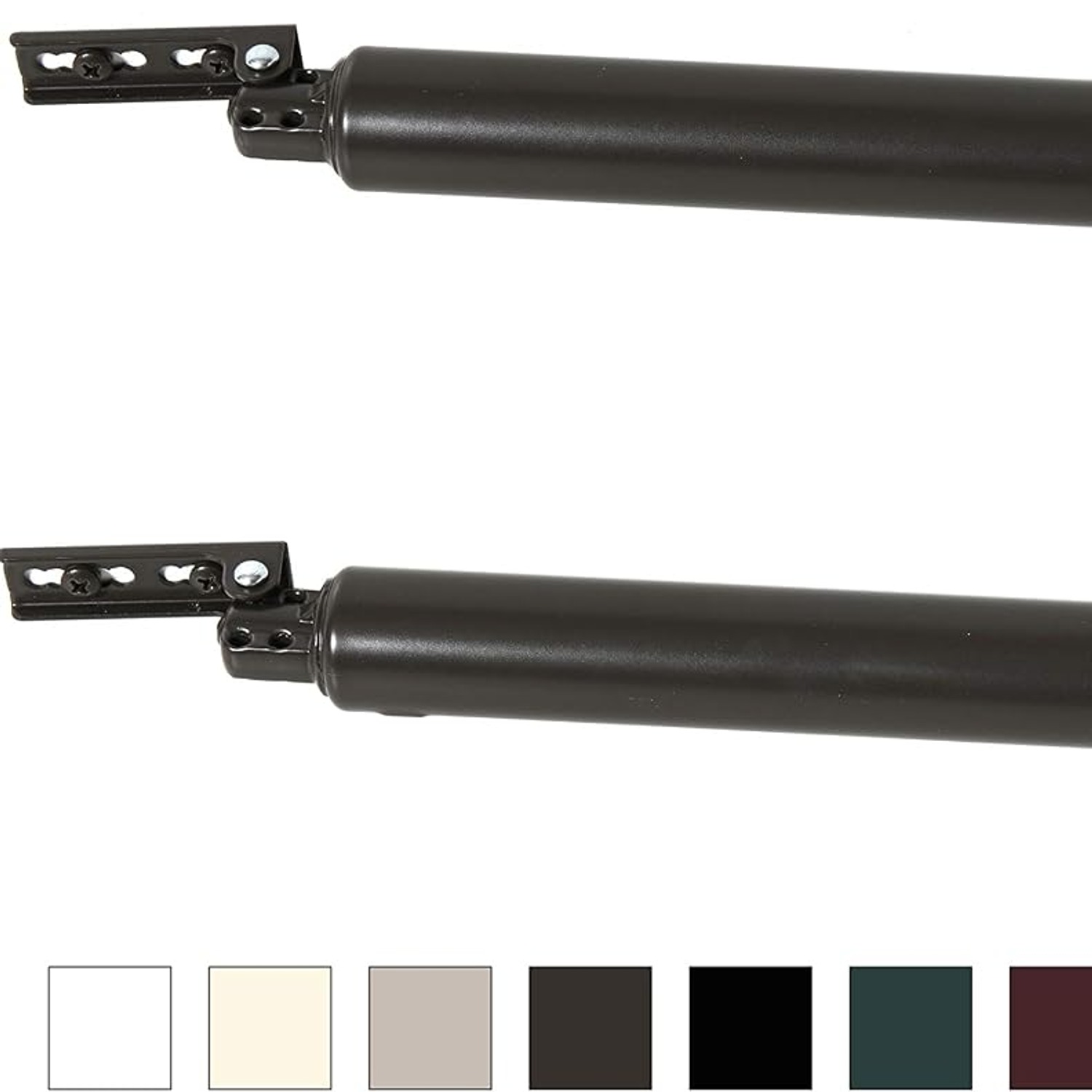
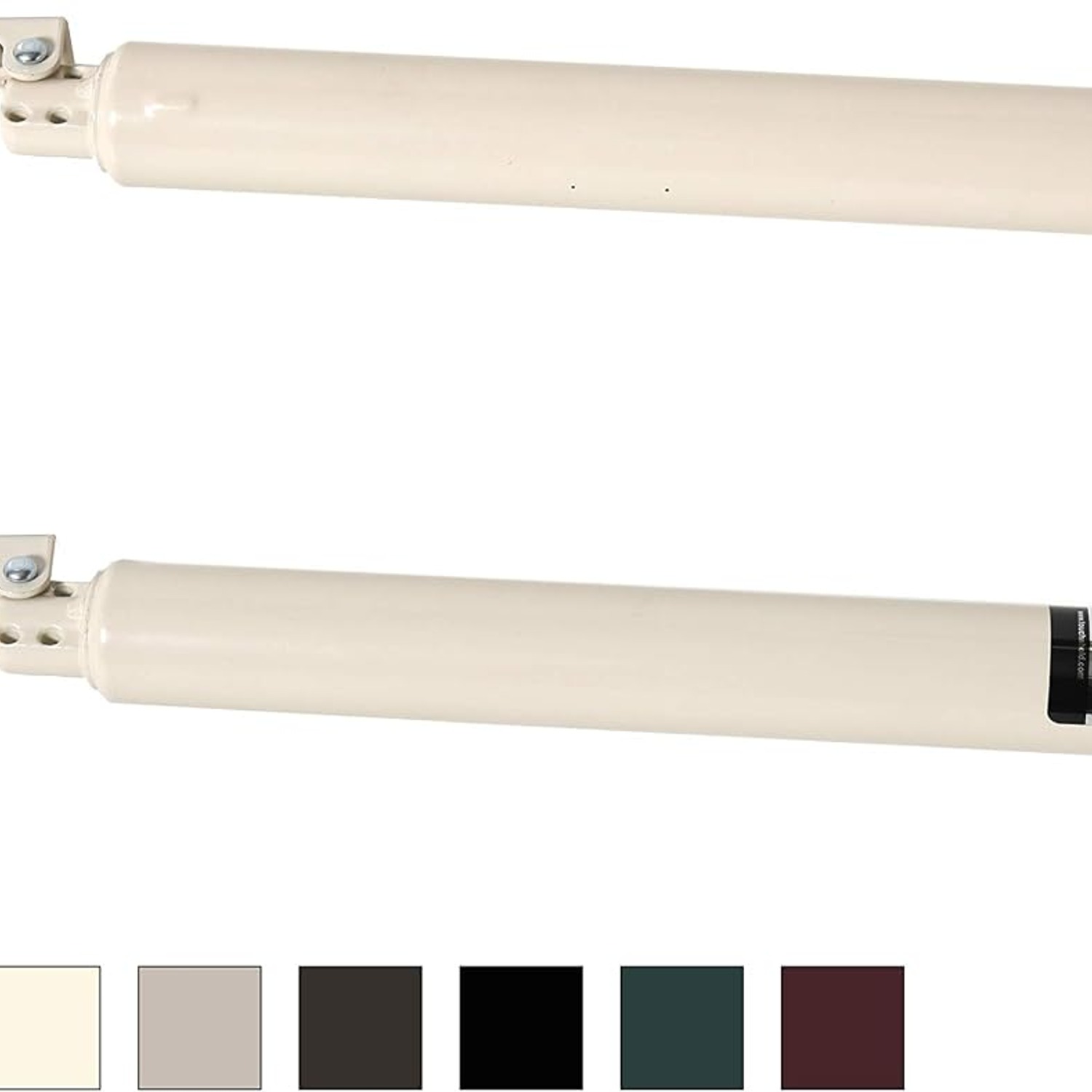
This Green Star kit gives you two closers, each 3 inches by 3 inches by 12 inches, built from alloy steel, metal and stainless steel, finished in white, with screw-in fitting that works for new doors or as a replacement on many existing frames. The touch button hold-open removes the sliding washer entirely, and the smooth closing action removes the bounce.
Measure your door, check your mounting space, and fix any sag before you fit. Do that, and the closer stops being something you think about at all, which is exactly what you want from it.