

The complete guide
Screen Repair Tape Buyer's Guide, How To Fix Torn Window screens Without Replacing Them
The problem with a small hole
A torn window screen starts out as a minor annoyance. There is a snag near the corner, maybe a scrape where a branch rubbed during a windy night, and you tell yourself you will deal with it. Then summer arrives, and suddenly that small gap is a doorway. Mosquitoes find it. Flies find it. If you live somewhere warm, so do things with more legs.
The usual advice is to replace the mesh. That means pulling the screen out of the window, laying it flat, prying the rubber spline out of the channel, cutting new mesh to size, rolling the spline back in with a special tool, and trimming the excess. It is not hard exactly, but it takes an afternoon and some gear, and most people do not own a spline roller. For a hole the size of a coin, that is a lot of effort.
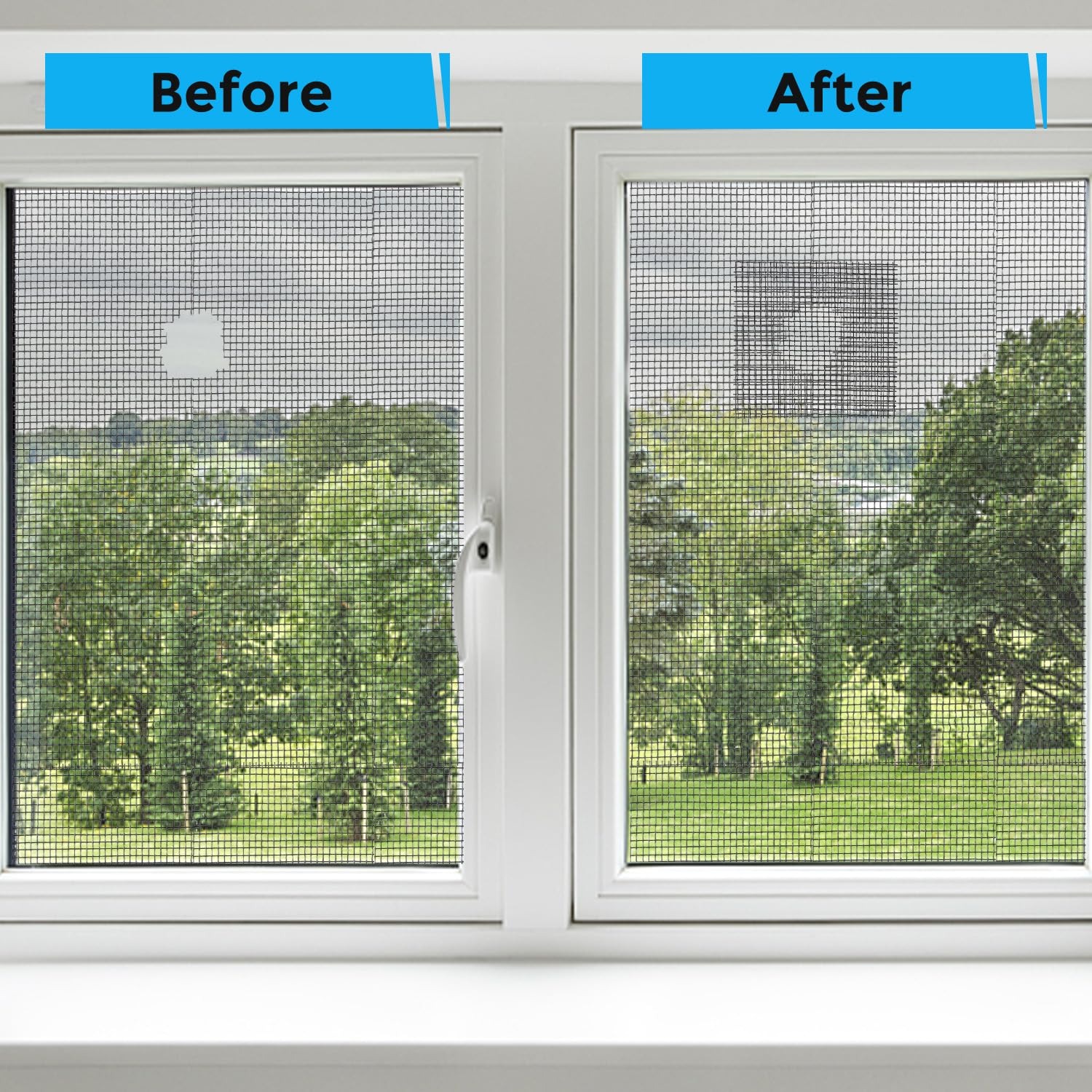
Screen repair tape is the shortcut. Cut a piece, stick it on, done. It is not pretending to be a factory-new panel. It is a sensible fix for damage that does not justify a full rebuild, and it costs a fraction of what re-screening would.
How this tape works
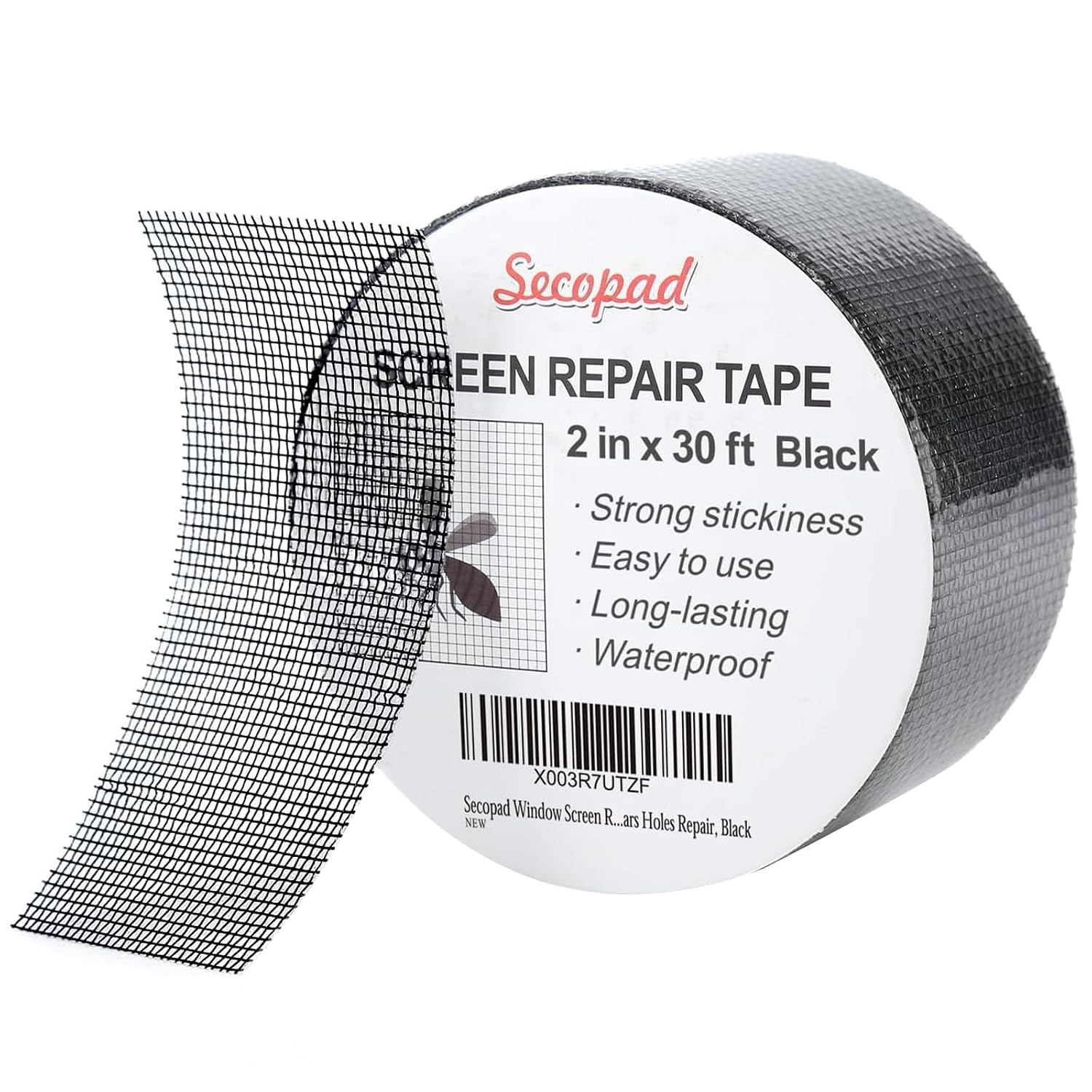
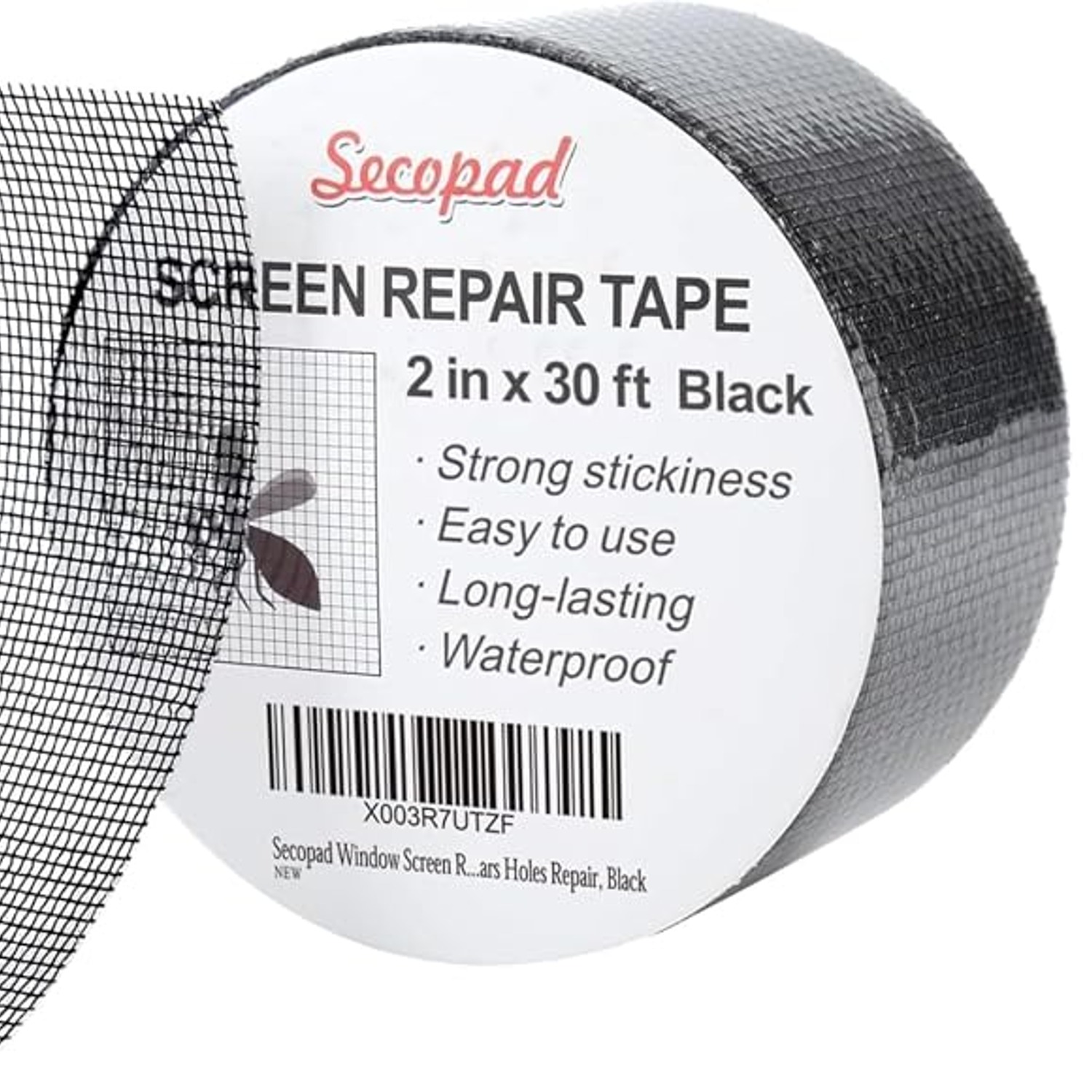
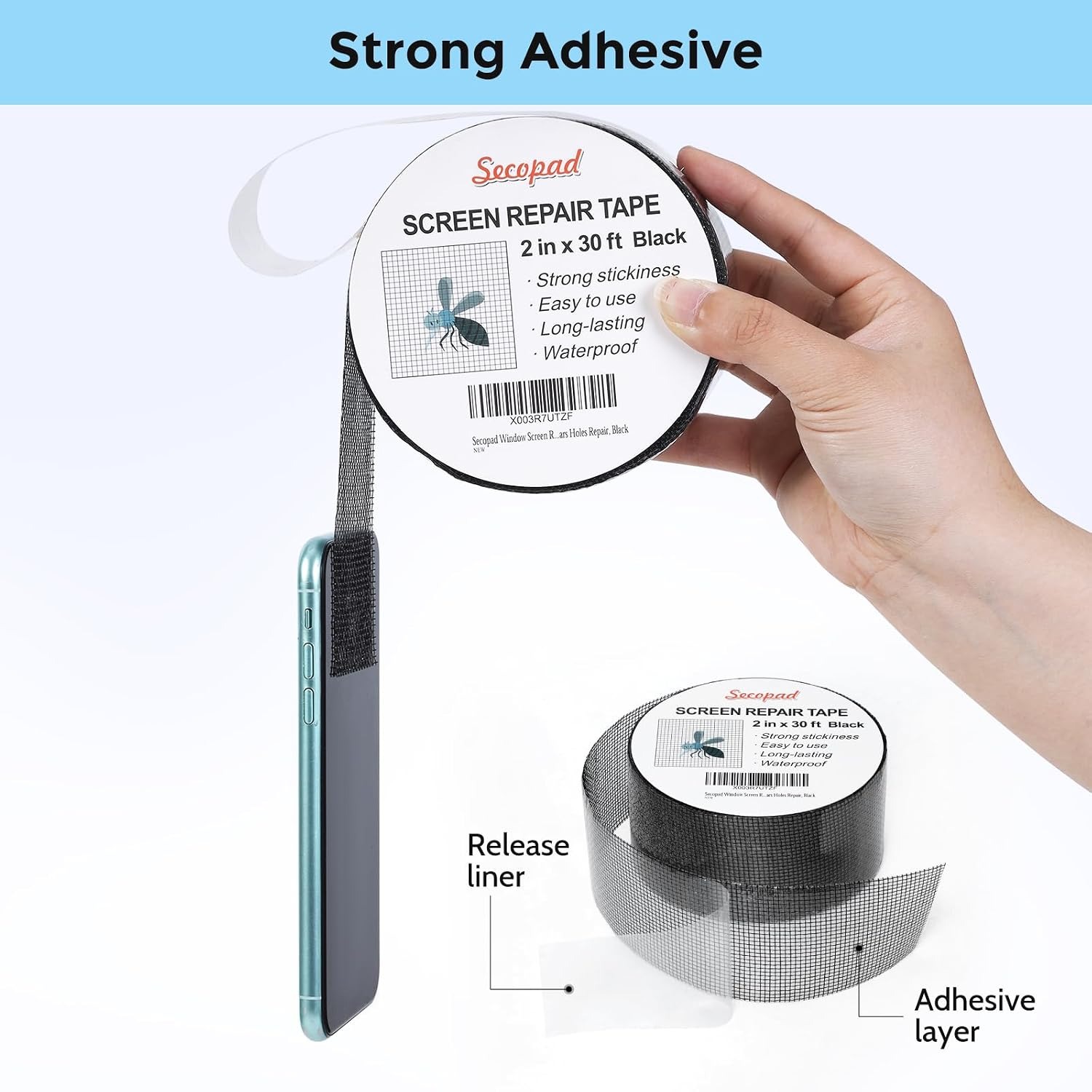
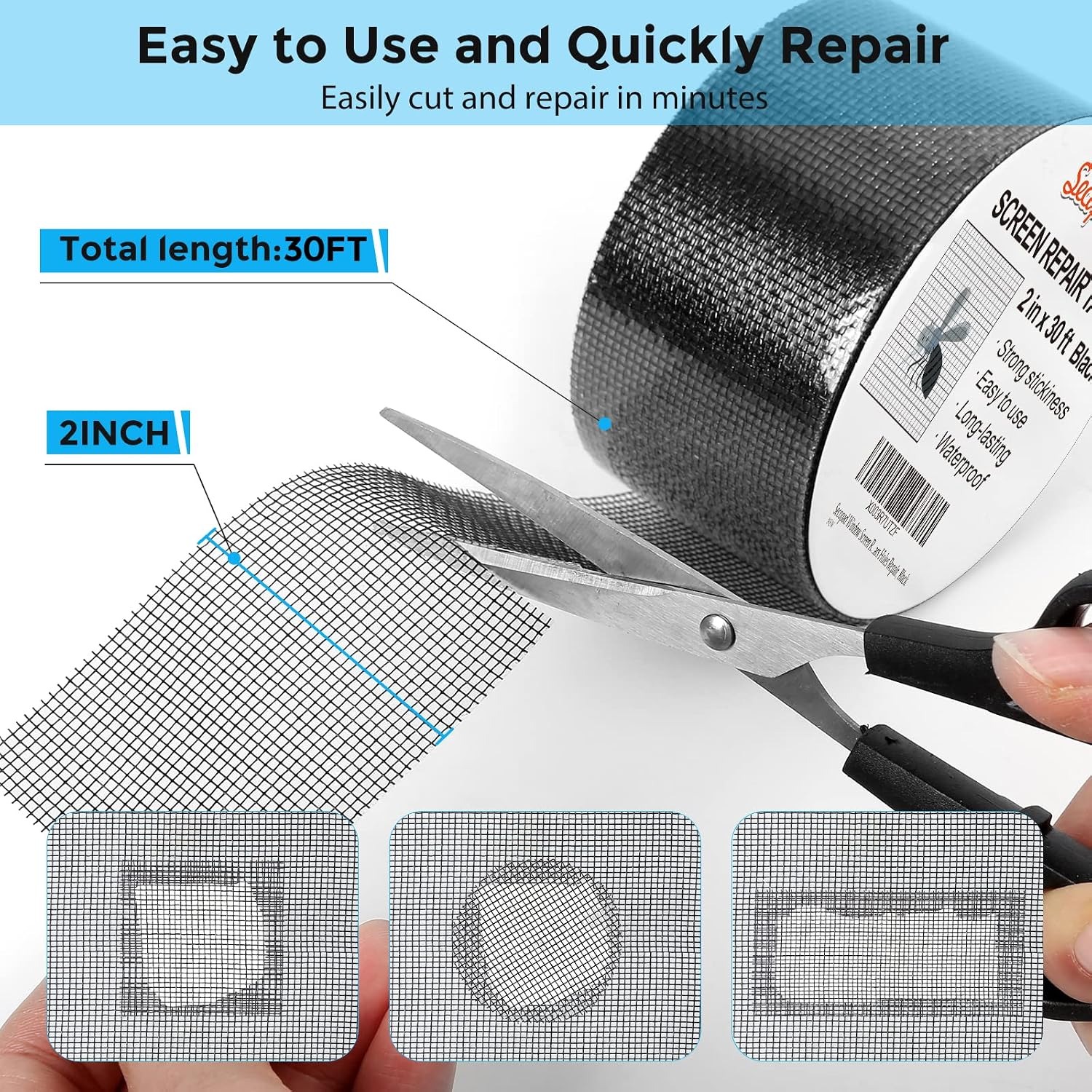
The roll is 2 inches wide and 30 feet long. The tape itself is a fiberglass mesh carrier with adhesive on the back, covered by a release liner you peel away before use.
The mesh carrier matters. A solid tape would read as a bright patch of plastic stuck to your window, visible from the garden and from across the room. A mesh carrier blends in better because it has the same visual texture as the screen it is covering. In black, against standard dark window screen, it mostly reads as a shadow.
The supplier is upfront about two limits, and they are worth repeating. The tape is not invisible, and it is not ventilated. If you stand close and look for the patch you will see it. And the patched section itself does not pass air, because the adhesive layer is continuous behind the mesh. On a window screen, where the patch covers a few square inches of a panel measuring several square feet, that makes no practical difference to the breeze coming in. It is only worth knowing so you are not surprised.
The adhesive is the part doing the real work. It grips the fibres of the existing mesh rather than sitting on a smooth surface, which is why surface preparation matters more here than with most tapes.
Where you can use it
Window screens are the obvious case, and they are where most people start. Kitchen and bathroom windows tend to get the worst of it, partly from moisture and partly from grease in the air.
Screen doors are the second big one. They take hundreds of openings a week, people shove them with elbows and shopping bags, and kids push on the mesh rather than the frame. Tears near the handle and along the bottom rail are almost universal. A strip of tape along a split there stops the damage from running further, which is often the more valuable outcome.
Beyond the house, the same roll handles pool enclosures, patio screens, gazebo panels and camping tents. Pool screens in particular are enormous and expensive, so catching a small tear early is worth real money. Campers often keep a roll in the gear box because a torn mesh panel on a tent turns a good night into a miserable one, and there is no hardware store at a campsite.
Choosing the right approach for your damage
Not every tear suits tape, and it helps to be honest about which one you have.
Pinholes and small punctures are the easiest. A square an inch or two across, centred on the hole, handles it completely. These are the repairs where tape is clearly the best screen patch tape answer rather than a compromise.
Straight splits, the kind you get when something sharp drags along the mesh, want a strip rather than a square. Cut a length that overshoots the split by an inch or more at each end, so the patch is anchored in undamaged mesh. A split that is left alone will keep running, so this is the repair worth doing soonest.
Larger holes, say the size of your palm, can still be taped. Use overlapping pieces or apply one patch per side so the tape sandwiches the damaged area. The result is more visible, but it works and it buys you time until you are ready to re-screen properly.
Shredded or missing mesh over a wide area is where tape stops being the sensible choice. If you can see daylight through a region bigger than your hand, or the mesh has gone brittle and crumbles when you touch it, the panel needs new mesh. Tape will stick to crumbling screen for about a week and then fall off with a chunk of it attached.
Getting the application right
Almost every failed screen tape repair comes down to the same mistake, which is sticking it to a dirty screen.
Screen mesh is a dust trap. It collects pollen, road grit, cobwebs and, near kitchens, a film of airborne cooking grease that you cannot see but can definitely feel if you run a finger across it. Adhesive cannot bond through any of that. It bonds to the dirt, the dirt lets go of the screen, and your patch is on the floor within a fortnight.
So: brush the area first, then wipe it with a damp cloth. For greasy screens use a drop of dish soap and rinse it off. Then wait until the mesh is completely dry. On a warm day that is a few minutes. On a damp morning it might be an hour, and it is worth the wait.
Cut your patch with ordinary scissors, making it noticeably larger than the damage on every side. Rounding the corners slightly is a small trick that helps, because square corners are the first thing to catch and lift.
Peel the release liner and line the patch up before it touches down, since repositioning is not really an option once the adhesive grabs. Press from the middle outward, working the tape against the mesh with your thumb. Spend extra effort on the edges. A patch that is firmly stuck in the middle and loose at the rim will fail at the rim.
If you want maximum durability on a door or an exposed outdoor screen, apply a matching patch to the opposite face. The two pieces bond to each other through the hole as well as to the mesh around it, which makes a much tougher repair.
Living with the repair
Once it is on, there is not much to do. Clean the screen as you normally would, but keep it gentle around the patch. A soft brush or cloth with water is fine. Skip the pressure washer, skip the solvents, and do not scrub directly at the tape edges.
If an edge does start to lift after a season or two of weather, press it back down while the day is warm. Warmth makes the adhesive more cooperative. If it will not stay, cut a fresh piece and go over the top. With 30 feet on the roll you are not exactly rationing.
Store the remainder somewhere cool and dry with the liner intact. Fold the free end back on itself so you can find the start again, which sounds trivial until you are standing in the garage picking at a roll edge with a fingernail.
The short version
A torn window screen does not need a full mesh replacement, and most of the time it does not deserve one either. This 30 foot roll of black screen repair tape fixes tears, holes and splits in window screens, screen doors, pool and patio mesh and tent panels, using nothing more than scissors and a clean surface.
It is not invisible and it is not ventilated, and the supplier says so plainly. What it is, is fast, cheap and good enough to stop insects getting in and stop small damage getting bigger. Clean the mesh properly before you apply it and the patch will do its job for a long time. Keep the rest of the roll in a drawer, and the next tear becomes a two minute job instead of a weekend one.